






Yes. You should test for radon before buying a home in Clarksville, Tennessee. Testing is the only way to know the radon level inside a specific property, regardless of its location on a radon map or the results from nearby homes.
Radon is a naturally occurring, invisible, and odorless radioactive gas that can enter a house through cracks and openings in the foundation. Because levels can vary significantly from one home to the next, a professional test should be part of your inspection and due-diligence process.
For a buyer, the goal is not to create unnecessary alarm. It is to identify a condition that can usually be addressed with the right testing, mitigation, and documentation.
By Randy Whetsell
Why radon testing matters in Clarksville
Clarksville and Montgomery County include a wide range of homes, from newer subdivisions to older properties, crawl-space homes, basements, slab homes, and rural residences. Construction type, foundation condition, soil, ventilation, and weather can all affect indoor radon levels.
Radon forms naturally as uranium in soil, rock, and groundwater breaks down. It then moves upward through the ground and can enter a home through cracks in slabs, gaps around pipes, sump openings, crawl spaces, expansion joints, and other foundation penetrations. Because it is colorless and odorless, you cannot detect it without testing.
In Tennessee, testing matters because elevated readings are not rare. The Tennessee Radon Program explains that elevated radon levels have been found throughout the state. That statewide pattern aligns with what buyers should expect in Middle Tennessee generally: underlying limestone and karst geology, fractured rock, and variable soil conditions can create pathways that allow soil gases to move into homes. One house may test low while the one next door tests high.
That does not mean every Clarksville home has a radon problem. It means you should not rely on assumptions based on neighborhood, price point, age, or whether the home looks well maintained.
The EPA’s radon zone map is useful for understanding broad geographic potential, but it cannot predict the radon level in a particular property. A home in a moderate-potential area can still test above the action level, while nearby homes may have different results. The EPA map and supporting documents should be treated as a screening resource, not a substitute for testing.
Haus expert contribution
“At Haus, we advise buyers to treat radon the same way they treat any other hidden condition during due diligence,” says Randy Whetsell of Haus – CVILLE Tennessee. “You are not trying to create fear. You are trying to get objective information during the inspection window so you can make a calm decision, negotiate clearly, and close with fewer surprises.”
What is the EPA action level for radon?
The EPA action level is 4 picocuries per liter, or 4 pCi/L. According to the U.S. Environmental Protection Agency, homeowners should fix the home if the radon level is 4 pCi/L or more, and the agency also notes that many people choose to reduce radon levels between 2 pCi/L and 4 pCi/L. Source: EPA, “A Citizen’s Guide to Radon”, accessed September 21, 2026.
A result of 4 pCi/L or higher does not mean you cannot purchase the home. It means you should take action to reduce the level. The EPA and Tennessee Radon Program also encourage buyers to consider reducing radon levels between 2 and 4 pCi/L because no level is considered completely risk-free.
A simple way to understand the results is:
- Below 2 pCi/L: The reading is relatively low, but radon risk is not zero.
- Between 2 and 4 pCi/L: Consider mitigation or additional testing, particularly if the home will be occupied long term.
- At or above 4 pCi/L: Request professional evaluation and mitigation planning before closing or immediately after purchase.
The most important point is that 4 pCi/L is an action level, not a legal pass-or-fail standard. Your lender, contract, inspector, and mitigation professional may also have requirements that affect how the result is handled.
When should you test a Clarksville home?
The best time to test is during your inspection period, after your offer has been accepted and before your inspection deadlines expire.
A standard home inspection may not automatically include radon testing. Ask your inspector whether radon testing is available as an add-on service, or arrange a separate test with a qualified radon measurement professional.
How does a short-term radon test work, and how long does it take?
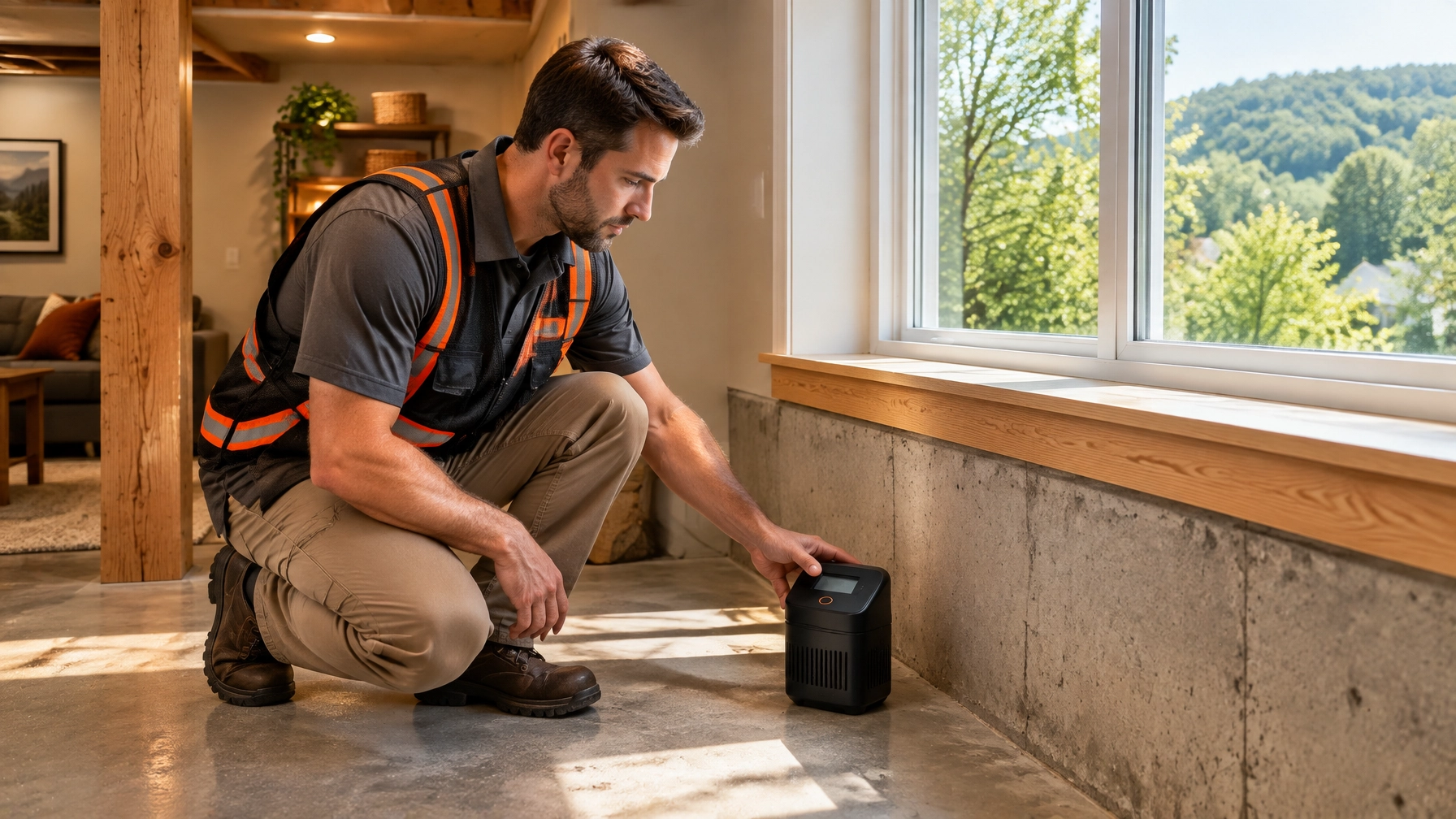
Most real estate transactions use a short-term radon test. The device is usually placed in the lowest level of the home that is regularly used or could reasonably be used by occupants. That may be a basement, a lower-level family room, or the main level if there is no basement.
Short-term testing typically works like this:
- The tester places a continuous radon monitor or approved test device in the home.
- The home is kept under closed-house conditions, meaning windows stay closed except for normal entry and exit, and exterior doors are not left open unnecessarily.
- The device remains in place for the required test window.
- The results are read, documented, and shared before your inspection contingency expires whenever possible.
In many Clarksville-area transactions, a professional short-term test takes 48 hours for a continuous monitor, though some kits and programs may run three to five days depending on the device and instructions. The Tennessee Radon Program recommends carefully following the kit instructions, running the test for the specified period, and returning the kit promptly if it is a mail-in test.
Before testing begins, confirm:
- Where the device will be placed.
- How long the test will run.
- Whether the test is appropriate for the lowest lived-in level.
- What closed-house conditions are required.
- When the written results will be delivered.
- Whether a follow-up test is recommended.
If you are buying a home with a basement or crawl space, ask where the test should be placed based on how the area is used. A finished basement, for example, may require different consideration than an inaccessible crawl space.
For more information about the broader inspection process, review what a home inspection covers in Clarksville. You may also want to review what to expect at a home inspection in Clarksville TN if you are building your due-diligence checklist.

Can you use a free Tennessee radon test kit during a home purchase?
The Tennessee Radon Program provides free test kits and educational resources to Tennessee residents. These kits can be a useful way to learn more about the radon level in your current home or a property you already own.
However, buyers should confirm whether a free kit meets the timing, documentation, and testing requirements of their purchase contract or lender. A real estate transaction often benefits from a professionally coordinated test because the inspector can document placement, testing conditions, dates, and results.
If you use a free kit, read the instructions closely. Common mistakes include leaving the kit out too long, failing to maintain closed-house conditions, recording the wrong start or end time, or delaying the return shipment.
When the result affects negotiations, clear documentation is especially important.
What does radon testing cost in Clarksville, and what does mitigation usually cost?
Costs vary by provider, property type, and whether radon testing is bundled with a general inspection, but buyers in the Clarksville area can usually expect:
- Professional radon testing: often about $150 to $250
- Follow-up testing: sometimes similar in cost, depending on the method used
- Typical active radon mitigation system: often about $1,200 to $2,500 for many single-family homes
Complex layouts, multiple foundation areas, finished basements, difficult fan placement, or electrical upgrades can push mitigation costs higher. The best practice is to request a written estimate from a qualified mitigation contractor before finalizing repair negotiations.
For buyers, the bigger issue is usually not the absolute cost. It is whether the testing, estimate, installation, and post-mitigation verification can all happen within your contract timeline.
What if the home already has a mitigation system?
If the property already has a radon mitigation system, do not assume the system is working simply because the fan is running.
Ask the seller for:
- Installation records.
- Previous radon test results.
- Maintenance or repair records.
- Information about when the fan was replaced.
- Any warranty documents.
- A recent post-mitigation test.
You may also want your inspector or a qualified radon professional to review the system. A follow-up test can confirm whether the mitigation system is maintaining an acceptable level.
A mitigation system is not necessarily a negative feature. In many cases, it shows that the issue was identified and addressed. The key is verifying its condition and current performance.
Should buyers test new construction for radon?
Yes. New construction should also be tested.
Builders may use radon-resistant construction features, such as vapor barriers, sealed penetrations, vent pipes, or provisions for a future mitigation fan. Those features can reduce the potential for radon entry, but they do not guarantee a low indoor reading.
After the home is completed and occupied, testing confirms how the finished structure performs. This is particularly important when a new home includes a basement, conditioned crawl space, or other lower-level living area.

How can a radon result affect your negotiations?
A radon result can become part of your inspection negotiations without turning the transaction into a confrontation.
How does radon show up in an inspection contingency?
In most Clarksville-area purchase contracts, radon is handled through the inspection contingency or due-diligence period, not as a separate surprise after all contingencies have expired. In practical terms, that usually means:
- The buyer orders a radon test during the inspection window.
- The result is attached to the inspection response or repair proposal if elevated.
- The buyer may request mitigation, a credit, a price adjustment, or another agreed solution.
- The parties document any agreement in writing before contingency deadlines pass.
If the reading is elevated, your options may include:
- Requesting that the seller install a mitigation system before closing.
- Asking the seller to obtain a written estimate from a qualified mitigation contractor.
- Negotiating a seller-paid closing-cost concession, if permitted by your loan and contract.
- Requesting a purchase-price adjustment.
- Agreeing on a post-closing mitigation plan with appropriate documentation.
- Requesting a follow-up test after mitigation.
The right approach depends on the test result, the property’s condition, the contract deadlines, the lender’s requirements, and the seller’s willingness to participate.
Focus on the documented issue rather than presenting radon as a reason to reject the home automatically. The Haus guide to negotiating a home sale in Clarksville can help you think through repair requests, credits, and price adjustments more strategically.
Your agent can help you organize the report, request contractor documentation, and communicate the issue clearly. A qualified mitigation professional should determine the appropriate system and verify the result after installation.
Do sellers mitigate for radon before listing?
Sometimes, yes, especially if a seller already knows the home tested high in the past or wants to reduce inspection friction before the property hits the market. A pre-listing mitigation system can make the transaction cleaner if the seller also keeps the installation paperwork and a post-mitigation test result.
Just as often, though, sellers do not test or mitigate before listing because they have never had a reason to check, they do not want to spend money upfront, or they expect the buyer to handle any testing during due diligence.
If you are buying, do not assume the absence of a mitigation system means the home is clear, and do not assume the presence of a system means there is no need for verification. Ask for documentation either way.
What about homes with wells, septic systems, or acreage?
If you are buying outside the urban core or considering a property with acreage, you may need several separate inspections. A standard home inspection generally does not provide a complete evaluation of a private well, septic system, water quality, or radon level.
Ask your agent about coordinating:
- A general home inspection.
- A radon test.
- A private well inspection and water-quality testing.
- A septic inspection.
- A termite inspection.
- Additional foundation, drainage, or structural evaluations when appropriate.
Haus also provides guidance for buyers considering homes with acreage near Clarksville. Build these inspections into your timeline early, because rural property due diligence can require more scheduling and documentation.
Frequently asked questions about radon testing
Is radon testing required when buying a Clarksville home?
Not every Tennessee home purchase requires radon testing by law. However, testing is strongly recommended because radon levels cannot be determined by appearance, age, price, or neighborhood.
Is a high radon result a deal-breaker?
Usually, no. Radon levels can often be reduced through a properly designed mitigation system. The result should be treated as a condition to investigate and address, not an automatic reason to abandon the purchase.
Who pays for radon mitigation?
The buyer and seller may negotiate who pays. Common arrangements include seller-completed mitigation, a closing-cost concession, a price adjustment, or the buyer accepting responsibility after closing. Your contract and lender rules matter.
Can a home test low one year and high another year?
Yes. Radon levels can change with weather, soil conditions, ventilation, foundation openings, and changes to the home. A test reflects conditions during a particular period, which is why follow-up testing can be useful.
Should I test if the home is in a low-risk radon zone?
Yes. Radon maps show regional potential, not the actual condition of an individual home. Testing is the only reliable way to determine the indoor level.
The bottom line for Clarksville homebuyers
Yes, radon testing Clarksville TN homes is worth doing before you close. Request the test during your inspection period, compare the result to the EPA action level of 4 pCi/L, and address any elevated reading with documentation, estimates, and a clear negotiation strategy.
If the result is elevated, ask questions, obtain professional guidance, and negotiate a solution that protects your health and your investment. Haus can help you coordinate the broader buying process, understand inspection findings, and move toward closing with greater confidence.
When you are ready to buy in Clarksville or Montgomery County, start with Haus’s home-buying resources, review what a home inspection covers in Clarksville, or contact Haus for buyer guidance tailored to your contract timeline and the home you are considering.






