





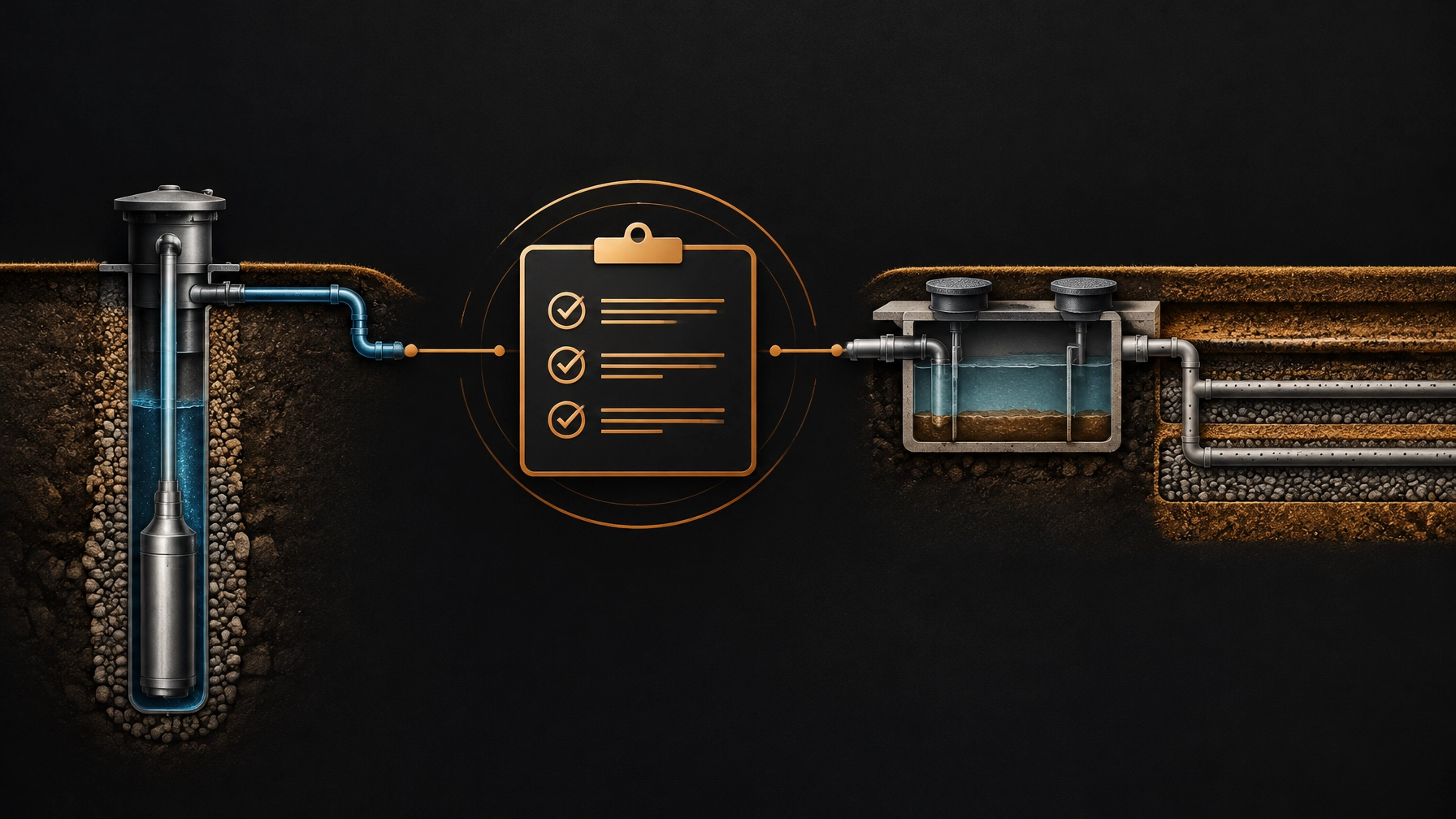

If you’re looking at a home on the rural edges of Montgomery County or Stewart County, the property may rely on a private well, a septic system, or both. Those systems call for more than a quick glance during a general home inspection. Your purchase contract, inspection schedule, and follow-up plan can determine whether you have time to understand the findings and decide what to do next.
Quick Answer
Make sure your signed purchase contract specifically addresses well and septic inspections, identifies the deadlines that apply, and explains what options you have if results are unsatisfactory. Arrange buyer-selected inspections promptly, coordinate access and any required testing with the seller, and do not assume that an inspection result automatically gives you a right to repairs or cancellation.
How does a well and septic inspection contingency work?
A contingency is a contract condition. It sets out what must happen, by when, and what choices may be available if the condition is not met. The exact terms in your executed purchase contract, not a general expectation about how inspections work, control the process.
Before you sign, review whether the inspection language covers the private well and septic system specifically, or whether separate terms or an addendum are needed. Confirm the deadline for completing the inspections, delivering results, and giving any required notice. Also clarify what the contract allows you to do if a report identifies a concern: negotiate repairs or other terms, accept the condition, or terminate if the contract gives you that right and you follow its procedures.
Do not assume that a standard home-inspection provision automatically covers specialized well and septic testing. Nor should you assume that a request for repairs, or an unsatisfactory report, automatically extends a deadline. If you are unsure how a clause works, ask your real estate professional to explain the process and consult a Tennessee real estate attorney about contract interpretation.
When should you schedule the inspections?
Typical planning windows: Start arranging inspections as soon as your contract is fully signed. Leave enough room within the actual contract deadlines for scheduling, testing, receiving reports, asking follow-up questions, and delivering any required written notice. There is no universal number of days that applies to every transaction; use the dates and requirements in your own agreement.
Specialists may have limited availability, and the inspection may involve more than one visit. A water-quality sample, for example, must be collected and analyzed. Septic access, pumping, or further evaluation may also take coordination. If a test needs to be repeated after treatment, pump-out, or repair, build in enough time to obtain the new result before the relevant contract deadline, or discuss an extension in writing before that deadline passes.

Who orders the well and septic inspections?
In many transactions, you select and arrange the specialists, while the seller provides access and cooperates as agreed. Confirm who will order and pay for each inspection, laboratory test, septic pump-out, and any follow-up visit. Put important responsibilities in the contract or a written agreement rather than relying on assumptions or a hallway conversation.
Well: assess function and water quality
Ask a qualified professional about the tests appropriate for the property, which may include water-system operation or yield and a laboratory water-quality sample. Confirm the test parameters required by your lender, if it has requirements. TDEC notes that Tennessee does not set sampling and analysis requirements for private water supplies; buyers should ask the entity requiring a test which parameters it needs. TDEC also recommends annual testing of private supplies for bacteria.
Ask the seller for available well records, including the driller’s report or identifying tag information. TDEC says drillers must submit a report describing the well’s location, completion date, and construction. Records can be useful background, but they are not a substitute for current testing of the well and water. TDEC’s guidance also explains that water-well drillers, pump installers, and water-treatment-device installers in Tennessee must be licensed.
Septic: examine the system and its records
Arrange a buyer-selected septic evaluation with an appropriately qualified professional. Ask what the evaluation includes, whether the tank needs to be located or opened, and whether pumping is recommended or required for the inspection. The inspection provider should explain what they can and cannot determine; an evaluation is not necessarily a guarantee about the system’s future performance.
Request available permits, installation or repair records, and information about the system’s approved capacity. Compare those records with the home’s current layout and use, including additions or changes that could affect wastewater demand. TDEC’s septic information explains state permitting for septic-system work and related services. Confirm any property-specific questions with the appropriate state or local office.
For official information, review TDEC’s private well guidance (accessed October 14, 2026) and its septic permits and related services page (accessed October 14, 2026).
What happens if an inspection finds a problem?
First, read the report and ask the inspector to explain the finding, its practical implications, and what further evaluation may be appropriate. A report may identify a maintenance issue, a repair need, an inconclusive result, or a concern that needs more investigation. Those outcomes are not interchangeable, and none automatically dictates the contract outcome.
Depending on the signed agreement, you and the seller may discuss repairs, a price adjustment, a seller credit, or another written solution. You may also have a right to proceed or terminate under specific contract terms. Any agreement should be documented in writing and completed before the applicable deadline. If you need additional time, request a written extension; do not assume the deadline pauses while everyone negotiates.

How do pump-outs, repairs, and retests fit in?
A pump-out or repair may be only one step in evaluating a concern. For example, a specialist may recommend pumping a septic tank before completing an assessment, or a well professional may recommend disinfection followed by another water sample. The follow-up result matters: a repair receipt or pump-out record alone may not answer whether the system is functioning as needed.
Before authorizing work, clarify who will arrange and pay for it, who will perform it, what documentation you will receive, and whether the work requires a permit or qualified provider. Agree in writing on any reinspection or retest process and the deadline for receiving results. If the work cannot be completed within the original contingency period, seek a written contract amendment before the deadline expires.
How should you coordinate inspections with your lender and appraisal?
Tell your lender early that the property uses a private well or septic system. Ask whether it requires particular reports, water-testing parameters, permits, or other documentation, and share those requirements with the relevant inspection providers. The requirements can vary by loan program and property, so verify them directly with your lender.
An appraisal and a well or septic inspection serve different purposes. Do not treat an appraisal as a substitute for a specialist’s evaluation. If the lender or appraiser requests additional information, clarify what is needed, who will provide it, and whether the request affects your contract deadlines. Keep your agent, lender, seller, and inspection providers aligned on access, report delivery, and any follow-up work.
“When a property depends on a private well or septic system, you deserve a clear picture of what is being tested, when your decisions are due, and what the contract actually allows. Our team is committed to helping buyers navigate those details with care. Haus Realty & Management is a Tennessee Silver Level Veteran Ready Business.”
Five frequently asked questions
Does a home inspection automatically cover a private well and septic system?
Not necessarily. Confirm what the general inspection includes and arrange separate well or septic evaluations when needed. Check that your contract gives you the inspection rights and choices you expect.
Can I choose my own well and septic inspectors?
Ask your agent to help you identify appropriate specialists and verify their qualifications for the work they will perform. Confirm access, payment, and inspection arrangements with the seller as required by your contract.
Can I cancel if a well or septic report is unsatisfactory?
Only if your signed contract provides a termination right that applies to the circumstances and you follow its notice and deadline requirements. Review the specific language before taking action.
What if repairs or retesting cannot be completed before my inspection deadline?
Contact your agent promptly and request a written extension or amendment if appropriate. Do not assume a repair discussion, scheduled retest, or verbal agreement changes the contract deadline.
Should I ask my lender about private-well testing?
Yes. Ask early which water-quality parameters or other documentation it requires. Share its instructions with your testing provider and allow time for results and any necessary follow-up.
Plan your next steps with confidence
When you’re considering a property with a private well or septic system, prompt scheduling and clear contract language can help you make informed decisions without losing sight of important deadlines. If you’re beginning your home search, explore Haus buyer resources and ask questions about property-specific systems early in the process.
For guidance as you evaluate a home in the Clarksville area, contact Haus Realty & Management at (931) 201-9694. Our experienced team is dedicated to helping you understand your options and move through each step with care.
This article provides general information, not legal, engineering, inspection, or lending advice. Your executed purchase contract and applicable professional guidance control your transaction.






