Yes. You can find houses with acreage near Clarksville, Tennessee, including properties in rural Montgomery County and nearby areas of Cheatham, Robertson, and Stewart counties. Depending on your budget, commute, and intended use, you may find anything from a home on two or three acres to a larger property with pasture, barns, fencing, ponds, or room for a hobby farm.
The important distinction is that buying a rural home is not the same as buying a typical subdivision property. Before you make an offer, you need to understand the land, water source, septic system, zoning, outbuildings, financing, and daily drive to Fort Campbell or work.
What lot sizes are common near Clarksville?
There is no single standard lot size for acreage homes around Clarksville. However, buyers generally search in several practical categories:
- Two to five acres: Enough space for privacy, a garden, recreation, or limited animals while remaining relatively manageable.
- Five to ten acres: A popular range for buyers who want pasture, horses, larger outbuildings, or a more substantial buffer from neighbors.
- Ten to twenty acres: More suitable for extensive gardens, multiple animals, small-scale agricultural use, or a private homestead.
- Twenty acres or more: Better suited to buyers seeking significant privacy, working land, recreational acreage, or long-term investment potential.
These categories are search guidelines rather than guarantees about current inventory. A property’s usefulness depends on its topography, road frontage, fencing, usable pasture, drainage, restrictions, and access to utilities.
A five-acre tract that is mostly steep woods may provide less usable space than a three-acre property with level, fenced pasture. When you tour a property, ask how much of the land is genuinely usable for your plans.
For additional information about purchasing vacant land, review Haus’s guide to buying land and acreage near Clarksville.
Where should you look for acreage near Clarksville?
Montgomery County is usually the first place to consider because it offers the best balance between rural space, Clarksville services, and access to Fort Campbell. Rural portions of the county can provide larger lots without placing you too far from shopping, schools, medical care, and employment.
You may also compare nearby rural areas in:
- Northern and western Montgomery County: Often attractive to buyers prioritizing Fort Campbell access and a quieter setting.
- Rural Sango and southeastern Montgomery County: A popular option for buyers seeking larger lots while remaining connected to Clarksville.
- Cheatham County: May offer rural properties and larger tracts, but the commute can be longer depending on the exact location.
- Robertson County: Can appeal to buyers who want acreage north or east of Clarksville, though travel times vary substantially.
- Stewart County: May offer more rural privacy, but buyers should carefully evaluate services, roads, and commute expectations.
If you are moving for Fort Campbell, do not judge a property only by its mileage from the installation. Your actual drive depends on the gate you use, your duty location, traffic, school drop-offs, road conditions, and the time you travel.
A property that looks close on a map may add considerable time to your daily routine.
What should you know about wells and septic systems?
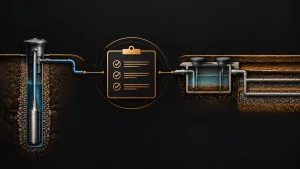
Many acreage properties near Clarksville have public water but use septic systems because public sewer is not available. Other rural properties may use both a private well and septic system.
Before buying, determine:
- Whether the home uses public water, a private well, or another water source
- The age and location of the septic tank and drain field
- Whether the septic system was designed for the home’s bedroom count
- Whether the system has been pumped or inspected recently
- Whether there are records of repairs, failures, or additions
- Whether the property has enough suitable soil for a replacement system
- Whether outbuildings or future construction could interfere with the drain field
For unimproved land, a soil evaluation or “perc” approval is especially important. A parcel can appear affordable and attractive but still be difficult or impossible to develop if the soil does not support an approved septic system.
In Montgomery County, septic permitting is handled through the Tennessee Department of Environment and Conservation. You can review the state’s official septic system permitting information before purchasing land or planning a new build.

How is financing different for a home with acreage?
Financing depends on whether you are buying an existing home, purchasing vacant land, or building a home from the ground up.
USDA financing
A USDA loan may be available for an eligible home in a qualifying rural area. USDA financing does not impose one universal acreage limit for every property. However, the property must primarily function as a residence, and the land should be typical for the area.
USDA eligibility can become more complicated when a property includes:
- Significant agricultural operations
- Commercial barns or farm buildings
- Income-producing land
- Multiple residences
- Extensive livestock facilities
- Subdivision or development potential
The USDA Single Family Housing Guaranteed Loan Program provides current program guidance. Your lender, appraiser, and buyer’s agent should evaluate the specific property rather than assuming that any rural home will qualify.
VA financing
Eligible military buyers may be able to use VA financing for a primary residence with acreage. The property still needs to satisfy lender, appraisal, and VA requirements. Acreage that is primarily agricultural, income-producing, or supported by extensive commercial improvements may require additional review.
If you are a Fort Campbell buyer, compare the property with your intended occupancy, service timeline, cash reserves, and long-term plans. Haus provides more information about how VA loans work in Clarksville.
Conventional rural financing
Conventional lenders may offer more flexibility for higher-value acreage properties, but underwriting can vary. The lender may examine the property’s marketability, comparable sales, access, improvements, and land-to-home value.
Construction and land loans
If you want to purchase land and build later, a standard home mortgage may not be the right product. You may need a land loan, construction loan, or construction-to-permanent loan.
Budget for costs beyond the home itself, including:
- Driveway construction
- Clearing and grading
- Well or water tap fees
- Septic design and installation
- Utility extensions
- Surveying and engineering
- Permits
- Fencing and gates
- Barns, sheds, and site drainage
Buying land first and building later can provide flexibility, but it also creates more financial and permitting responsibilities. Compare the complete project cost with the cost of buying an existing home on acreage.
Haus’s information about new construction in Clarksville can help you begin that comparison.

What about zoning, agricultural use, and outbuildings?
A property may be advertised as a “mini-farm,” “homestead,” or “hobby farm,” but marketing language does not replace zoning verification.
Before making an offer, confirm with the appropriate county planning and zoning office:
- Whether the property permits horses, goats, poultry, or other animals
- The number and type of animals allowed
- Setbacks for barns, sheds, fences, and arenas
- Whether an accessory dwelling is permitted
- Whether short-term rentals or farm-based businesses are allowed
- Whether there are subdivision restrictions or deed restrictions
- Whether existing structures were properly permitted
Agricultural zoning and an agricultural tax classification are also different issues. A property may be zoned for agricultural uses without receiving a reduced agricultural assessment. Conversely, a tax classification may have eligibility requirements involving land use, acreage, income, or documentation.
Do not assume that an agricultural exemption transfers automatically when a property changes ownership. Ask the county assessor and your tax professional how the property is currently classified and what you would need to maintain or change that status.
Outbuildings deserve their own inspection. Look at the condition of roofs, foundations, electrical systems, drainage, fencing, stalls, water lines, and access for equipment. A large barn may be valuable to one buyer but an expensive maintenance obligation to another.
Who is a house with acreage best suited for?
Acreage homes can be a strong fit if you want:
- Space for horses or other permitted animals
- A garden, orchard, or greenhouse
- Privacy from nearby homes
- Room for children to play outdoors
- Storage for trailers, boats, or equipment
- A hobby farm or small homestead
- A larger buffer for pets and recreation
- The ability to add permitted improvements over time
They may be less suitable if you want minimal maintenance, a short commute, sidewalks, nearby retail, or predictable utility costs. Rural properties often require more responsibility for mowing, driveway maintenance, fencing, drainage, pest control, and private systems.
You should also consider how a rural location may affect resale. The right acreage home can attract buyers who value land, but the buyer pool may be smaller than it is for a conventional home in a large subdivision.
Is acreage near Clarksville worth the commute?
For many buyers, the answer is yes. The extra land can provide privacy and flexibility that is difficult to find in a traditional neighborhood.
However, evaluate the commute before you become emotionally attached to a property. Test the route during the hours you would actually travel. Consider:
- Your preferred Fort Campbell gate
- Traffic during shift changes
- School and childcare routes
- Access to groceries and medical services
- Emergency response times
- Road conditions and winter weather
- Fuel and vehicle maintenance costs
You may also compare the financial and lifestyle tradeoffs between Clarksville and Oak Grove. Haus’s guide to the cost of living in Oak Grove versus Clarksville can help you evaluate that decision.
What should you do before making an offer?
Before you submit an offer on a Clarksville-area home with acreage, ask your real estate professional to help you verify:
- Property boundaries and legal access
- Zoning and permitted uses
- Water source and septic records
- Soil or perc information
- Floodplain and drainage concerns
- Deed restrictions and easements
- Outbuilding permits and condition
- Financing eligibility
- Insurance availability and cost
- Realistic commute times
A careful review can help you avoid buying land that does not support your intended lifestyle.
If you are searching for a home with acreage, a hobby farm, or a buildable rural property near Fort Campbell, contact Haus Realty & Management. Our experienced team can help you compare locations, evaluate property details, and move forward with a plan tailored to your goals.
Written by Randy Whetsell. This article is for general educational purposes and is not legal, tax, lending, zoning, engineering, septic, or agricultural advice. Confirm property-specific requirements with qualified local professionals and the appropriate county or state offices before making a purchase decision.