





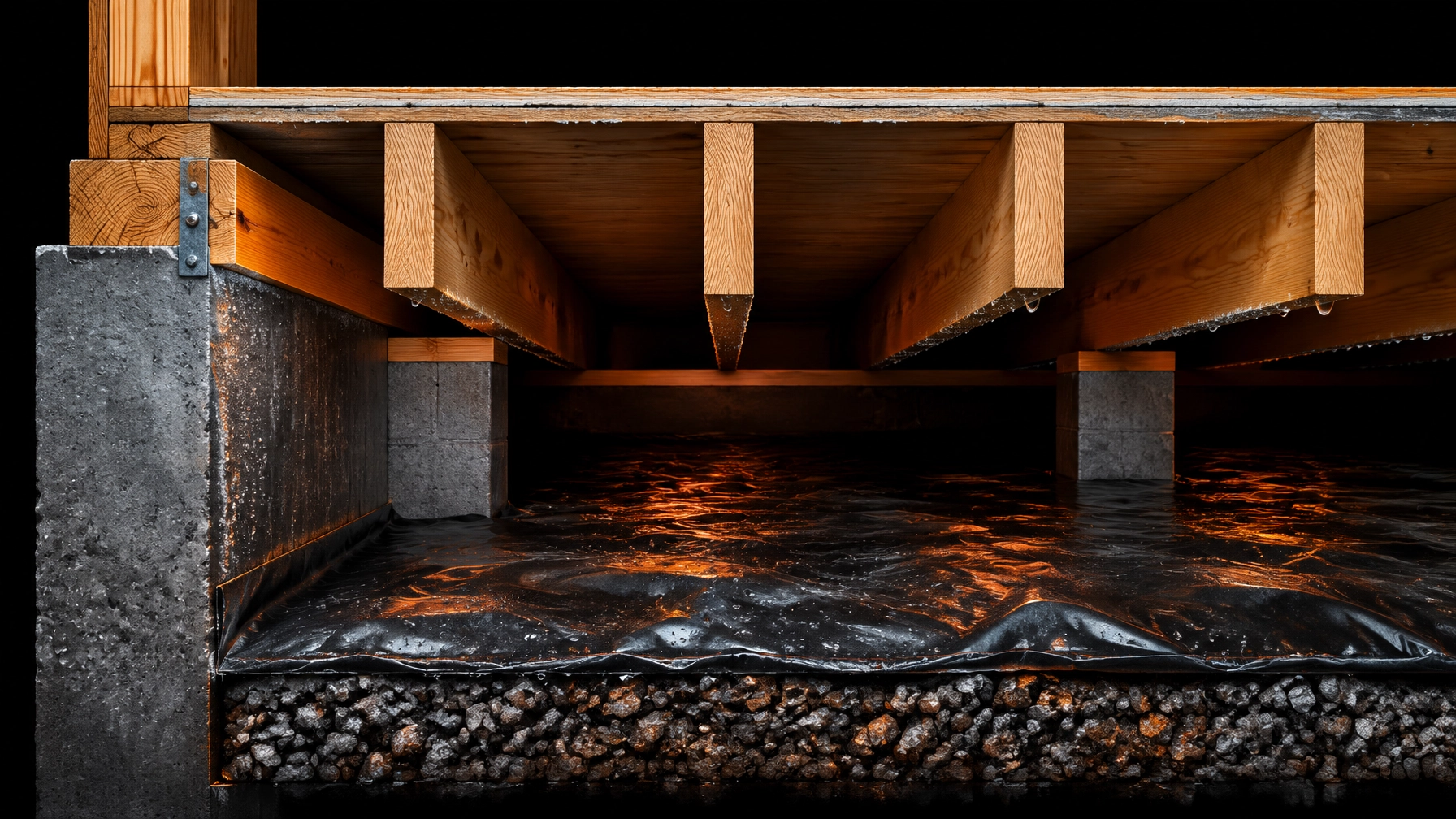

Crawl space moisture matters in Clarksville because Middle Tennessee’s clay soils, humid summers, and heavy spring and fall rainfall can keep water and humidity around a home’s foundation. Many older and mid-century Clarksville homes are built over crawl spaces rather than slabs, making moisture control an important part of protecting the structure, indoor air quality, comfort, and resale value.
If you are buying or already own a home in Montgomery County, do not treat a damp crawl space as a minor maintenance issue. Look for the source of the moisture first, then determine whether drainage improvements, a vapor barrier, encapsulation, dehumidification, or a more specialized repair is appropriate.
Why is crawl space moisture common in Clarksville TN?
Clarksville’s weather creates several conditions that can affect crawl spaces:
- Clay soils can hold water and drain slowly after storms.
- Humid summer air can enter through vents and raise crawl space humidity.
- Heavy spring and fall rain can overwhelm gutters, downspouts, and surface drainage.
- Older homes may have deteriorated vapor barriers, open foundation vents, or outdated insulation.
- Plumbing leaks, HVAC condensate, and groundwater can add moisture from inside the crawl space.
Moisture does not always appear as a large puddle. It may be present as damp soil, condensation on ducts or framing, staining on foundation walls, or humidity that remains high even when the space looks dry.
Because air from a crawl space can move into the living area through gaps around plumbing, ductwork, and flooring, the condition below the home can affect how the entire house smells and feels.

What damage can crawl space moisture cause?
Can moisture rot floor joists and sill plates?
Yes. Persistent dampness can deteriorate wood floor joists, beams, subflooring, and sill plates. These components support the floors and connect the structure to the foundation.
Wood rot may begin in a small area near a plumbing leak or foundation wall, but long-term moisture can spread across framing. Soft, damaged, or sagging wood may require a structural evaluation rather than a simple surface repair.
Can crawl space moisture cause mold and musty odors?
Yes. Mold and mildew can grow on wood, insulation, and other organic materials when humidity remains elevated. A musty odor in the living space may be one of the first signs that something is wrong below the floor.
Cleaning the visible mold without correcting the water or humidity source usually provides only a temporary result. The source may be exterior runoff, groundwater, plumbing leakage, condensation, or inadequate moisture control.
Does crawl space moisture increase HVAC costs?
It can. Humid air makes your HVAC system work harder to maintain comfortable indoor conditions. When a crawl space is damp, moisture may also affect ductwork and insulation, reducing the efficiency of the heating and cooling system.
A dehumidifier may help, but it should not be used to hide a drainage or plumbing problem. The moisture source must be addressed first.
Does moisture attract termites and other pests?
Damp conditions and deteriorated wood can make a crawl space more attractive to termites, carpenter ants, and other pests. Moisture also creates conditions in which wood-destroying insects can cause more damage.
A general home inspection is not the same as a termite or wood-destroying insect inspection. Buyers should ask whether a separate WDI inspection is appropriate, particularly when purchasing an older Clarksville home or using financing that requires additional property documentation.
Can moisture contribute to foundation movement?
Water around the foundation can increase pressure against foundation walls and contribute to erosion, settlement, or movement. Clay soils can also expand and contract as their moisture content changes.
Not every foundation crack indicates a structural emergency. However, horizontal cracks, displacement, repeated water entry, uneven floors, or doors and windows that suddenly bind should be evaluated by an appropriately qualified professional.
What should you check during a Clarksville home walkthrough?
When you inspect a home, ask to see the crawl space if it is safe and accessible. Your checklist should include:
- Standing water or muddy areas
- Damp soil that remains wet after dry weather
- Efflorescence, which appears as white, chalky deposits on foundation walls
- Water stains or active leaks
- Sagging, stained, soft, or deteriorated floor framing
- Mold or mildew on wood, insulation, or foundation surfaces
- Insulation hanging loose or falling out
- A vapor barrier that is missing, torn, folded, or not sealed
- Open, damaged, or obstructed foundation vents
- Plumbing leaks or HVAC condensate near the floor
- Mud tubes, insect wings, frass, or other pest evidence
- A dehumidifier that runs constantly or cannot maintain reasonable humidity
- Sump pumps, drainage channels, or discharge lines that appear incomplete or poorly maintained
Also walk around the exterior after rainfall. Check whether the soil slopes away from the foundation, whether gutters are clear, and whether downspouts discharge far enough away from the home.
For more inspection guidance, review Haus Realty & Management’s Clarksville TN home inspection guide for buyers.

Is a vapor barrier enough, or does the crawl space need encapsulation?
That depends on the moisture source, the crawl space design, and the level of control you need.
What does a basic vapor barrier do?
A properly installed vapor barrier reduces moisture vapor rising from the soil. It should cover the crawl space floor, overlap at seams, and be secured and sealed around walls, piers, and penetrations as appropriate.
A basic barrier can be a practical improvement when ground vapor is the primary issue and bulk water is not entering the space. However, a thin, torn sheet of plastic loosely placed over part of the soil is not the same as a professionally installed system.
What does crawl space encapsulation do?
Encapsulation generally involves sealing the crawl space more comprehensively. Depending on the design, the work may include:
- Installing a durable sealed liner over the floor
- Sealing foundation walls and support piers
- Closing or controlling foundation vents
- Air-sealing access doors and penetrations
- Adding a dedicated dehumidifier
- Installing drainage, a sump pump, or a condensate discharge system when needed
Encapsulation typically costs more than a basic vapor barrier because it involves more materials, labor, and equipment. It can provide better humidity control, but only when the underlying water problem has been addressed.
A homeowner should not accept a contractor’s recommendation without asking: Where is the moisture coming from? Is there groundwater, surface runoff, plumbing leakage, or condensation? What will happen to water that enters the crawl space? How will humidity be monitored after the work is complete?

What are the practical crawl space moisture fixes?
The right repair depends on the cause.
Should the grading be changed?
If soil slopes toward the foundation, regrading may direct surface water away from the home. This is often one of the most important first steps.
Should downspouts be extended?
Yes, when roof runoff is discharging beside the foundation. Extensions or underground drainage may move water farther away and reduce saturation near the crawl space.
Are foundation vents always the solution?
Not necessarily. In a humid climate, open vents can allow warm, moisture-filled air into the crawl space. Some homes benefit from controlled ventilation, while others are better served by a properly designed sealed and dehumidified crawl space.
Do not simply close vents without addressing drainage and humidity control.
When are sump pumps or drainage systems needed?
A sump basin, interior drainage channel, exterior drainage, or another water-management system may be appropriate when groundwater or recurring bulk water cannot be controlled through grading and downspouts alone.
Have the water path evaluated before selecting equipment. A pump without a reliable discharge route will not solve the problem.
How does crawl space moisture affect a home inspection and negotiation?
A home inspector may document standing water, dampness, damaged framing, poor drainage, mold-like growth, deteriorated insulation, or inadequate vapor-barrier coverage. The inspector may recommend additional evaluation by a structural specialist, pest professional, mold professional, drainage contractor, or crawl space specialist.
The inspection finding does not automatically mean the buyer should cancel the purchase. It does mean you need to understand the scope and cost before proceeding.
Depending on the contract and the findings, a buyer may request:
- Seller remediation before closing
- A licensed contractor’s evaluation
- Repair documentation and warranties
- A seller-paid credit
- A price adjustment
- A structural or specialty inspection
- Additional time to investigate
Freddie Mac reported that the average 30-year fixed mortgage rate was 6.95% for the week ending September 17, 2026. At that borrowing cost, financing a major repair through a higher purchase price can affect your monthly payment for years. Ask your lender and agent to compare the financial effect of a seller credit, repair, or price adjustment rather than evaluating the concession only by its headline dollar amount. Review the official Freddie Mac PMMS data.
What does Haus Realty & Management recommend?
“Crawl space moisture should be evaluated as a system, not as an isolated stain or puddle,” says a Haus Realty & Management representative. “Buyers should identify how water is getting there, document the condition, and obtain qualified opinions before agreeing to a repair or credit. Owners should keep invoices, photographs, humidity readings, and service records so the work can be explained clearly during a future sale.”
That practical documentation can help you distinguish routine maintenance from a substantial structural or environmental concern.
Homeowners should also keep crawl space maintenance connected to the rest of the property. Haus resources on fall home maintenance for Clarksville homeowners, late-summer maintenance, and preparing a Clarksville home for cooler weather can help you organize seasonal checks of drainage, HVAC equipment, plumbing, and exterior conditions.
What should you do next?
If you are buying a Clarksville home, inspect the crawl space during your due-diligence period, ask questions about every moisture warning sign, and obtain specialty evaluations when recommended.
If you already own the home, start outside: check grading, gutters, and downspouts after the next heavy rain. Then inspect the crawl space for standing water, wood damage, insulation failure, pest evidence, and humidity. Correct the source before investing in encapsulation or other improvements.
For personalized guidance while buying, selling, or maintaining a home in Clarksville and Montgomery County, contact Haus Realty & Management. Our experienced team can help you understand inspection findings, coordinate the next step, and evaluate how a property condition may affect your real estate decisions.
Frequently asked questions about crawl space moisture in Clarksville
Is a damp crawl space common in Clarksville TN?
It is a common concern because of humid weather, heavy seasonal rain, clay soils, and the number of older and mid-century homes built over crawl spaces. “Common” does not mean harmless; recurring moisture should be investigated.
Is a vapor barrier the same as encapsulation?
No. A vapor barrier primarily limits moisture vapor from the soil. Encapsulation is a broader moisture-control approach that may seal floors, walls, piers, vents, and access points and may include dedicated dehumidification.
Should I buy a home with crawl space moisture?
Possibly, but only after you understand the source, severity, repair scope, and cost. Use the inspection period to obtain qualified evaluations and negotiate appropriate repairs or credits.
Can a dehumidifier solve crawl space moisture?
A dehumidifier can control humidity, but it cannot correct exterior drainage, groundwater, plumbing leaks, or structural damage. It should be part of a moisture-control plan rather than the only response.
Who should evaluate damaged crawl space framing?
A qualified structural professional should evaluate framing that is soft, sagging, significantly stained, or visibly deteriorated. A home inspector can identify concerns, but may recommend a more specialized evaluation.






