





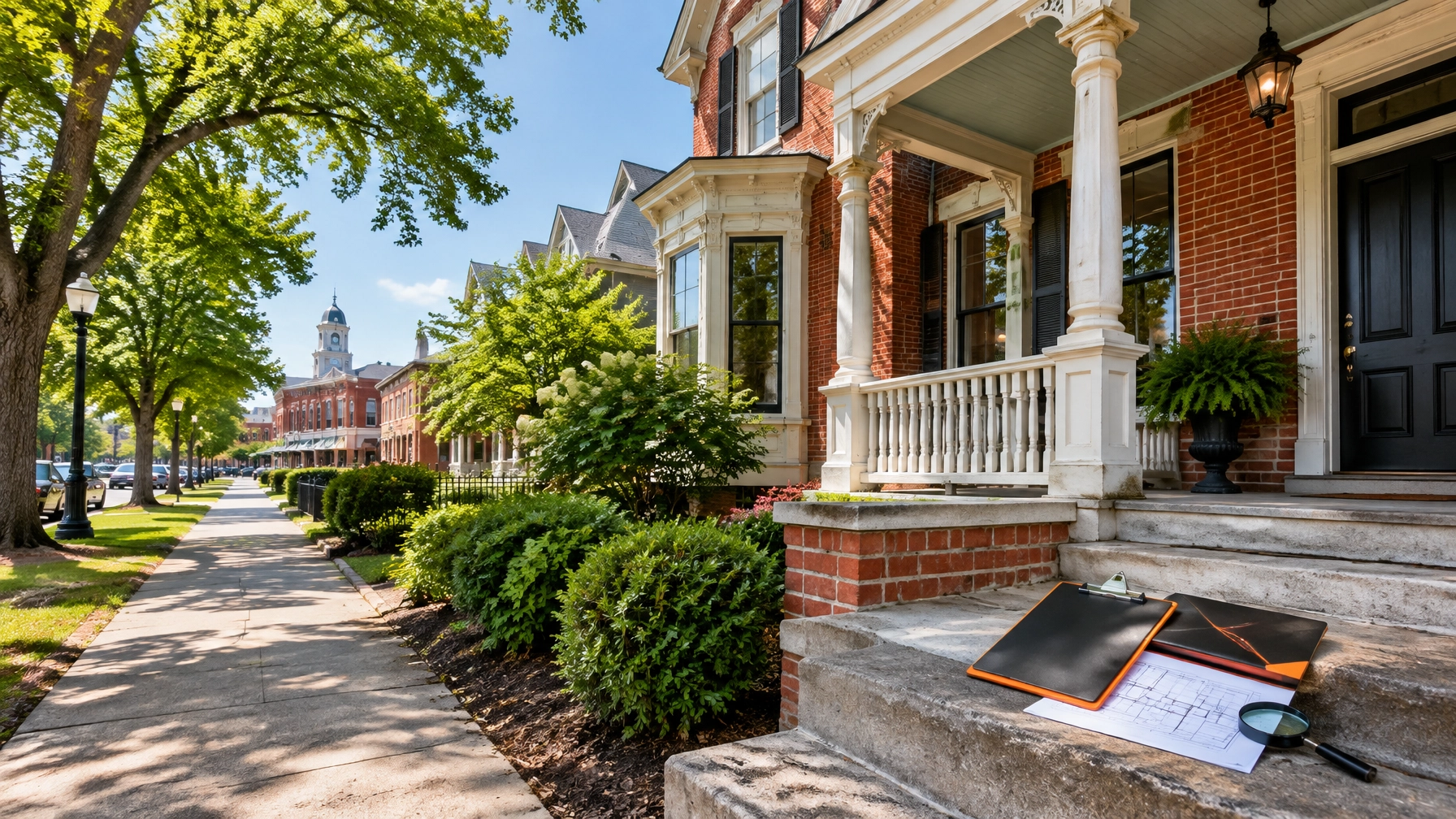

Buying a historic home in Clarksville, Tennessee can give you distinctive architecture, established landscaping, and a meaningful connection to the community. Before you make an offer, however, confirm the property’s historic designation, understand possible exterior-change approvals, and complete a deeper inspection than you might order for a newer home.
What is the first thing to confirm before buying a historic home in Clarksville?
Determine whether the property is:
- Located inside a local historic zoning district;
- Individually listed or eligible for the National Register of Historic Places; or
- Simply an older home with historic character but no formal designation.
These classifications are not interchangeable. A National Register listing generally does not automatically create the same local restrictions as a municipal historic zoning district. By contrast, a property inside a local district may be subject to design review for exterior alterations, additions, demolition, relocation, and certain site improvements.
Clarksville’s Regional Historic Zoning Commission and Regional Planning Commission oversee local historic zoning and design-review processes. Downtown-area historic zones have included Emerald Hill, Dog Hill, and Main Street, but you should verify the current district boundary and requirements for the specific address through the Clarksville-Montgomery County Regional Planning Commission.
A home just outside a district boundary may not be subject to the same local review. Do not rely only on a listing description or a seller’s understanding of the property’s status.
Do historic homes in Clarksville require approval for exterior changes?
They may. If the property is in a local historic district, ask the planning staff which proposed projects require review or a Certificate of Appropriateness before you close.
Potentially regulated work may include:
- Replacing windows or exterior doors;
- Altering siding, masonry, trim, or porches;
- Changing a roof visible from the street;
- Building an addition, garage, fence, or detached structure;
- Installing exterior lighting or signage;
- Demolishing or relocating a structure; and
- Making substantial changes to the front façade.
Routine maintenance and minor work may be treated differently from an alteration, but you should confirm that distinction before purchasing materials or signing a contractor agreement. The local design-review process and applicable zoning ordinance are more reliable than informal advice from a contractor, online forum, or previous owner.
Ask for the applicable design guidelines, application requirements, meeting schedule, and estimated review timeline. If your ownership plan includes a screened porch, modern windows, solar equipment, an addition, or a new driveway, investigate those projects before making an offer.
What should a historic-home inspection include?
A standard home inspection is important, but it may not be enough for an older property. Your inspection period should allow time for specialists to evaluate systems that may be original, modified over decades, or concealed behind later finishes.
Consider discussing these inspections with your buyer agent and qualified professionals:
- Structural foundation, framing, settlement, and moisture conditions;
- Roof age, flashing, gutters, chimney, and masonry;
- Electrical service, wiring type, grounding, outlets, and panel capacity;
- Plumbing supply lines, drain lines, sewer connection, and water pressure;
- Heating and cooling equipment, ductwork, ventilation, and fuel systems;
- Wood-destroying insects and concealed wood damage;
- Attic insulation, ventilation, and roof framing;
- Crawl-space moisture, drainage, and vapor conditions;
- Fireplaces, flues, wood stoves, and other solid-fuel equipment; and
- Any renovations that appear unpermitted or poorly documented.

Older homes can have strong craftsmanship, but they can also contain layered repairs. A newer electrical panel does not necessarily mean all branch wiring is modern. A remodeled bathroom does not confirm that the plumbing behind the wall was replaced. Ask inspectors to identify both the visible condition and the likely remaining service life of major components.
Are lead, asbestos, radon, or flood concerns relevant?
They can be, depending on the property’s age, condition, location, and renovation history.
For homes built before 1978, federal lead-based paint disclosure requirements generally apply. Review the seller’s disclosure, available reports, and the EPA/HUD pamphlet before signing a purchase contract. If you plan to disturb painted surfaces, use a lead-safe certified contractor and consider a lead inspection or risk assessment. Review the EPA’s lead-based paint disclosure guidance for current federal information.
Asbestos-containing materials may be present in older floor tile, pipe insulation, siding, roofing, textured finishes, or other building materials. You cannot reliably identify asbestos by appearance alone. If renovation could disturb suspect materials, ask an appropriately qualified professional about sampling and management. Do not cut, scrape, or remove questionable materials yourself.
Radon testing is also worth considering. The EPA recommends corrective action at or above 4 picocuries per liter (pCi/L). A test during the inspection period can help you determine whether mitigation should be included in your budget or negotiations.
Flood risk is property-specific. Check the address through FEMA’s Flood Map Service Center, ask your insurance professional for a quote, and review drainage, foundation moisture, prior water intrusion, and any available claims or repair documentation. A property outside a mapped high-risk zone can still experience localized drainage problems.
How should you evaluate utilities and documentation?
Ask for records before you assume a system is original, updated, or properly permitted. Useful documentation may include:
- Roof, HVAC, electrical, plumbing, and foundation invoices;
- Permits for additions, conversions, and major renovations;
- Prior inspection reports;
- Chimney or fireplace service records;
- Pest-treatment documentation;
- Survey, easement, and boundary information;
- Utility bills or service information; and
- Any historic designation, district, grant, or preservation correspondence.
Confirm how the home receives water, sewer, gas, and electric service. Determine whether the main utility lines and service panels can support your plans. If the property uses older infrastructure, ask contractors to explain replacement access, likely cost, and whether local review could affect exterior work.
You should also verify that finished rooms, additions, accessory structures, and converted attic or basement areas are represented accurately in the public record and listing information. Your agent, lender, inspector, and closing professionals can help identify questions, but a title professional or attorney should address legal interpretation.
Can you finance a historic home with a conventional, FHA, or VA loan?
Often, but the property’s condition and the lender’s requirements matter. Historic character alone does not automatically prevent financing. However, deferred maintenance, unsafe systems, active water intrusion, structural problems, or incomplete renovations may affect the appraisal, loan approval, insurance, or closing timeline.
Ask your lender early:
- Whether the planned loan permits the property’s current condition;
- How the appraisal will address unique architectural features;
- Whether repairs must be completed before closing;
- Whether a renovation-loan option is appropriate; and
- What insurance documentation is required.
For mortgage-rate context, Freddie Mac’s Primary Mortgage Market Survey reported averages of 7.03% for a 30-year fixed mortgage and 6.42% for a 15-year fixed mortgage for the week ending September 24, 2026. These are national survey averages, not a quote for your loan. Review current terms directly with your lender at Freddie Mac PMMS.
A unique home may also require an appraiser with experience evaluating older or architecturally distinctive properties. Ask your lender how the appraisal process will account for renovations, outbuildings, location, and comparable sales.
What are the realistic tradeoffs of owning a historic home?
The benefits may include character, mature streetscapes, original millwork, higher ceilings, and a location near established Clarksville destinations. A home near Downtown Clarksville may also offer architectural details and neighborhood context that are difficult to reproduce in newer construction.
The tradeoffs can include:
- More frequent exterior maintenance;
- Specialized contractors and materials;
- Higher repair costs for masonry, windows, roofs, or trim;
- Longer planning timelines for exterior changes;
- Limited ability to remove original features;
- Higher insurance complexity;
- Unexpected conditions behind walls or ceilings; and
- The need to document repairs carefully.
The right question is not simply, “Is this home beautiful?” Ask whether the home’s condition, rules, systems, and long-term maintenance needs fit your budget and lifestyle.

What does a local Haus expert recommend?
Micheal Allen Holzhauer, Team Leader/Realtor, recommends that buyers treat the inspection period as a planning window rather than a formality. Confirm the property’s district status first, then match your intended improvements to the applicable review process before you finalize your renovation budget.
Micheal Allen Holzhauer
Team Leader/Realtor
Micheal@YourTennesseeHomes.com
(931) 627-3205
For buyers connected to military relocation or veteran services, Haus is also a “Tennessee Silver Level Veteran Ready Business” focused on clear, responsive support throughout the purchase process.
What questions should you ask before making an offer?
Is the property inside a Clarksville historic district?
Ask the Regional Planning Commission to verify the address, district boundary, contributing status, and applicable design guidelines.
Can I replace the windows or add a porch?
Possibly, but the answer depends on the property’s local designation, the proposed design, visibility from public areas, and the approval process. Obtain written guidance before budgeting the project.
Should I waive inspections because the home looks well maintained?
No. Historic homes should receive careful inspections even when the visible finishes appear excellent. A well-preserved interior does not confirm the condition of wiring, plumbing, foundation, roof structure, or concealed moisture areas.
How much should I budget for repairs?
There is no dependable one-size-fits-all estimate. Use specialist inspections, contractor proposals, insurance quotes, and documented maintenance history to build a property-specific budget with a contingency reserve.
Where can I find historic homes currently for sale?
You can review current Clarksville-area listings through the Haus website and Haus property search. Availability, pricing, and property details change, so verify information before scheduling a showing or preparing an offer.
Is a Clarksville historic home right for you?
A historic home can be an excellent fit if you value architectural character and are prepared to maintain the property thoughtfully. It may be a poor fit if you need immediate, unrestricted remodeling, predictable maintenance costs, or a completely modernized system package.
Before you commit, verify the designation, investigate the rules, inspect the structure and systems, review environmental considerations, confirm insurance and financing, and document your renovation plans. Haus can help you evaluate the purchase from the first showing through closing.
Request a Clarksville buyer consultation.
Clarksville office: (931) 201-9694
Visit hausrm.com for buyer guidance and current real estate services.
This article is for general educational purposes and is not legal, tax, engineering, inspection, insurance, or lending advice. Verify property-specific requirements with the appropriate Clarksville-Montgomery County officials, qualified professionals, and your lender.






