





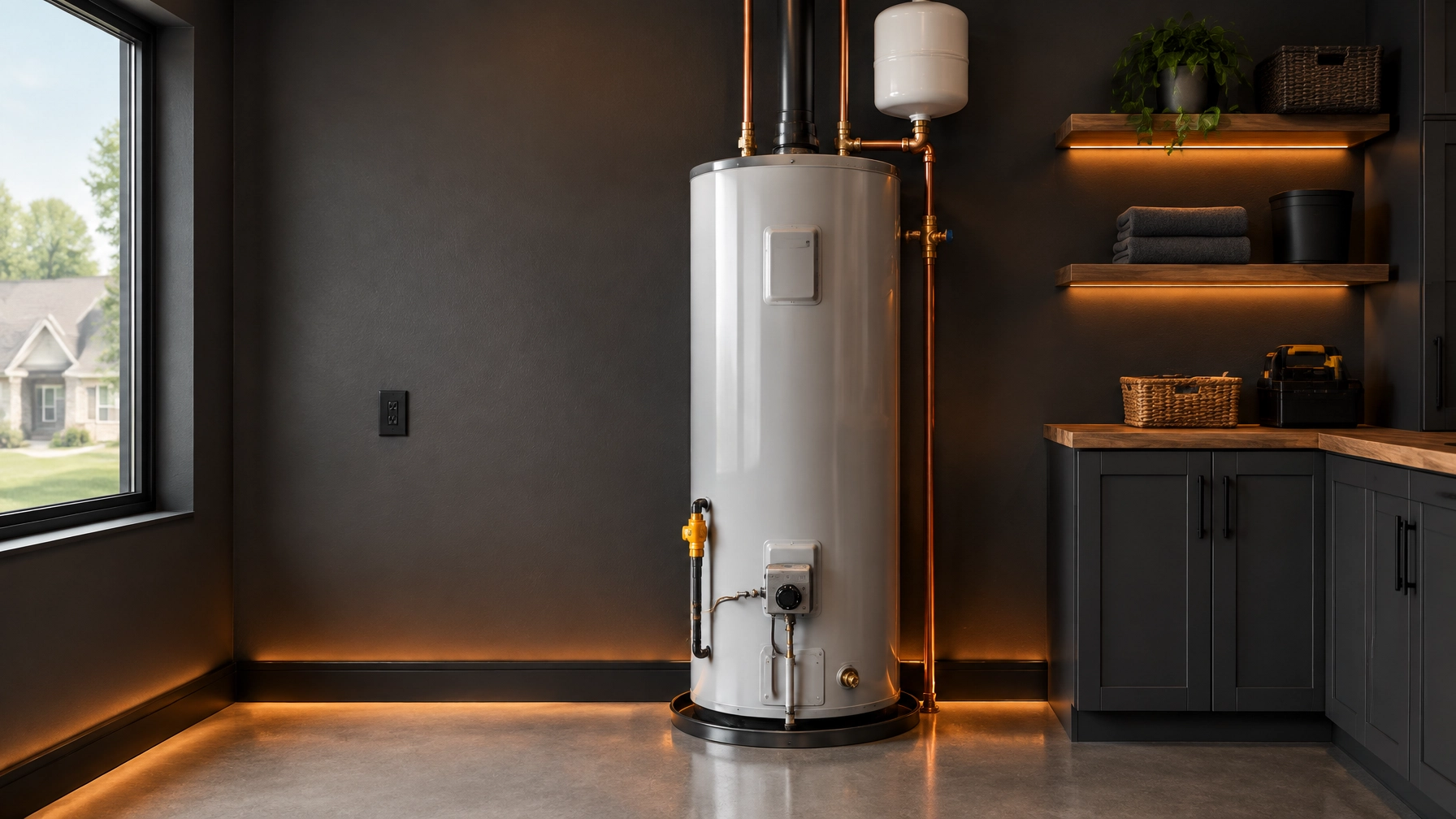

If you are searching for water heater replacement Clarksville TN, the short answer is this: inspect your water heater regularly, flush tank-style units as recommended, watch for leaks and corrosion, and begin planning replacement when the unit approaches 10 years old or develops recurring problems.
Clarksville homeowners should pay particular attention to mineral buildup and winter pipe exposure. The City of Clarksville’s 2024 water quality report recorded average water hardness of approximately 103 parts per million, or 6.0 grains per gallon. That level can contribute to sediment and scale inside water-heating equipment over time.
Your home’s water heater is not something you should ignore until it fails. A small maintenance issue can become a loss of hot water, a flooded utility room, or avoidable damage to flooring and nearby belongings.
How does Clarksville water affect a water heater?
Clarksville’s municipal water supply comes from the lower Cumberland River. The city’s 2024 Water Quality Report provides the most useful local reference for hardness and other water characteristics.
When moderately hard water is heated, calcium and magnesium minerals can settle inside a tank. Over time, that sediment may:
- Reduce the amount of usable hot water
- Make the heater rumble, pop, or crackle during operation
- Reduce heating efficiency
- Damage electric heating elements
- Increase wear on valves and other components
- Shorten the useful life of the unit
If your property is served by a utility outside the City of Clarksville, including a system in the broader Red River area, review that provider’s water-quality report rather than assuming its water characteristics are identical.
How often should Clarksville homeowners maintain a water heater?
For most homeowners, a practical schedule includes a visual inspection every month, a professional inspection at least annually, and maintenance based on the manufacturer’s instructions.
The U.S. Department of Energy’s Energy Saver Guide recommends practices such as reducing sediment, insulating water-heating equipment and pipes, and using a temperature setting appropriate for household safety and efficiency.
A maintenance visit may include:
- Flushing sediment from a tank-style heater
- Checking the temperature and pressure relief valve
- Inspecting the anode rod
- Looking for corrosion around fittings and connections
- Checking the drain valve for seepage
- Reviewing gas, electrical, and venting components where applicable
- Inspecting insulation on exposed hot-water lines
- Descaling a tankless water heater
For a traditional tank heater, ask a qualified professional whether annual flushing is appropriate for your system. Tankless units generally require periodic descaling, and mineral-heavy conditions may make regular service especially important.

What temperature should a residential water heater be set to?
The U.S. Department of Energy generally identifies 120°F as a suitable setting for most households. This can help balance comfort, energy use, and scald prevention.
Before adjusting the temperature, consider:
- The manufacturer’s instructions
- The needs of children, older adults, or anyone with limited mobility
- Whether your home uses a mixing or tempering valve
- Whether your system is part of a larger or specialized installation
Do not open electrical access panels or work on gas controls unless you are qualified to do so. If you are uncertain about the setting or the equipment’s condition, ask a licensed professional to evaluate it.
What are the warning signs of water heater failure?
A water heater may need immediate attention when you notice:
- Water pooling around the base
- Rust-colored hot water
- Corrosion on the tank or fittings
- A leaking pressure-relief discharge pipe
- Rumbling, popping, or banging sounds
- Inconsistent water temperature
- Less hot water than your household normally needs
- Repeated pilot-light or control problems
- Rising energy bills without a clear explanation
- A unit that is more than 10 years old
A leak from the tank itself generally indicates internal corrosion and is usually a replacement issue rather than a simple repair. Leaks from a valve or connection may be repairable, but you should still address them promptly.
When should you repair versus replace a water heater?
Repair may make sense when the unit is relatively new and the problem involves a replaceable component, such as a thermostat, heating element, valve, or igniter.
Replacement deserves serious consideration when:
- The unit is approximately 10 years old or older.
- The tank is leaking or visibly corroded.
- The system requires repeated repairs.
- The heater no longer provides enough hot water.
- Sediment has caused persistent noise or performance problems.
- Energy use appears to be increasing.
- You are preparing to sell or rent the property and want to reduce the risk of a failure during a transaction or tenancy.
Energy efficiency is another factor. When replacement is necessary, compare the unit’s capacity, fuel type, efficiency rating, installation requirements, and expected maintenance, not just the initial purchase price.
A tankless system, conventional tank, heat pump water heater, electric model, gas model, or propane system may each be appropriate in different homes. The right choice depends on household size, existing utility connections, available space, budget, and long-term plans.
What should you do before a Tennessee winter?
Clarksville winters are generally manageable, but freezing temperatures can still damage exposed pipes in garages, crawlspaces, unfinished basements, and exterior walls.
Before cold weather arrives:
- Insulate exposed hot and cold water lines.
- Seal drafts near the water heater and plumbing penetrations.
- Keep garage doors closed during freezing weather.
- Confirm that the area around the heater is clear of stored items.
- Identify the water shutoff valve before an emergency occurs.
- Check for dripping faucets or vulnerable exterior plumbing.
- Ask a qualified professional whether heat tape or additional protection is appropriate.
If a pipe freezes or the water heater begins leaking, shut off the water supply if it is safe to do so. For an electric unit, turn off the dedicated breaker only if there is no standing water near electrical components. For gas equipment, do not attempt unfamiliar controls or repairs. Contact a licensed plumber or emergency service provider.

What is Haus Realty & Management’s advice for homeowners?
Randy Whetsell, Principal Broker at Haus Realty & Management, recommends a planning-first approach to major home systems: document the equipment’s age, retain service records, and address warning signs before they become an emergency.
That advice is especially useful if you are considering selling, renting, or moving away from Clarksville. A water heater that fails shortly before closing or during a tenant’s lease can create scheduling problems, water damage, and avoidable stress.
Homeowners preparing for a sale can review Haus’s Clarksville home maintenance checklist and learn which repairs deserve attention before listing. If you are evaluating your home’s market position, you can also search Clarksville properties or contact Haus Realty & Management for guidance about the broader real estate decision.
Haus is a real estate and property management company, not a plumbing or contracting firm. This article is intended as maintenance education so you can recognize problems, plan responsibly, and speak with the appropriate licensed professional.
What should Clarksville rental owners know?
If you own a Clarksville rental property, water heater maintenance should be part of your preventive maintenance calendar. A documented inspection and service history can help you:
- Reduce emergency maintenance calls
- Protect flooring and surrounding finishes
- Improve tenant experience
- Identify replacement needs before a vacancy
- Budget for capital improvements
- Support more consistent property records
Haus Realty & Management owners can review maintenance services through Haus Rentals TN and learn more about Clarksville property management. Tenants should report leaks, unusual sounds, rusty water, or loss of hot water promptly rather than attempting repairs themselves.

What is the simplest annual water heater checklist?
Use this checklist as a starting point:
- Check the unit’s age and installation date.
- Look for moisture, rust, and corrosion.
- Listen for new rumbling or popping sounds.
- Confirm that the area around the heater is clear.
- Check exposed pipes for insulation and damage.
- Ask whether the tank should be flushed.
- Have the pressure-relief valve and anode rod evaluated.
- Schedule descaling for a tankless unit when recommended.
- Review the temperature setting.
- Begin replacement planning before the unit reaches the end of its expected service life.
If you see active leaking, turn off the water supply when safe and seek professional help quickly.
For Clarksville homeowners, the best water heater strategy is preventative: understand your local water conditions, maintain the system consistently, and plan replacement before failure forces an emergency decision. If you need help evaluating how a maintenance issue may affect your sale, rental, or long-term property plan, contact Haus Realty & Management.
This article provides general maintenance education and is not plumbing, electrical, gas, legal, insurance, or contracting advice. Consult the water heater manufacturer and a properly licensed professional for system-specific recommendations.






