





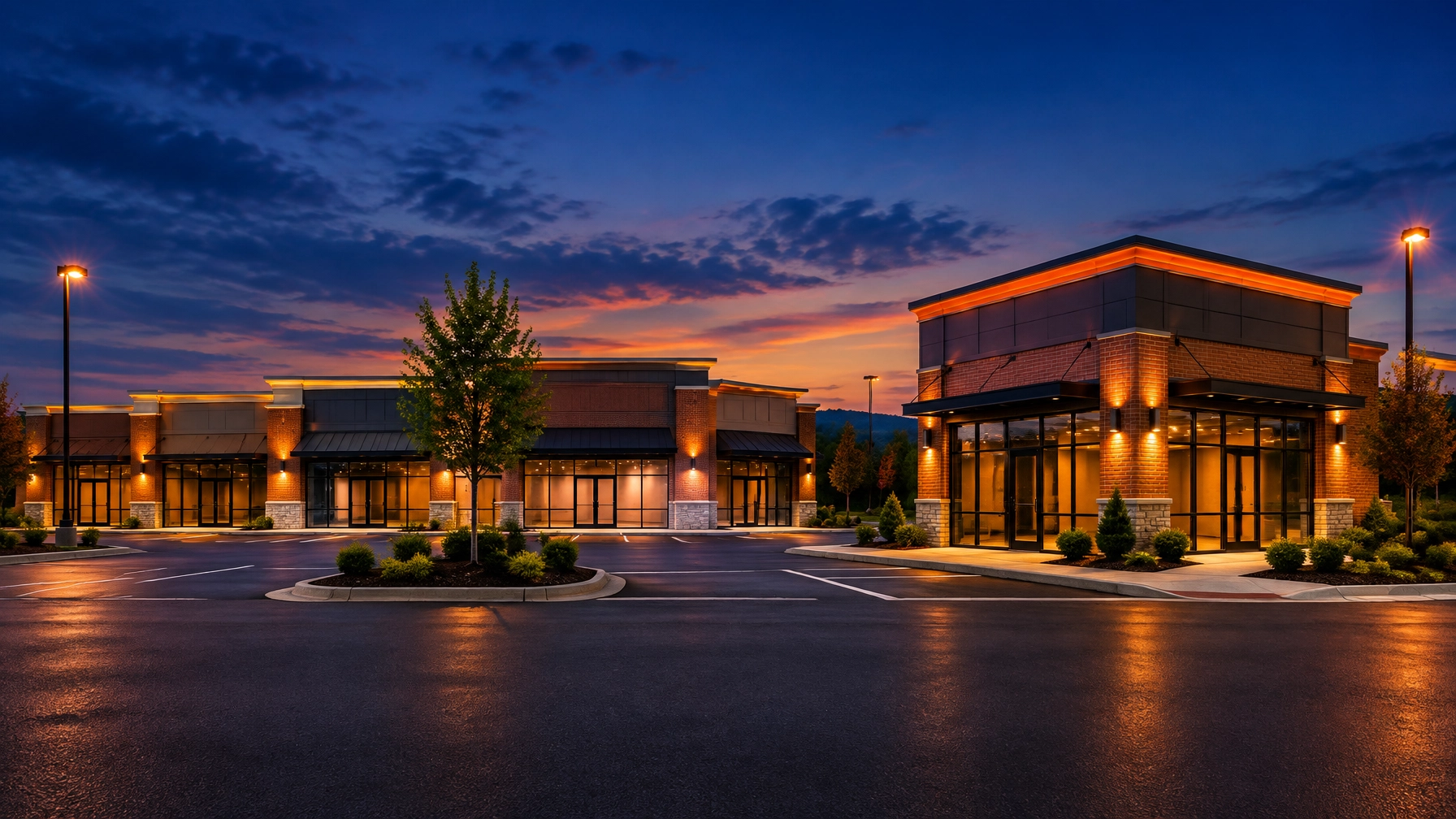

What is a triple net lease, and is it a good fit for a Clarksville, Tennessee investor or business owner? A triple net, or NNN lease, is a commercial lease in which the tenant generally pays base rent plus three major property expenses: real estate taxes, insurance, and common area maintenance.
NNN leases can offer investors more predictable income and fewer day-to-day expense obligations. For tenants, they may provide control over a commercial location at a lower base rent than a full-service gross lease. However, the tenant also assumes more responsibility for rising costs and property operations.
The lease language matters. Before signing or relying on an NNN investment analysis, ask qualified legal and accounting professionals to review the agreement, expense definitions, caps, exclusions, renewal provisions, and repair obligations.
What are the three “nets” in an NNN lease?
The three nets are:
- Property taxes
- Property insurance
- Common area maintenance, or CAM
A tenant usually pays these costs in addition to base rent. In a multi-tenant property, the tenant normally pays a proportional share based on the size of its leased premises compared with the total rentable area.

1. Property taxes
The tenant may reimburse the landlord for its share of county or municipal property taxes. The lease should explain whether the tenant pays:
- Current real estate taxes
- Tax increases over a base year
- Special assessments
- Taxes related to improvements
- Administrative fees associated with tax billing
Property taxes can change over time. A tenant should request recent tax bills and ask how future increases will be allocated.
2. Property insurance
Insurance obligations can include the building’s property coverage, liability insurance, or other policies required by the landlord or lender. The tenant may pay a share of the landlord’s insurance premium or may be required to carry separate business coverage.
Do not assume that “insurance” means every type of loss is covered. Your lease may distinguish between building insurance, tenant improvements, business property, general liability, and casualty events.
3. Common area maintenance
CAM includes the costs of operating and maintaining areas shared by multiple tenants. Depending on the property and the contract, CAM may include:
- Parking lot repairs and striping
- Landscaping and irrigation
- Snow or ice removal, if applicable
- Exterior lighting
- Common-area utilities
- Security
- Trash service
- Property management or administrative fees
- Maintenance of shared driveways, sidewalks, and drainage systems
CAM is often the most complicated “net” because the definition can vary significantly from one lease to another. Ask whether the lease includes capital repairs, roof replacement, structural work, or management fees. Also ask whether the landlord must provide an annual reconciliation and supporting documentation.
How is an NNN lease different from a gross lease?
The biggest difference is who carries the property’s operating-cost risk.
| Lease structure | Typical expense responsibility | Main risk |
|---|---|---|
| Full-service gross | Landlord generally pays property taxes, insurance, and building operating expenses; tenant pays one combined rent | Landlord carries more expense risk |
| Modified gross | Landlord and tenant divide expenses according to negotiated terms | Risk is shared and depends on the agreement |
| Triple net | Tenant pays base rent plus taxes, insurance, and CAM | Tenant carries more operating-cost risk |
A gross lease can be easier for a tenant to budget because the rent is more inclusive. An NNN lease may show a lower base rent, but the tenant’s total occupancy cost can rise when taxes, insurance, or maintenance costs increase.
A modified gross lease sits between the two. For example, the landlord might pay property taxes and insurance while the tenant pays utilities and certain maintenance costs. Another agreement may use a base year, requiring the tenant to pay only increases above that year’s expenses.
Never compare advertised base rents without comparing the full estimated occupancy cost.
Who carries risk in an NNN lease?
An NNN lease shifts substantial operating risk to the tenant, but it does not eliminate the landlord’s responsibilities.
The tenant may carry risk for:
- Rising property taxes
- Higher insurance premiums
- Unplanned CAM expenses
- Parking lot, landscaping, or exterior maintenance costs
- Utility increases
- Compliance with operating and maintenance standards
- Certain repairs or replacements, depending on the lease
The landlord may still be responsible for:
- Major structural components
- Roof and foundation obligations
- Financing and ownership decisions
- Compliance with lender requirements
- Property-level oversight
- Vacancy and tenant-credit risk
- Capital improvements excluded from the tenant’s obligations
Some NNN leases are closer to an “absolute net” structure, while others limit the tenant’s responsibility through expense caps, exclusions, or landlord repair obligations. The label alone does not tell you who pays for every future cost.
Where are NNN leases used in Clarksville?
NNN leases are common in commercial segments where tenants occupy defined premises and share limited property infrastructure.
In Clarksville, investors and business owners are most likely to encounter NNN structures in:
- Retail pads near high-traffic commercial corridors
- Small multi-tenant strip centers
- Freestanding retail buildings
- Service-oriented commercial properties
- Flex and light-industrial buildings
- Showroom and warehouse spaces
The Wilma Rudolph Boulevard and 101st Parkway areas are especially relevant for investors evaluating retail pads, small shop spaces, and light-industrial or flex opportunities. These corridors include a mix of high-visibility retail, service businesses, growing commercial development, and properties that may use expense pass-throughs.
The right property depends on your strategy. A retail pad with a strong tenant may offer a relatively simple income profile, while a small strip center can provide multiple income streams but requires more attention to CAM administration, tenant turnover, and maintenance coordination.
How do investors read an NNN cap rate?
A capitalization rate, or cap rate, compares a property’s annual net operating income with its purchase price:
Cap rate = Net operating income ÷ purchase price
For example, suppose a commercial property produces $180,000 in annual net operating income and is offered for $3 million:
$180,000 ÷ $3,000,000 = 6% cap rate
Because tenants pay many property expenses under an NNN structure, the stated NOI may appear more stable than the NOI of a gross-leased building. However, investors still need to verify the numbers.
Review:
- Whether the tenant is current on all reimbursements
- The remaining lease term
- Renewal options
- Scheduled rent increases
- Tenant financial strength
- Vacancy and credit-loss assumptions
- Roof, structure, and major-system conditions
- CAM history and reconciliation statements
- Property taxes and insurance trends
- Expected capital expenditures
A 6% cap rate is not automatically better than a 5.5% cap rate. The higher yield may reflect shorter lease duration, weaker tenant credit, deferred maintenance, an inferior location, or greater expense volatility.

What does the current interest-rate environment mean for NNN investors?
Freddie Mac’s 30-year fixed rate averaged 7.28% for the week ending October 1, 2026. This is a national residential mortgage benchmark, not a commercial loan quote. Commercial debt pricing varies by lender, property type, loan term, leverage, tenant quality, and investor experience.
Still, the benchmark provides useful national rate context because commercial borrowing costs generally track broader interest-rate conditions.
For a simple illustration, a quarter-point change in a loan rate can affect annual debt service and therefore the cash flow available to an investor. The effect depends on the loan amount, amortization period, interest rate, and loan structure. Ask your lender to model multiple rate scenarios rather than underwriting only the quote available today.
Review the current benchmark directly through Freddie Mac’s PMMS page.
Is an NNN lease right for you?
An NNN lease may be worth considering if you are:
- Seeking commercial investment income
- Comfortable reviewing operating expenses
- Buying a property with a financially strong tenant
- Looking for a longer-term lease structure
- Prepared to monitor taxes, insurance, and CAM
- Willing to evaluate tenant and location risk carefully
It may be less suitable if you want highly predictable total occupancy costs, have limited reserves, or do not want responsibility for variable property expenses.
For tenants, compare the estimated all-in cost, not just the advertised base rent. For investors, underwrite the property using realistic expense growth, renewal assumptions, capital needs, and vacancy risk.
The Haus frequently asked questions page can help you find answers to broader real estate and property-management questions, but your attorney should interpret the specific language of your commercial lease.
Haus expert perspective: Randy Whetsell
Randy Whetsell, broker with Haus Realty & Management, emphasizes the value of matching the commercial property and lease structure to the owner’s or tenant’s actual operating goals.
For Clarksville commercial owners, that means evaluating tenant quality, location, lease economics, maintenance responsibilities, and long-term property performance together. For business owners, it means understanding the full cost of occupancy before committing to a location.
Haus Realty & Management supports Clarksville owners and tenants with local market guidance, property evaluation, transaction coordination, and practical communication throughout the commercial real estate process. The team’s local knowledge can help you identify questions to raise with your lender, attorney, insurance professional, and other advisors.
Ask Haus about commercial space in Clarksville
Whether you are evaluating a retail pad, small strip center, or light-industrial space near Wilma Rudolph Boulevard or 101st Parkway, the lease structure can materially affect your budget and investment return.
Ask Haus about commercial space in Clarksville. Share whether you are buying, leasing, investing, or expanding your business so the conversation can focus on the properties and terms that fit your objectives.
Important: This article is for general educational purposes and is not legal, tax, accounting, lending, or investment advice. NNN lease obligations vary by contract. Ask qualified legal and financial professionals to review the lease and property economics before you sign or invest.






