





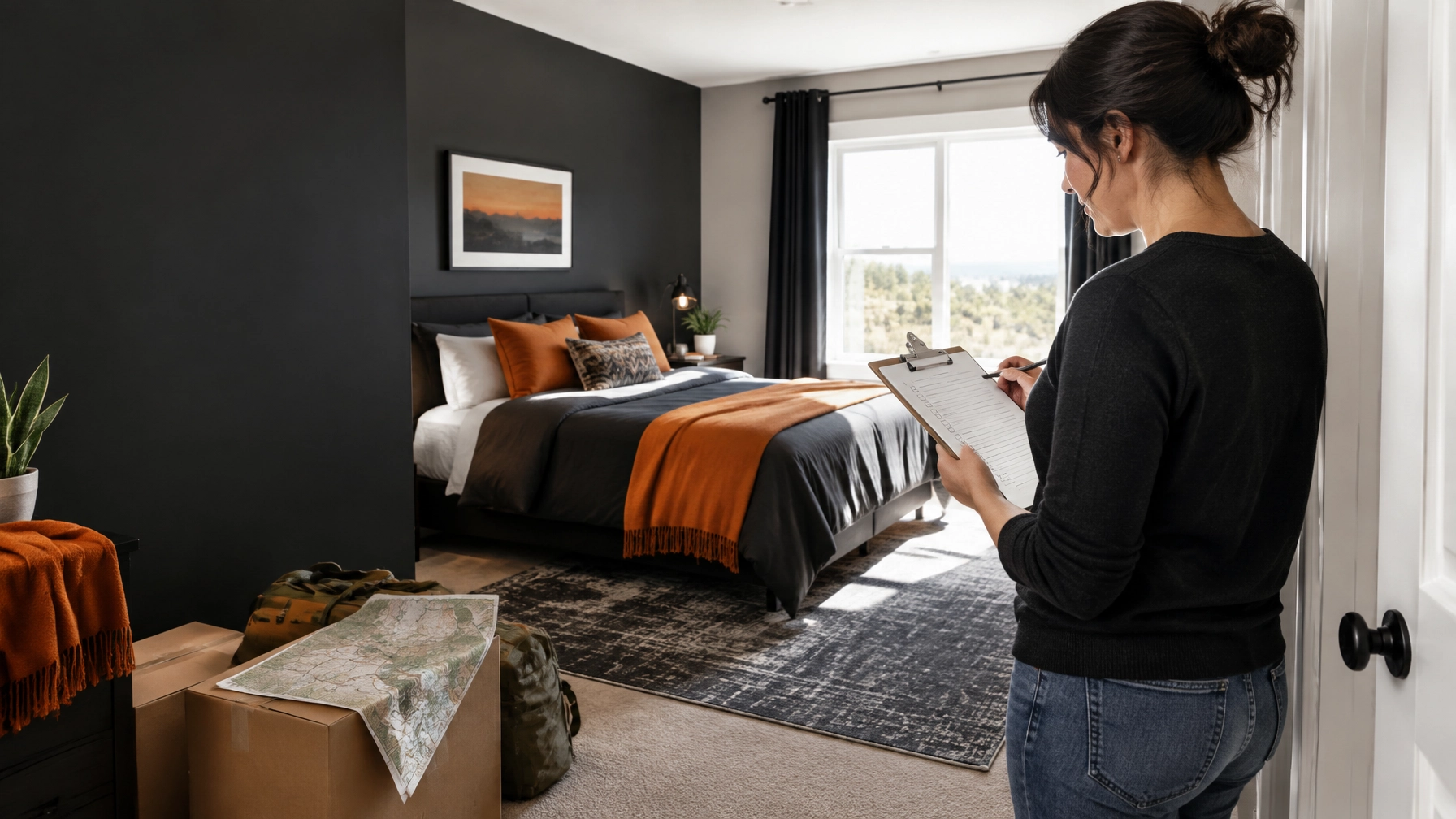

If you are searching for “rent out a room in my house Clarksville TN,” you may be considering a practical form of house hacking: renting part of your home while you continue living there. For Fort Campbell buyers, this can be a useful way to offset a mortgage near Gate 4 or Gate 7, especially when a private bedroom is attractive to a service member, civilian employee, or relocating professional.
However, renting one room is not exactly the same as renting an entire house. You must review local zoning, occupancy, HOA, mortgage, insurance, lease, deposit, and tenant-screening requirements before advertising the space.
Here is a practical framework for getting started.
Is renting out a room in your Clarksville home legal?
In many cases, yes, but the answer depends on how the room is used, how many people occupy the home, the length of the arrangement, and the property’s jurisdiction.
First, determine whether the property is:
- Inside Clarksville city limits
- In unincorporated Montgomery County
- Governed by a planned development or homeowners association
- Subject to special subdivision covenants or deed restrictions
Clarksville’s zoning ordinance separates residential districts and identifies permitted, conditional, and review-based uses. The city’s land-use rules can treat a single owner-occupied room rental differently from multiple rooms rented to unrelated occupants under separate agreements. Review the Clarksville zoning ordinance and contact the appropriate planning or building-code office before making assumptions.
You also need to confirm occupancy and safety requirements. A bedroom should have appropriate access, ventilation, heating, and emergency egress. Do not convert a basement, garage, or other area into sleeping space without confirming that it meets applicable building and fire-code requirements.
If you plan to rent multiple bedrooms to unrelated people under separate leases, the arrangement could be viewed differently from one room rented in an owner-occupied home. Ask the city or county whether the proposed use could be classified as a rooming or boarding house.
What do HOA rules say about unrelated occupants?
Your HOA may impose stricter requirements than local zoning.
Before you advertise, read your:
- Declaration of covenants, conditions, and restrictions
- Bylaws
- Leasing rules
- Architectural or property-use policies
- Rental caps and minimum-lease provisions
Pay particular attention to language involving “unrelated occupants,” “roomers,” “lodgers,” “boarding houses,” “commercial use,” or “single-family use.”
Some communities permit a home to be leased to one household but restrict separate room rentals to unrelated adults. Others may prohibit short-term rentals while allowing leases of six months or longer. Renting to a single Fort Campbell service member under a written long-term agreement may be treated differently from renting separate rooms to multiple unrelated occupants.
Do not rely on a verbal statement from a neighbor or board member. Request the applicable rule in writing and keep it with your property records.
Does Tennessee landlord-tenant law apply to a roommate or lodger?
Calling someone a “roommate” or “lodger” does not automatically remove landlord-tenant obligations.
If the occupant pays rent in exchange for the right to use a specific bedroom and shared areas for an ongoing period, the arrangement may be treated as a residential tenancy. Montgomery County is subject to Tennessee’s Uniform Residential Landlord and Tenant Act, commonly called URLTA.
That may mean you have duties related to:
- Habitability and repairs
- Notice before entry
- Security deposits
- Lease disclosures
- Written notices
- Lawful termination and eviction procedures
- Fair housing compliance
The exact legal treatment can depend on the agreement, the property, the length of occupancy, and whether the occupant has exclusive possession of a defined space. For the dated statutory framework, review the 2024 Tennessee Code provisions for residential landlord-tenant law. You can also review Haus’s explanation of Tennessee lease disclosure rules under TCA § 66-28-302.
This article is general information, not legal advice. Consult a qualified Tennessee attorney about your specific room-rental arrangement.
How should you structure the room rental agreement?
Use a written Tennessee-specific agreement rather than relying on a text-message understanding.
Your agreement should clearly identify:
- The rented bedroom
- Shared areas the occupant may use
- Lease start date and term
- Monthly rent and due date
- Security deposit amount and handling
- Utility responsibilities
- Parking and storage rights
- Guest limits
- Quiet hours
- Cleaning expectations
- Smoking and pet policies
- Maintenance reporting procedures
- Notice and termination requirements
- Rules for keys, locks, and access
A room rental also needs clear privacy boundaries. State whether you may enter the bedroom for repairs, inspections, or emergencies and how much notice will normally be provided. Establish whether the occupant has a private bathroom or shares one with the owner.
For active lease agreement documentation, include the true name and address of the property owner or authorized management agent as required by TCA § 66-28-302, along with the applicable management and maintenance contact information.

How do you divide utilities and handle deposits?
Shared utilities should be addressed before the occupant moves in. Common approaches include:
- Utilities included in rent: Simple to administer, but the owner carries the risk of unusually high usage.
- Fixed monthly utility charge: Predictable for both parties, provided the agreement explains the charge.
- Percentage split: The occupant pays an agreed share of electricity, water, gas, internet, or other services.
- Per-person division: Costs are divided according to the number of occupants, though this can become complicated if guests stay frequently.
Do not leave utility billing vague. State which services are included, when payment is due, and how you will handle a significant change in service cost.
If you collect a security deposit in a URLTA-covered rental, follow applicable Tennessee deposit-handling requirements. Keep a detailed move-in checklist with photographs of the bedroom, bathroom, common areas, appliances, flooring, walls, and furnishings. Clearly distinguish between ordinary wear and damage.
If the room is furnished, list the furniture and its condition in an addendum. That documentation can reduce disputes when the occupant leaves.
How should you screen a room-rental applicant?
Even when you live in the home, use a consistent and documented screening process. Avoid choosing someone solely because you had a good conversation or because the applicant is affiliated with Fort Campbell.
Review objective information such as:
- Identity
- Income and employment
- Rental history
- Credit history
- Eviction records
- References
- Expected move-in date
- Number of occupants
- Vehicle and parking needs
For military applicants, lawful documentation may include military pay information, orders, or other verifiable income records. Apply the same written standards to every applicant and follow federal Fair Housing and consumer-reporting requirements.
Haus’s guide on how to screen tenants in Clarksville, TN explains how to create a consistent process for income verification, rental history, credit reports, references, and adverse-action procedures.
A room rental can also create a more personal relationship than a whole-house lease. That makes written standards even more important. Do not ask questions about protected characteristics, medical conditions, religion, family plans, or other personal subjects unrelated to the lease.
What should Randy Whetsell’s mortgage and insurance advice be?
Haus expert contribution from Randy Whetsell: “Before you rent a room, review the documents that govern your home. Your mortgage lender and homeowners insurance carrier need accurate information about how the property will be occupied. The safest structure is usually a clearly defined, long-term room rental in an owner-occupied residence, supported by a written agreement and consistent house rules. Do not advertise a separate dwelling, promise access that the property was not designed to provide, or operate a short-term lodging business without confirming that your financing and insurance allow it.”
A room rental may affect:
- Owner-occupancy representations
- Mortgage terms
- Homeowners insurance eligibility
- Liability coverage
- Personal-property coverage
- Loss-of-rent coverage
- Umbrella insurance requirements
- Coverage for a boarder’s belongings
Tell your insurance agent exactly what you plan to do. A standard homeowners policy may not provide the coverage you assume for a paying boarder, tenant injury, tenant property, or damage connected with rental activity. Ask whether you need an endorsement, landlord policy, additional liability protection, or a separate policy.
Your occupant should also be encouraged to obtain renters insurance for personal belongings and personal liability. Do not assume your policy covers the occupant’s furniture, electronics, clothing, or vehicles.
What about short-term rentals near Fort Campbell?
A room rented for fewer than 30 days can create a different regulatory issue from a six- or twelve-month room lease.
Clarksville’s short-term-rental rules may involve permits, parking, inspections, occupancy limits, and restrictions on renting to multiple parties under separate contracts. Renting one room to one long-term occupant is not the same as operating several short-term rooms for unrelated guests.
If you are considering Airbnb-style lodging, confirm the current city and county requirements before listing the room. Also check your HOA, mortgage, and insurance documents. Short-term rental activity can create additional tax, safety, and liability obligations.
Is renting out a room a good Fort Campbell house-hacking strategy?
It can be, but the numbers should be realistic.
Estimate:
- Monthly room rent
- Vacancy between occupants
- Utilities you will pay
- Maintenance and repairs
- Furnishings
- Increased insurance costs
- Screening and legal-document costs
- Potential turnover and cleaning
- The value of your privacy and time
A room rental may help offset part of a mortgage near Gate 4 or Gate 7, but rent should not be the only reason you purchase a property. Confirm that you can afford the home without assuming the room will be occupied continuously.
Freddie Mac’s Primary Mortgage Market Survey reported an average 30-year fixed mortgage rate of 6.95% for the week ending September 17, 2026. You can review the Freddie Mac PMMS data and archives when evaluating how current financing costs affect your house-hacking plan.
What should you do before advertising the room?
Use this checklist:
- Confirm city or county jurisdiction.
- Verify zoning and occupancy requirements.
- Review HOA restrictions.
- Read your mortgage documents.
- Call your insurance agent.
- Decide whether the arrangement is long-term or short-term.
- Prepare written screening criteria.
- Draft a Tennessee-specific room-rental agreement.
- Set rent, utilities, and deposit terms clearly.
- Photograph and document the room’s condition.
- Include the required owner or authorized-agent disclosure.
- Screen every applicant consistently.
- Keep written records of approvals, notices, payments, and repairs.
For professional support with rental analysis, leasing, screening, and property management, visit HausRentalsTN.com.
Final thoughts
Renting out a room in your Clarksville home can be a practical rental-investing strategy, particularly for Fort Campbell buyers who want to offset housing costs while living near Gate 4 or Gate 7. The arrangement works best when you treat it as a formal housing decision rather than an informal roommate agreement.
Review local rules, HOA restrictions, mortgage requirements, insurance coverage, Tennessee landlord-tenant obligations, and fair housing standards before you proceed.
If you would like help evaluating the income potential, compliance considerations, and operating responsibilities for your property, request a Clarksville rental-property analysis.






