





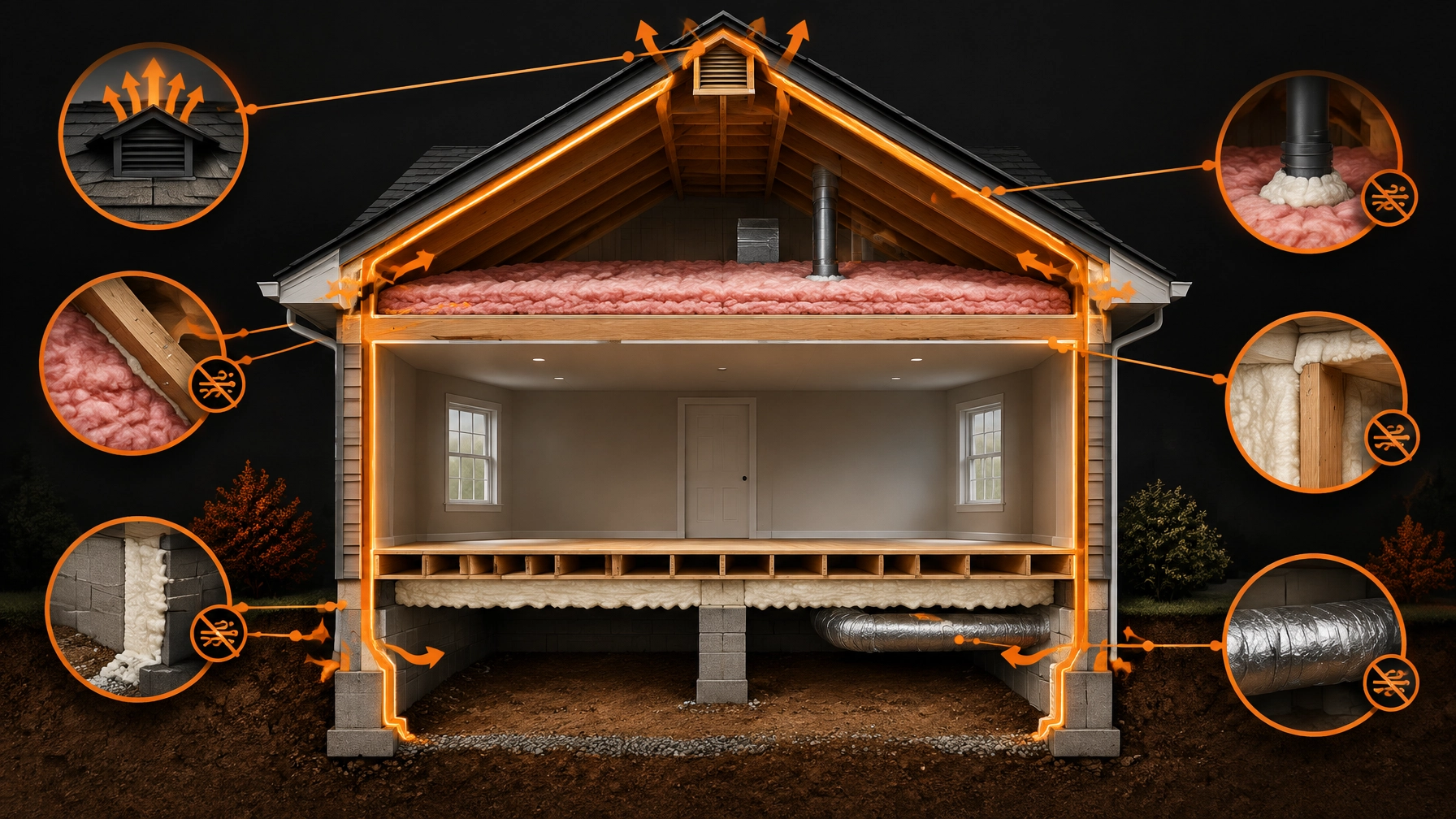

To improve attic and crawl space insulation in a Clarksville home, combine attic air-sealing with adequate insulation depth, then address crawl space moisture, ground vapor control, and insulation at the floor or foundation walls. Both spaces can work against your comfort and energy use when they leak air. In Middle Tennessee, hot, humid summers, cold snaps, and moisture in the soil make it important to consider air movement and water control alongside insulation.
The right sequence matters: identify and correct moisture problems first, seal the areas where air moves, and then add insulation suited to the way your home’s attic and crawl space are designed. Whether you own your home, rent it out, or are preparing for a PCS, these improvements can also help you spot maintenance concerns before they complicate a sale or turnover.
Why Do Clarksville Homes Need Both Attic and Crawl Space Insulation?
Your attic and crawl space sit on opposite sides of the living area, but they affect the same indoor comfort. In summer, attic heat can contribute to uncomfortable upper rooms and longer air-conditioning cycles. In winter, a drafty crawl space can make floors feel cold and allow outside air to reach the rooms above.
Moisture deserves equal attention. If humid air reaches cooler surfaces, or water enters the crawl space and remains there, insulation alone will not resolve the underlying issue. The Department of Energy’s Building America Solution Center guidance on insulated crawl spaces explains why moisture management and a well-designed crawl space boundary are important parts of the assembly.
How Much Attic Insulation Should a Clarksville TN Home Have?
R-49 is a useful planning benchmark for many Zone 4 homes, with R-60 worth considering when the attic’s space, condition, and project budget make it practical. It is not a substitute for checking your home’s existing insulation, the specific assembly, or the code requirements that apply to your project. Ask a qualified insulation professional to assess what is already there and what can be added safely and evenly.
Insulation depth is only part of the answer. Gaps around ceiling penetrations, attic hatches, and other openings can let conditioned air escape. Sealing those leaks before adding insulation helps the new material perform as intended.

What Should You Do Before Adding Attic Insulation?
- Look for leaks or damage. Check for roof leaks, damp or compressed insulation, pest activity, and signs of previous moisture.
- Find air leaks. Pay attention to the attic access, wiring and plumbing openings, and gaps around ceiling fixtures or other penetrations.
- Protect ventilation and safety clearances. Do not cover vents or place insulation against heat-producing equipment or flues where clearance is required. A contractor can identify appropriate materials and details.
- Air-seal before topping up. Seal appropriate openings at the ceiling plane, then add insulation evenly without blocking the design’s ventilation path.
If HVAC equipment or ductwork is in the attic, ask whether the current attic arrangement is appropriate before changing the insulation boundary. A change at the roofline is not simply an insulation upgrade; it needs careful design, moisture planning, and code review.
How Do You Insulate a Crawl Space the Right Way?
Start with water and moisture, not insulation. Look for plumbing leaks, standing water, damp soil, poor drainage, or signs that gutters and downspouts are directing water toward the foundation. Address the source and allow the space to dry before covering surfaces or installing insulation.
Next, choose a coherent crawl space approach. Some homes use a vented crawl space with insulation under the floor; others use a sealed, insulated crawl space with insulation at the foundation walls. These strategies have different requirements. Avoid mixing details from both without a qualified assessment, and verify local code and permit requirements for your home.
For a sealed approach, a continuous ground vapor barrier, sealed seams, and attention to the foundation perimeter and rim joists are common elements. The assembly also needs an appropriate plan for humidity control and any equipment or combustion-safety concerns. For a vented approach, the ground still needs moisture control, and floor insulation must be properly supported and installed to reduce gaps and drafts.

What Does Crawl Space Encapsulation Involve?
Encapsulation generally means creating a more continuous boundary between the crawl space and the outdoor environment. Depending on the house and local requirements, work may involve a ground vapor barrier, sealed seams and penetrations, foundation-wall and rim-joist air-sealing and insulation, and a plan to manage humidity. Some properties may need drainage improvements or other moisture repairs first.
Encapsulation is not just laying plastic over soil or closing vents. Before you proceed, ask the contractor to explain the proposed assembly, how the space will be kept dry, whether mechanical equipment needs special consideration, and how the work will comply with applicable code.
What Are the Signs That Insulation Is Underperforming?
| Sign | Possible area to investigate | What to check |
|---|---|---|
| High summer bills or rooms that stay hot | Attic | Insulation coverage, air leaks, and ventilation paths |
| Rooms hot above a garage | Ceiling or adjoining boundary | Gaps and insulation continuity |
| Cold floors in winter | Crawl space | Floor insulation, drafts, and moisture conditions |
| Musty smells or moisture on ducts | Crawl space | Water entry, damp soil, and humidity control |
| HVAC runs long cycles | Whole home | Air leakage and insulation in both spaces, along with system condition |
These signs can have more than one cause. Use them as prompts to investigate, not proof that insulation is the only problem.

Can You Finance Insulation Upgrades?
You may be able to pay from savings, use a home-improvement financing option, or consider financing tied to a larger renovation. Compare terms and fees, and weigh the project against a realistic energy payback rather than assuming a specific savings figure. Because mortgage rates are elevated, many Clarksville homeowners may prefer savings or another appropriate funding option over a cash-out refinance.
As a dated reference point, Freddie Mac’s Primary Mortgage Market Survey showed a 30-year fixed average of 7.28% and a 15-year average of 6.60% as of October 1, 2026. These are national survey averages, not a quote for your loan. Review the Freddie Mac PMMS and speak with a qualified lender about your options.
Why Address Insulation Before You List?
A Haus Realty & Management broker notes that insulation and crawl space condition come up regularly in pre-listing inspections and buyer walkthroughs in Clarksville and Montgomery County. Addressing known attic or crawl space concerns before listing can reduce the likelihood of inspection-period renegotiation and help you explain the home’s condition clearly to prospective buyers. Keep invoices, inspection notes, and details about completed work together.
If you own a rental, maintenance in these areas can also be part of protecting your investment and preparing for a tenant change or future sale. Explore the Haus real estate investing resources for additional property-owner guidance.
Frequently Asked Questions
Should I air-seal the attic before adding insulation?
In general, yes. Seal appropriate leaks at the attic floor first, then add insulation without blocking required ventilation or violating safety clearances.
Is floor insulation or foundation-wall insulation better for a crawl space?
It depends on whether the crawl space will remain vented or be sealed and insulated. Have the full assembly assessed so moisture control and insulation work together.
Can I add insulation over damp or moldy material?
No. Find and correct the moisture source first. Have damaged materials assessed and handled appropriately before covering the area.
Does crawl space encapsulation mean I can ignore humidity?
No. A sealed crawl space still needs a suitable humidity-control plan, and the design should account for drainage, equipment, and local code.
Who should inspect attic and crawl space insulation before a sale?
A qualified home inspector or insulation professional can assess condition and identify concerns. Your real estate team can help you understand how those findings may affect sale preparation.
Get Local Guidance for Your Home
A thoughtful insulation upgrade starts with understanding your home’s current condition, not choosing a product before you know what needs attention. If you want help understanding how attic and crawl space condition affects your home’s value or rentability, talk with the Haus Realty & Management team. Visit our homeowner resources hub or reach out to discuss your goals.
This article offers general information, not an insulation design, energy-savings guarantee, financing recommendation, or code determination. Have a qualified professional evaluate your home and confirm applicable local requirements before work begins.






