





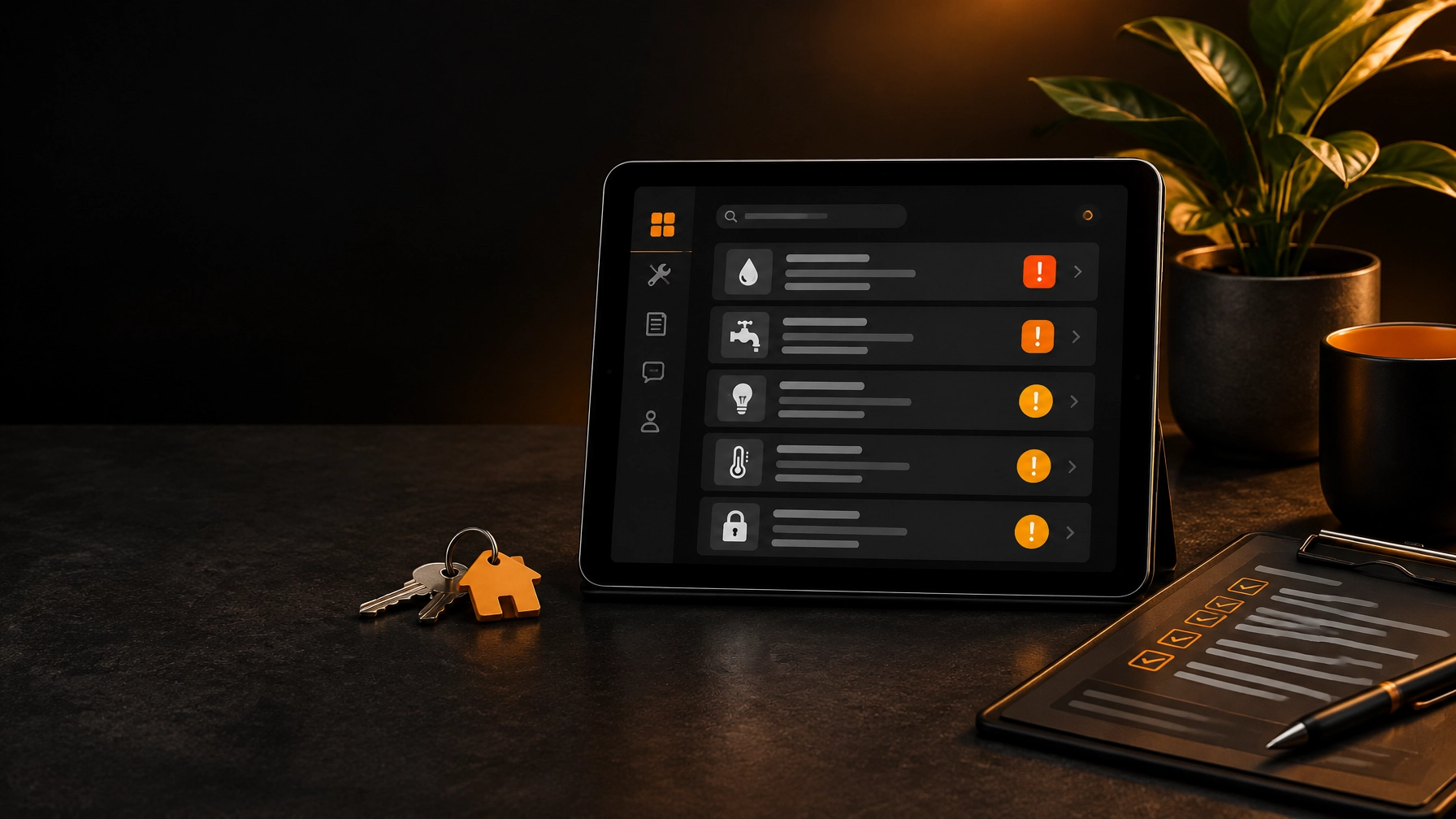

The most profitable way to handle rental maintenance requests in Clarksville, TN is to use a documented system that captures every request, separates emergencies from routine issues, assigns a response target, and tracks the cost through completion. You protect your income not by delaying repairs, but by responding consistently, authorizing work intelligently, and preventing small problems from becoming expensive failures.
For owners, maintenance is both a resident-service obligation and a financial-control process. A request that is ignored can damage the property, interrupt rent collection, increase liability exposure, and create a larger repair bill later.
What should happen when a tenant submits a maintenance request?
Every request should enter one central system, whether that is an online portal, dedicated email address, or documented phone process. Avoid relying on scattered text messages and informal calls that are difficult to track.
A useful intake record should capture:
- The property address and tenant contact information
- The date and time the request was received
- The affected system or area
- A written description of the issue
- Photos or video when available
- Whether water, electricity, heat, cooling, or access to the home is affected
- Any immediate safety concern
- The next action and person responsible for it
The first decision is not “How much will this cost?” It is “How quickly could this become unsafe, cause property damage, or materially affect habitability?”
That distinction helps an owner spend money in the right order instead of treating every request as either an emergency or an inconvenience.
How should you prioritize emergency and routine requests?
A practical triage system uses three levels.
Which maintenance requests require immediate escalation?
Emergency requests typically involve active water intrusion, major electrical hazards, fire or smoke concerns, gas odors, a failed essential system during dangerous weather, or conditions that could rapidly damage the property.
The response should begin immediately. That does not always mean a permanent repair will be completed within minutes. It means the management team should acknowledge the request, provide safe interim instructions when appropriate, dispatch the proper help, and continue communicating until the immediate risk is controlled.
For example, a burst supply line may require stopping the water and preventing further damage before a complete plumbing repair is scheduled. A failed cooling system during a severe Clarksville heat event may require rapid assessment, temporary mitigation, and a clear update if parts or specialized service are delayed.
Which requests should be treated as urgent?
Urgent issues may include a refrigerator leak, a malfunctioning water heater, a plumbing problem that is worsening but not actively flooding, or a heating or cooling concern that affects comfort but does not present an immediate safety risk.
These requests should receive a defined response window rather than being placed in an unmonitored queue. The goal is to schedule an inspection quickly, determine the actual cause, and prevent the issue from escalating.
Which requests can be scheduled as routine work?
Routine work may include a minor adjustment, a noncritical fixture issue, cosmetic repair, or a maintenance item that does not affect safety, habitability, or the property’s core systems.
Routine does not mean forgotten. Assign a target date, communicate that date to the tenant, and close the loop with completion notes and photographs.

How does response time affect an owner’s return?
Response time has a cost, but the cost is not limited to the service invoice.
A delayed response can lead to:
- Additional water or structural damage
- A larger HVAC or plumbing repair
- Resident frustration and repeated follow-up calls
- Lost leasing momentum if the property becomes difficult to show
- More time spent coordinating multiple visits
- A higher chance of paying for temporary measures and permanent repairs separately
At the same time, sending a contractor without enough information can create unnecessary trip charges, repeat visits, or work that does not address the underlying problem.
The better approach is to make the first response useful. Ask focused questions, request photos when safe, identify the affected system, and determine whether the technician needs access to a specific location such as a crawl space, attic, utility room, or exterior equipment area.
As of the week ending September 24, 2026, Freddie Mac reported a national average of 7.03% for a 30-year fixed mortgage and 6.42% for a 15-year fixed mortgage in its Primary Mortgage Market Survey. Those figures are not rental maintenance costs, but they illustrate why owners should pay close attention to carrying costs, reserve planning, and preventable property expenses when borrowing costs remain significant.
Why does Clarksville’s summer HVAC demand require advance planning?
Summer HVAC calls deserve special attention in Montgomery County because high heat and humidity can create concentrated demand. During a peak-weather period, a contractor’s next available appointment may not be immediate, particularly for a property without an established service history.
The practical owner-side response is to plan before the first major heat wave:
- Review the age and service history of each system
- Schedule seasonal inspections before demand peaks
- Identify which properties have older equipment
- Record filter sizes and equipment information
- Confirm how after-hours calls are escalated
- Keep residents informed about what information to provide during a no-cooling call
- Track repeat repairs that may indicate a larger capital decision
A rental in an older established area such as St. Bethlehem may have different maintenance patterns from newer construction in Sango. Older homes may involve aging equipment, prior repairs, or less predictable system performance. Newer homes may have newer major systems but still require attention to drainage, airflow, installation issues, and warranty documentation.
The correct response is not to assume that one neighborhood or construction era is trouble-free. It is to use property-specific records to decide where proactive attention has the greatest financial value.

How can an owner control repair costs without creating deferred maintenance?
Cost control begins with decision rules, not with refusing to authorize work.
A useful owner-side system should define:
- Which repairs can be approved within the management agreement
- When the owner must receive an estimate
- When multiple options should be presented
- What information is required for a replacement recommendation
- How emergency work is documented
- How completed work is verified
- How invoices, photographs, and warranties are stored
For recurring issues, review the pattern rather than approving each invoice in isolation. A series of small HVAC repairs may indicate that replacement planning is more responsible than continuing to pay for temporary fixes. Repeated plumbing calls may indicate a system problem rather than unrelated incidents.
This is also where maintenance reserves matter. A reserve allows you to address a failing system based on condition and lifecycle rather than waiting until the failure becomes an emergency. The goal is not to spend more. The goal is to spend deliberately.
Haus property management’s owner-side approach is to connect each request to the property’s history, budget, and risk profile. Randy Whetsell emphasizes that consistent documentation gives owners better information for deciding whether a repair is temporary, preventative, or part of a larger capital plan.
For owners who value service standards and community commitment, Haus operates as a “Tennessee Silver Level Veteran Ready Business.” That commitment complements a practical management process: clear communication, dependable follow-through, and respect for the owner’s investment.
What Tennessee owner information must be disclosed to the tenant?
Tennessee law requires the landlord or the landlord’s agent to disclose the name and address of the property owner or the owner’s authorized agent to the tenant under TCA § 66-28-302.
The disclosure should also identify the managing agent and provide a telephone number, email address, or online portal for maintenance communication. The information must remain current if ownership or management changes.
You can review the statutory language through this Tennessee Code Annotated § 66-28-302 reference. Owners should consult qualified legal counsel for advice about a specific lease, property, or compliance question.
How can owners build a maintenance process that protects rental income?
A dependable process should follow the same sequence every time:
- Receive and document the request.
- Acknowledge the tenant promptly.
- Triage the issue by safety, habitability, and damage risk.
- Gather enough information to make the first dispatch useful.
- Assign the request to the appropriate service provider.
- Set expectations for the next update.
- Review the estimate and authorization requirements.
- Confirm completion with notes, photos, and the invoice.
- Update the property record.
- Look for repeat patterns that require preventative or capital planning.
This system protects the resident experience while giving the owner a clearer view of where money is going.

Frequently asked questions about rental maintenance requests in Clarksville
How quickly should a landlord respond to a maintenance request?
The appropriate response time depends on the issue. Safety hazards, active leaks, and essential-system failures require immediate escalation. Noncritical requests should still be acknowledged, assigned, and tracked rather than left unanswered.
Should every maintenance request be treated as an emergency?
No. Treating every request as an emergency can increase costs and delay more serious work. A documented triage system helps distinguish immediate risks from urgent and routine items.
How can an owner reduce repeat maintenance calls?
Review the property’s request history. Repeated repairs involving the same system may justify a professional diagnosis, preventative work, or replacement planning instead of another isolated repair.
What information should a tenant provide with a maintenance request?
The tenant should provide the location, description, timing, visible symptoms, photos or video when safe, and whether the issue affects water, electricity, heating, cooling, access, or safety.
How does professional management help control maintenance costs?
Professional management can centralize intake, prioritize requests, coordinate communication, document completed work, and help the owner identify recurring problems before they become larger expenses.
What should you do next if maintenance requests are affecting your rental’s profitability?
A rental maintenance system should make every request easier to understand, prioritize, document, and resolve. In Clarksville’s varied rental stock, the right process accounts for seasonal HVAC pressure, property age, neighborhood conditions, response-time realities, and the owner’s long-term financial plan.
Haus Realty & Management helps Tennessee and Kentucky owners evaluate their rental operations and make informed management decisions. Visit Haus Realty & Management or review available properties through the Haus property search.
Get a rental-rate and management evaluation.
Call the Clarksville office at (931) 201-9694 or visit hausrm.com.
Maintenance response times, repair costs, contractor availability, and legal requirements can vary by property and circumstance. This article is general information and is not legal, tax, insurance, or contractor advice.






