





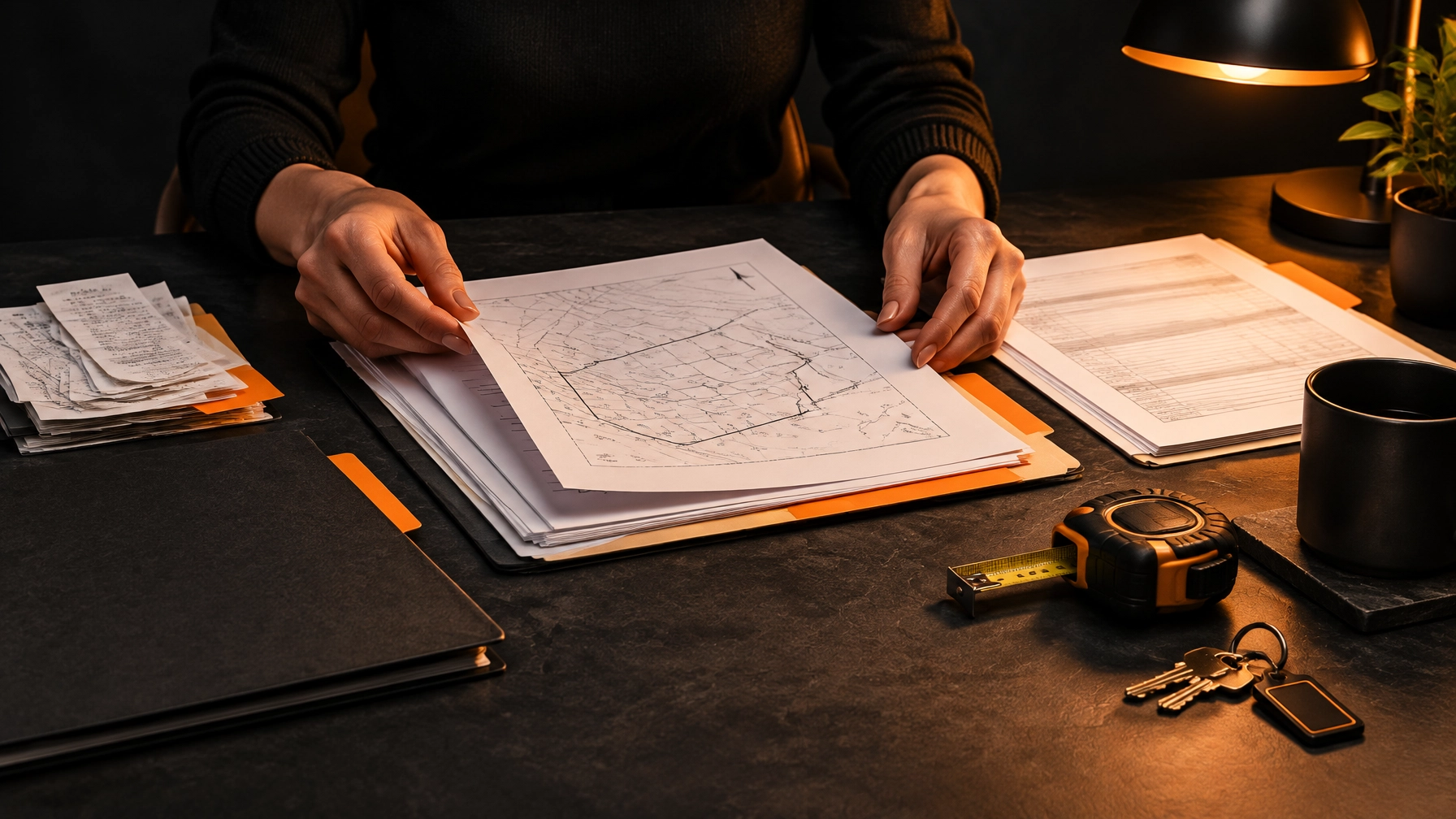

To prepare for a buyer’s appraisal, organize records of improvements, make every area accessible, address obvious maintenance and safety concerns, and keep utilities on. An appraiser verifies market value rather than grading your taste, so the highest-return preparation is documentation, access, and condition evidence, not redecorating.
What should you do before the appraiser arrives?
Use this practical checklist to help the appraiser see the property clearly and verify relevant facts:
- Compile improvement receipts and permits. Gather invoices, warranties, contractor information, permit records, and final approvals for significant work.
- Write a one-page upgrades list. Note each project, its completion date, approximate cost, and scope. Include items such as a roof replacement, HVAC work, a finished room, or a permitted addition.
- Provide the survey and plat. These can help clarify lot boundaries and property layout. Include other relevant property documents, such as easement information, if applicable.
- Clear access to the attic and crawl space. Move boxes, furniture, and stored belongings away from access panels, ladders, and doors.
- Fix obvious deferred maintenance. Take care of straightforward issues such as a dripping faucet, a broken handrail, or a door that will not latch.
- Address visible safety issues. Make walkways clear and secure, and resolve apparent hazards such as exposed wiring or loose steps.
- Keep the utility account active. Water, electricity, and other needed services should be on so the appraiser can view the property and its systems appropriately.
- Be available for questions without hovering. Let the appraiser work independently. Make your information available through your agent or in a tidy folder, and answer questions factually if asked.
Think of this preparation as providing an accurate record, not staging a sales pitch. Your agent can help you organize the materials and share relevant information through the appropriate channel.
Which improvements and conditions can affect an appraisal?
Closed comparable sales help establish the market context. The appraiser also considers the home’s characteristics and condition, making adjustments when the evidence supports differences between the property and comparable sales. A repair receipt or upgrade list can help document what is there, but it does not guarantee a specific value.
Fresh paint, new throw pillows, and decorative accessories may make a home feel more welcoming to a buyer, but they typically contribute little to the valuation on their own. By contrast, a documented finished living space, a new roof, or an HVAC replacement may matter more because these improvements affect usable area, condition, or major systems. The appraiser still evaluates them in the context of local market evidence, workmanship, permits where applicable, and the home as a whole.
That distinction can help you avoid spending heavily on last-minute cosmetic upgrades solely for the appraisal. Clean, uncluttered rooms and clear access are useful; a costly redesign is not a reliable way to raise the appraised value.

How should you prepare if your Fort Campbell buyer is using a VA loan?
If a buyer’s VA appraisal has been ordered and you are already partly packed for a PCS move, pause packing around the areas the appraiser needs to see. Keep access routes open to the attic, crawl space, utility areas, electrical panel, water heater, and HVAC equipment. If a room is full of boxes, move them enough to show the space and allow safe entry.
An empty home still needs clear access to its mechanicals. Do not assume that removing furniture makes the property ready: storage in closets, garages, or utility spaces can block important equipment. Leave lights on where possible, keep utilities active, secure pets, and give your agent any entry or alarm instructions.
A VA appraisal includes a value assessment and review of applicable Minimum Property Requirements; it is not a substitute for the buyer’s independent home inspection. If the appraiser identifies a concern, direct questions about loan requirements or next steps to the buyer’s lender and your real estate professional. Avoid making promises about repairs before you understand what is being requested.

Can a home appraisal affect the buyer’s monthly payment?
The appraisal and the buyer’s interest rate are different parts of a purchase, but the valuation can affect financing. Lenders use the appraisal as part of their collateral review. If the appraised value is below the contract price, the buyer may need to discuss options such as renegotiating, bringing additional funds, or seeking a reconsideration through the lender. For more detail, read our guide to handling an appraisal gap in Clarksville.
For context, Freddie Mac’s Primary Mortgage Market Survey reported national average rates on October 8, 2026, of 7.40% for a 30-year fixed-rate mortgage and 6.73% for a 15-year fixed-rate mortgage. These are national averages, not a Clarksville-specific or VA loan quote. A buyer’s actual rate and terms depend on their lender and individual circumstances. You can review the Freddie Mac PMMS data.
As a simple illustration, on a $300,000, 30-year fixed loan, reducing the rate by a quarter point, from 7.40% to 7.15%, would lower principal-and-interest payments by roughly $37 per month. This estimate excludes taxes, insurance, mortgage costs, and any fee or points needed to obtain a lower rate. A seller-paid rate buydown is a separate negotiation with lender rules and contract terms; an appraisal does not automatically create one. For neutral home-financing tools, visit the Consumer Financial Protection Bureau’s homebuying resources.
How do you keep the appraisal process independent?
No one may pressure or improperly influence an appraiser. The goal is to provide accurate information, not to secure a higher number. Do not tell the appraiser what value to reach, suggest they must match the contract price, or repeatedly argue for a particular conclusion. Share factual records and allow the appraiser to make an independent assessment.
If the appraisal comes in below the contract price, your agent and the buyer’s lender can explain the appropriate next steps. Our article on what to know about a pre-listing appraisal explains how an appraisal differs from a seller’s own estimate of value. For potential issues and options after a low result, see our guide to appraisal gaps.
“The most helpful thing a seller can do is make the facts easy to verify. A clear improvement list, accessible spaces, and a home that is safe to walk through let the appraiser focus on an independent, evidence-based valuation.”
, Randy Whetsell, Broker/Owner of Haus Realty & Management in Clarksville, TN

What other steps can help you prepare for the buyer’s appraisal?
If you are still getting the property ready for market or want to anticipate condition questions, a pre-listing inspection can help you understand visible maintenance concerns before a buyer’s inspection. It is separate from an appraisal, but its findings may help you plan repairs and organize supporting records.
Before the appointment, confirm the time with your agent, gather your documents in one place, and do a quick walkthrough for blocked access or visible hazards. Then give the appraiser room to work. Thoughtful preparation cannot guarantee a particular result, but it can help ensure the home’s condition and documented improvements are easier to assess.
Frequently asked questions about preparing for a Clarksville home appraisal
Should I repaint my home before an appraisal?
Usually, not solely for the appraisal. Address peeling paint or an obvious maintenance issue, but fresh color and cosmetic updates generally matter less than comparable sales, condition, and documented improvements.
Should I give the appraiser my upgrade list?
Yes, you can make a concise, factual list available through your agent or in a folder. Include dates, costs, permits, and receipts where available, without suggesting what value the appraiser should conclude.
Do I need to leave the utilities on?
Yes. Keep the utility account active so the appraiser can access and view the property appropriately. Ask your agent or the buyer’s lender if you have questions about a specific system or property condition.
Does a VA appraisal replace a home inspection?
No. A VA appraisal supports the lender’s valuation and reviews applicable property requirements; the buyer may still choose a separate inspection for a more detailed assessment of condition.
What if my home is already empty?
Keep attic, crawl-space, utility, and mechanical areas accessible. Remove stored items that block panels or equipment, keep utilities on, and leave clear walking routes through the home.
Can I tell the appraiser what price the home should be worth?
No. Do not pressure or improperly influence the appraiser. Provide verifiable information and allow the appraiser to reach an independent conclusion.
What happens if the appraisal is lower than the contract price?
The buyer, seller, agents, and lender can review options based on the contract and loan terms. These may include negotiating a price change or, when appropriate, asking the lender about a reconsideration of value. See our Clarksville appraisal-gap guide.
Can Haus help me understand my home’s value before it sells?
Yes. Request a Clarksville home-value analysis. Our experienced local team can help you review market context and plan your next steps.
#ClarksvilleTN #MontgomeryCountyTN #FortCampbell #HomeAppraisal #HomeSelling #SellerTips #VAAppraisal #TennesseeRealEstate #HausRealty #HomeValue






