





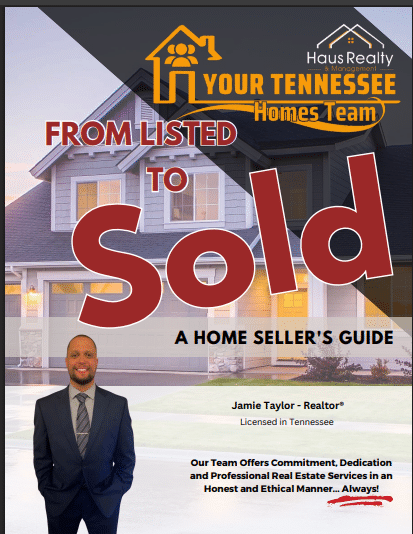

Thinking About Selling Your Home? Here’s What the Process Actually Looks Like
Selling a home can feel pretty simple from the outside.
Put a sign in the yard. Take some pictures. List it online. Get an offer. Hand over the keys.
If only it were that easy.
There are actually a lot of moving pieces between deciding to sell your home and sitting down at the closing table. Pricing, preparation, marketing, showings, negotiations, inspections, repairs, appraisal and closing all play a role.
The good news?
You don’t have to figure all of it out at once.
Here’s a straightforward look at what you can expect when selling a home.
Step 1: Start With a Plan
Before worrying about pictures, signs or open houses, the first step is figuring out what you’re trying to accomplish.
Why are you selling?
How quickly would you like to move?
Do you need the proceeds from this home to purchase another one?
Are there repairs that should be completed first?
And, of course:
What is your home actually worth in today’s market?
This is where a Comparative Market Analysis, or CMA, becomes important.
Rather than choosing a price based solely on what you paid, what a neighbor listed for, or what an online estimate says, we’ll look at comparable properties, current competition, recent sales, your home’s condition, location and features to develop a pricing strategy.
The goal isn’t simply to put the highest possible number on the listing.
The goal is to position the home where buyers see the value.
Step 2: Prepare the Home Before Buyers See It
First impressions happen quickly—and increasingly, the first impression doesn’t happen when someone walks through your front door.
It happens online.
Before your home goes on the market, we’ll look at what can reasonably be done to make it show its best.
That may include decluttering, deep cleaning, touching up paint, completing needed repairs, improving curb appeal, cleaning carpets, organizing closets and reducing personal items.
You don’t necessarily need to remodel your house before selling it.
In fact, spending money on the wrong improvements can mean putting thousands of dollars into projects that don’t return the same amount when you sell.
The objective is different:
Make the home clean, maintained, inviting and easy for buyers to picture as their own.
That can be as simple as trimming the lawn, freshening mulch, cleaning windows, replacing burned-out bulbs, touching up trim or giving the front door a fresh coat of paint.
Small details can change the way the entire property feels.
Step 3: Make the Home Easy to Imagine Living In
Staging isn’t about decorating your home according to someone else’s taste.
It’s about looking at your home through a buyer’s eyes.
A room you’ve used a certain way for years might make perfect sense to your family. A buyer walking through for the first time may not immediately understand the space.
Good staging helps define rooms, highlight the property’s strongest features and reduce distractions.
That doesn’t necessarily mean bringing in an entire house full of rented furniture.
Sometimes it simply means rearranging what you already own, removing unnecessary furniture, neutralizing certain spaces and giving rooms a little breathing room.
The goal is for buyers to walk through and think:
“I can see myself living here.”
Step 4: Presentation Matters Online
For many buyers, your home’s online listing is effectively its first showing.
They’re scrolling through properties deciding which homes deserve an in-person visit—and which ones they’re going to swipe past.
That’s why photography and presentation matter.
Professional real estate photography is designed to capture rooms with appropriate lighting, composition and angles while accurately showcasing the property. Depending on the home, video, virtual tours or aerial photography may also help buyers better understand the layout, land, surrounding area or unique features.
Aerial photography can be particularly useful when the property’s lot, setting or surrounding area is an important part of its appeal. Virtual tours and video can also help buyers get a better sense of how rooms connect before scheduling a showing.
The goal isn’t to make the house look like something it isn’t.
It’s to make sure buyers can clearly see everything it is.
Step 5: Marketing Goes Beyond Putting the Home on the MLS
Listing a property is only the beginning.
A strong marketing strategy is about putting the property in front of potential buyers wherever they’re actually searching.
That can include MLS exposure, major real estate search websites, company websites, social media, agent networking, email marketing, property flyers, signage and open houses.
The seller guide emphasizes online exposure, agent networks, property marketing, social media and direct communication as important pieces of getting a property noticed.
Different homes may call for different approaches.
The important part is having an actual strategy rather than simply listing the property and waiting.
Step 6: Now Come the Showings
Once your home is active, buyers need opportunities to see it.
This is the part of selling that can occasionally be inconvenient—especially if you’re still living in the home.
Keeping the house reasonably clean, being flexible with showing requests, opening blinds for natural light, keeping pet areas tidy, managing odors and maintaining a comfortable temperature can all help the home show well.
Whenever possible, sellers should also leave during showings.
Buyers generally feel more comfortable taking their time, discussing the property and imagining themselves living there when the owner isn’t standing in the next room.
Don’t Forget Security
You’re also allowing unfamiliar people into your home, so some basic precautions matter.
Before showings, put away valuables, prescription medications, financial documents, mail containing personal information and other sensitive items.
And if someone randomly knocks on the door asking to see the house because they noticed the sign?
Don’t let them in.
They can contact the listing agent and arrange a proper showing.
Step 7: You Received an Offer. Now What?
Getting an offer is exciting.
But the biggest number at the top of the page doesn’t automatically make it the best offer.
There may be several other things to consider:
The buyer’s financing.
Requested closing costs or concessions.
Contingencies.
Inspection terms.
Proposed closing date.
Repair expectations.
Appraisal considerations.
And the seller’s estimated proceeds after the terms of the offer are taken into account.
A slightly lower offer with favorable terms could potentially make more sense for a particular seller than a higher offer carrying additional costs or conditions.
That’s why offers should be evaluated as complete packages, not simply by purchase price. The seller guide likewise identifies loan type, contingencies, financing, closing timeline, closing costs, repair requests and price among the considerations when reviewing an offer.
Step 8: Negotiation Begins
Receiving an offer doesn’t necessarily mean you have to say yes or no immediately.
Generally, a seller can accept an offer, reject it, or respond with a counteroffer.
The buyer can then respond to that counteroffer, and negotiations may continue until an agreement is reached—or one side decides not to proceed.
This is where having someone representing your interests becomes particularly important.
Price may be part of the negotiation, but so can closing costs, timelines, repairs, personal property and other contractual terms.
Once both sides reach an agreement and the contract is signed, the transaction moves into the next phase.
Step 9: Inspection and Repair Negotiations
Depending on the contract, the buyer may have the property professionally inspected.
An inspector may evaluate major areas and systems such as the roof, exterior, foundation or crawlspace, HVAC, plumbing, electrical components, attic and insulation, windows, doors, drainage, appliances and other accessible portions of the property.
An inspection doesn’t necessarily mean the seller will be handed a giant repair list that must automatically be completed.
What happens next depends on the contract and inspection results.
There may be additional negotiations.
The buyer may accept the property’s condition.
The parties may reach an agreement concerning certain repairs or other terms.
Or circumstances may arise that affect whether the transaction moves forward.
This is one of the stages where the details of the actual contract matter tremendously.
Step 10: The Appraisal
When the buyer is financing the purchase, the lender will generally require an appraisal to help determine the property’s value for lending purposes.
Ideally, the appraisal supports the agreed-upon purchase price.
If it does, the transaction can continue toward closing.
If the appraisal comes in below the contract price, however, the situation may require additional discussion between the parties.
Possible paths can include renegotiating the price, determining whether the parties will address some or all of the difference, or pursuing another solution permitted by the contract.
A low appraisal isn’t automatically the end of a transaction—but it’s definitely something that needs to be handled carefully.
Step 11: Getting to the Closing Table
Once the contractual requirements have been satisfied and everything is ready, it’s time to close.
Closing is where the documents and funds necessary to complete the transaction are handled and ownership is ultimately transferred to the buyer.
For the seller, this is also where applicable expenses and property-related obligations are accounted for before the seller receives the proceeds due from the transaction.
And then comes the moment everybody has been working toward:
The home is sold.
Don’t Forget the Final Move-Out Details
There are still a few housekeeping items to handle as you leave.
Remove all personal belongings.
Check cabinets, drawers and closets one last time.
Clean the home.
Gather manuals, receipts and warranties that belong with the property.
Leave appropriate keys, remotes and other property-related items.
Handle utilities and your change of address.
Keep your closing documents somewhere safe.
And after ownership has transferred, make sure insurance and other property-related accounts are handled appropriately.
The seller guide’s final checklist also emphasizes leaving the home clean and completely cleared of personal belongings for the new owners.
Selling Doesn’t Have to Feel Overwhelming
There are a lot of moving pieces in a real estate transaction.
That’s exactly why you shouldn’t feel like you need to know all of them before you call a REALTOR®.
You don’t have to know whether you should paint the kitchen.
You don’t have to know exactly what your home is worth.
You don’t have to understand every line of a purchase agreement.
And you definitely don’t need to have the entire process figured out before asking your first question.
That’s part of my job.
If you’re thinking about selling a home in Middle Tennessee—even if you’re months away and simply trying to figure out what your next move might look like—I’m happy to start with a conversation.
No pressure.
We’ll look at the property, talk about your goals, discuss what may or may not be worth doing before listing, and start building a plan that makes sense for your situation.
Because selling your home is a big decision.
Understanding the process shouldn’t have to be.
— Jamie Taylor, REALTOR®
Your Tennessee Homes Team
Haus Realty & Management
Serving Middle Tennessee






