





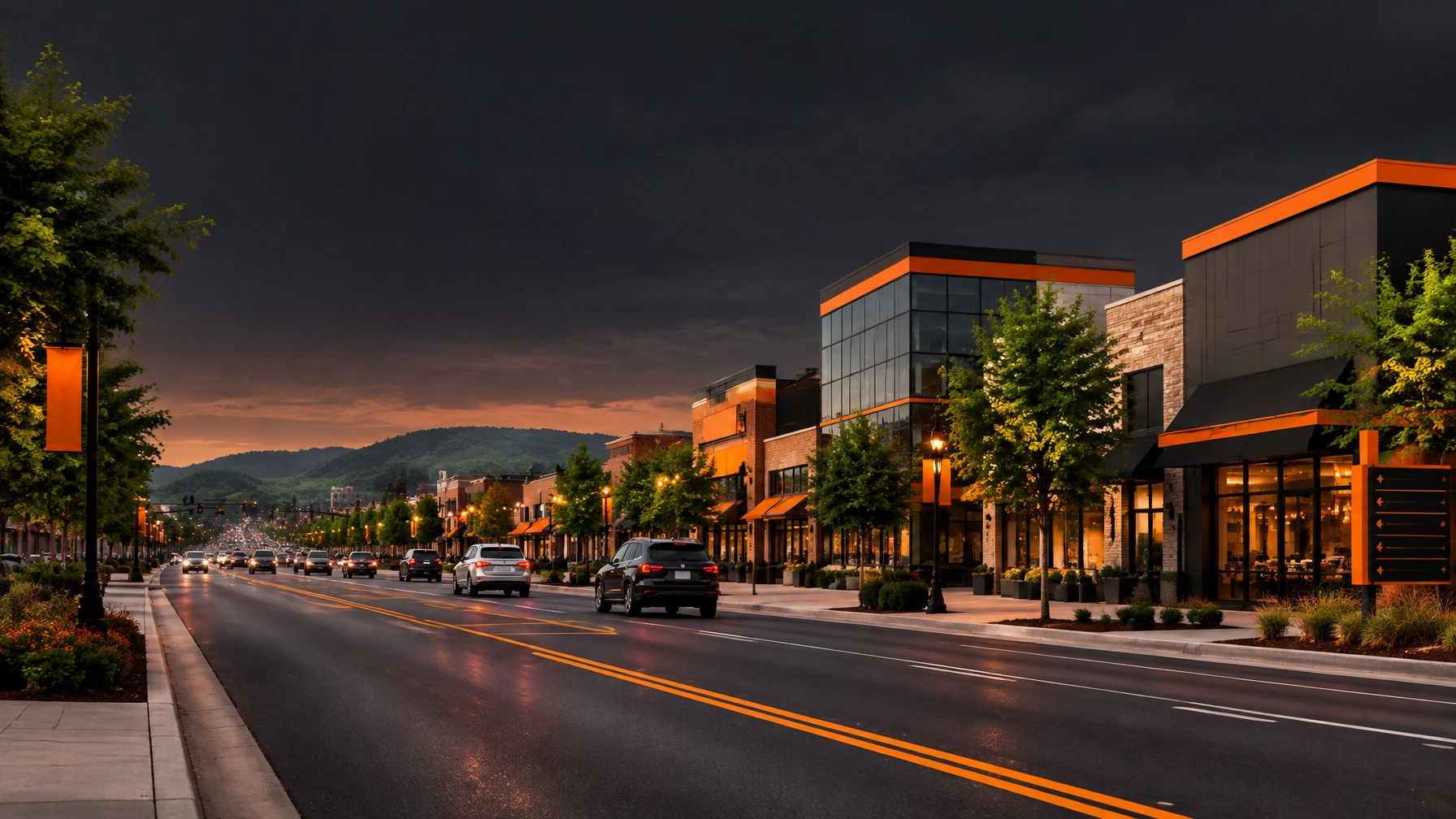

What are the main commercial corridors in Clarksville, TN?
The main commercial corridors in Clarksville are concentrated around Wilma Rudolph Boulevard, Madison Street, Riverside Drive, Fort Campbell Boulevard, Tiny Town Road, the Interstate 24 interchanges, downtown Clarksville, Sango, and St. Bethlehem.
Each area serves a different customer base. Some corridors are designed for regional shopping and high visibility. Others are better suited to neighborhood services, professional offices, military-oriented businesses, industrial support, or downtown redevelopment.
If you are searching for commercial property for lease in Clarksville TN, understanding these differences can help you evaluate a location based on tenant demand, access, traffic patterns, visibility, and long-term growth potential.
Haus commercial perspective: Randy Whetsell, Principal Broker at Haus, emphasizes that commercial real estate decisions should begin with the likely tenant, not just the building. A successful site must match the way customers, employees, delivery vehicles, and business operators use the corridor.

1. Wilma Rudolph Boulevard and the Exit 4 retail corridor
Wilma Rudolph Boulevard is Clarksville’s most recognizable regional retail corridor. It connects Interstate 24 with major shopping centers, hotels, restaurants, entertainment, medical services, and surrounding residential growth.
The corridor is especially important around I-24 Exit 4 and the Governor’s Square area. It attracts tenants that depend on visibility and a large customer trade area, including:
- National and regional retailers
- Restaurants and quick-service operators
- Hotels and hospitality businesses
- Medical, dental, and wellness practices
- Fitness centers
- Personal service businesses
- Automotive-related uses
- Retail center and outparcel tenants
Published traffic materials have identified Wilma Rudolph Boulevard as one of the highest-volume commercial routes in the city, with older traffic counts generally ranging from the mid-30,000s to nearly 40,000 vehicles per day at selected locations. Those figures vary by segment and year, so you should confirm current traffic counts for a specific property before making a leasing or investment decision.
Visibility is a major advantage here, but it also comes with competition and access considerations. Review the number of curb cuts, turn lanes, signalized intersections, parking layout, monument signage, delivery access, and neighboring tenants.
For a retailer or restaurant, a highly visible corner may be valuable. For an office user or appointment-based service, easy ingress and sufficient parking may matter more than the highest possible traffic count.
2. St. Bethlehem and the Exit 11 area
St. Bethlehem is one of Clarksville’s strongest commercial growth nodes. The area extends around the Wilma Rudolph Boulevard retail network and connects with the I-24 Exit 11 corridor and Sango-area growth.
The tenant mix is broad. You will find demand from:
- Grocery and neighborhood retail
- Restaurants and coffee shops
- Medical and dental offices
- Childcare and family services
- Fitness and wellness users
- Apartment-serving businesses
- Professional and personal services
St. Bethlehem benefits from a combination of established retail, newer residential development, and access to Interstate 24. That makes it attractive to businesses seeking both local repeat customers and regional visibility.
However, the area is not one uniform submarket. A property near a major retail center may rely heavily on destination traffic and co-tenancy. A smaller center farther from the interstate may depend more on nearby neighborhoods and apartment communities.
When comparing available commercial property for lease in Clarksville TN, examine whether a property is positioned for regional, community, or neighborhood traffic. Those are different customer patterns with different rent and operating-cost implications.
3. Madison Street and the central Clarksville corridor
Madison Street, or U.S. 41A, is a mature commercial corridor serving central Clarksville. It connects downtown with established neighborhoods and commercial districts, making it well suited to businesses that depend on convenience and repeat local customers.
Madison Street commonly attracts:
- Local restaurants
- Professional offices
- Insurance and financial services
- Medical and healthcare users
- Grocery and convenience retail
- Automotive services
- Independent retailers
- Community-serving businesses
Unlike the newest portions of Wilma Rudolph Boulevard, Madison Street includes more older buildings, established storefronts, infill opportunities, and redevelopment sites. That can create opportunities for tenants who want a central location without the cost or scale of a large highway-oriented project.
The tradeoff is that older properties may require additional review. Check roof condition, HVAC systems, electrical capacity, parking, signage rights, ADA access, stormwater conditions, and the ability to accommodate modern tenant improvements.
Clarksville’s zoning framework includes a Madison Street Corridor Urban Design Overlay District, which is intended to shape future redevelopment, setbacks, sidewalks, landscaping, and frontage design. Review the City of Clarksville zoning ordinance before signing a lease or purchasing a redevelopment site.
4. Riverside Drive, downtown, and the riverfront

Riverside Drive and downtown Clarksville serve a different type of commercial customer than the interstate corridors. The area is shaped by historic buildings, local restaurants, professional offices, entertainment, civic activity, riverfront destinations, and downtown redevelopment.
The tenant profile often includes:
- Restaurants and bars
- Boutiques and specialty retailers
- Creative and professional offices
- Event and entertainment businesses
- Personal services
- Local hospitality concepts
- Small-scale mixed-use tenants
Downtown properties can benefit from character, walkability, and proximity to Austin Peay State University. They may also have more complicated parking, loading, building-code, historic-preservation, or renovation considerations than newer suburban centers.
For investors and business owners, downtown success is often tied to the full environment, not just the individual storefront. Nearby restaurants, events, residential growth, public improvements, and pedestrian connections can influence customer activity.
Riverside Drive also includes older commercial and service-oriented properties. A site may be appropriate for a contractor, warehouse-support business, service operator, or redevelopment concept, but you should confirm zoning and permitted uses before assuming a property can support a particular business model.
5. Fort Campbell Boulevard and Tiny Town Road
Fort Campbell Boulevard and Tiny Town Road are major military-serving commercial corridors in north and northwest Clarksville. Their demand is influenced by Fort Campbell personnel, military families, civilian employees, contractors, and nearby residential neighborhoods.
Common tenant types include:
- Grocery and necessity retail
- Quick-service restaurants
- Automotive repair and maintenance
- Discount and convenience retail
- Storage facilities
- Medical offices
- Childcare providers
- Service businesses
- Fitness and wellness operators
These corridors generally serve recurring, practical demand. Customers often choose businesses based on convenience, proximity to home or work, operating hours, parking, and ease of access.
Tiny Town Road has also become an important growth corridor as residential and commercial development expands near the Trenton Road area. Published planning materials have cited traffic volumes near the intersection in the tens of thousands of vehicles per day, but site-specific counts and turning movements should be verified for each property.

6. I-24 Exit 1 and the industrial-support area
Exit 1 has a stronger industrial and employment orientation than Exit 4. The area is connected to Trenton Road, industrial development, manufacturing, logistics, and major employers.
This node can create demand for:
- Industrial and flex space
- Contractor yards
- Equipment and material suppliers
- Warehouse and distribution users
- Workforce-oriented food service
- Convenience retail
- Automotive and truck services
- Office space connected to manufacturing and logistics
Businesses near Exit 1 may not need the same retail visibility as a restaurant on Wilma Rudolph Boulevard. Instead, they may prioritize truck access, loading, utility capacity, employee parking, outdoor storage, and proximity to industrial customers.
The interchange also generates secondary demand from employees and suppliers. That can support convenience retail and food-service businesses, but the customer base may be highly dependent on work schedules and industrial occupancy.
7. Sango and southeast Clarksville
Sango is an emerging neighborhood and commuter-oriented commercial node near Exit 11 and Highway 76. New residential development has increased demand for nearby services, restaurants, medical offices, childcare, personal services, and small-format retail.
Sango tenants often serve:
- Growing subdivisions
- Daily household needs
- Families and commuters
- Medical and wellness customers
- Local dining and coffee demand
- Professional service clients
The area may offer growth potential, but businesses should evaluate whether customer demand is already established or still dependent on future residential construction.
A property with excellent visibility but limited surrounding rooftops may require a longer ramp-up period. Review planned developments, road improvements, utility availability, signal timing, access points, and competing projects before assigning a premium to a site.

8. How Austin Peay State University shapes demand
Austin Peay State University adds a distinct demand pattern to downtown and central Clarksville. Students, faculty, staff, visitors, and nearby residents support businesses such as:
- Restaurants and cafés
- Apartments and residential services
- Fitness and wellness concepts
- Study-oriented retail and coffee shops
- Personal services
- Entertainment venues
- Professional and educational services
The university’s influence is strongest near the downtown and central Clarksville areas, but it also contributes to broader demand for housing, transportation, dining, and service businesses.
When evaluating a site near APSU, consider pedestrian activity, parking, visibility from campus routes, evening and weekend demand, and whether the business depends on students, permanent residents, or both.
What should you compare before leasing commercial space?
Before choosing a corridor, compare the property against your actual operating requirements:
- Identify your primary customer and where that customer travels.
- Separate regional traffic from repeat neighborhood demand.
- Review current traffic counts and turning movements.
- Confirm zoning, permitted uses, signage, parking, and access.
- Evaluate visibility from the correct direction of travel.
- Inspect building systems, roof condition, utilities, and loading areas.
- Review co-tenancy, competition, lease terms, and common-area costs.
- Study planned road, residential, industrial, and redevelopment projects.
- Match the corridor to your expected customer hours and delivery schedule.
- Consult a qualified commercial broker before relying on listing information.
The Clarksville Area Metropolitan Planning Organization’s 2050 transportation materials can provide additional context on regional transportation patterns and roadway conditions.
Where should you begin your Clarksville commercial property search?
There is no single “best” commercial corridor for every business. Wilma Rudolph Boulevard may be ideal for high-visibility retail, while Madison Street may fit a professional office or local service business. Tiny Town Road and Fort Campbell Boulevard may better serve military and neighborhood demand. Exit 1 may be more appropriate for industrial support, and downtown or Riverside Drive may suit a restaurant, boutique, office, or mixed-use concept.
Haus can help you compare available properties, understand corridor differences, review tenant and investment considerations, and narrow your search according to your business goals.
Explore the Haus commercial real estate overview or contact Haus to discuss commercial property for lease in Clarksville TN.






