






Author: Randy Whetsell
Category: Buying a Home
If you are considering a home in a flood zone Clarksville TN location, the first things to verify are the property’s FEMA flood-zone designation, whether the structure sits in a Special Flood Hazard Area, whether your lender will require flood insurance, and how that added insurance cost affects your monthly payment before you make an offer.
In practical terms, buying in or near a flood-prone area is not automatically a bad decision. It does mean you should confirm the exact flood zone, get a flood-insurance quote early, review drainage and prior water-intrusion history, and keep your inspection, financing, insurance, and appraisal contingencies in place until you understand the risk.
A FEMA designation is important, but it is not the only measure of risk. Flooding can also result from heavy rainfall, poor grading, overwhelmed drainage systems, streams, low-lying lots, or water entering through the roof, foundation, crawlspace, or basement. Your goal is to understand the property’s documented risk and likely ownership costs before you commit to the purchase.
Haus expert contribution: “In Clarksville, we tell buyers not to stop at the map label. You need to know whether the actual structure is in the hazard area, what insurance will cost, and how the lot handles water during heavy rain. That combination matters more than a quick online glance.” — Randy Whetsell, Haus Realty & Management
How Do You Check a Clarksville Home’s Flood Zone?
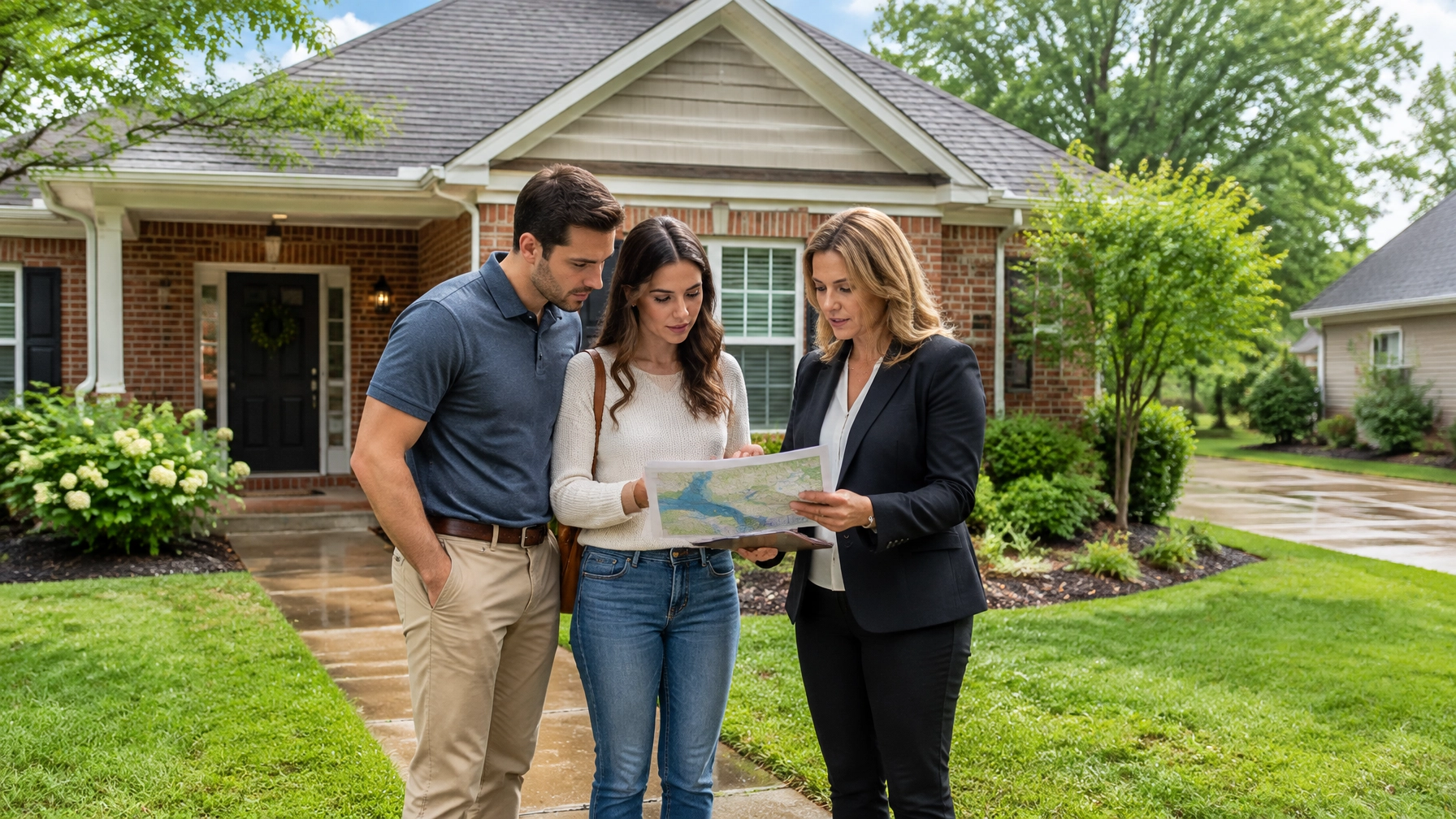
Start with the official FEMA Flood Map Service Center. Enter the complete property address and review the available Flood Insurance Rate Map information for that location.
As you review the map:
- Confirm the approximate location of the home, not just the parcel boundary.
- Note the FEMA flood-zone designation.
- Check whether the structure itself appears inside a mapped hazard area.
- Download or print the available map or FIRMette for your records.
- Review any available map revisions, amendments, or related documents.
- Compare the FEMA map with current aerial imagery and the property’s actual grading.
A map search is an important first step, but it should not replace professional due diligence. FEMA maps are regulatory tools based on available modeling and mapping data. They do not guarantee that a property outside a designated zone will never flood.
According to FEMA’s Flood Maps page, last updated January 22, 2024, the Flood Map Service Center is the official source for regulatory flood maps and flood hazard information used under the National Flood Insurance Program. FEMA also explains that Special Flood Hazard Areas are the zones with the highest mapped flood risk, generally including A and V zone families on the FIRM. See FEMA’s Flood Maps page and FEMA’s Flood Zones glossary.
Montgomery County also advises buyers and property owners to check flood hazards before purchasing. The county’s Flood Information page explains local floodplain requirements, map resources, permits, elevation certificates, and flood insurance availability.
The county specifically identifies the Cumberland River floodplain, low-lying areas near streams and drainages, and some areas away from waterways as locations where flooding may occur. In the Clarksville area, that means buyers should pay close attention to property near the Cumberland River, the Red River, and connected tributaries, creeks, drainage channels, and lower-lying bottoms that feed into those systems. If the home is near a stream, drainage channel, steep slope, culvert, or low point in a subdivision, investigate those conditions even if the property is not shown in a high-risk FEMA zone.
What FEMA Flood Zones Matter Most to Clarksville Buyers?
The most common categories buyers ask about are:
- Zone AE or other A zones: These are generally Special Flood Hazard Areas with a 1% annual-chance flood risk, often called the 100-year floodplain.
- Zone X (shaded): Usually moderate risk, often associated with the 0.2% annual-chance floodplain.
- Zone X (unshaded): Usually minimal mapped flood risk.
- Floodway designations: These deserve extra caution because they involve the channel and adjoining area needed to carry floodwater.
For a buyer, the key question is not only “What zone is the parcel in?” but also “Is the actual insurable structure inside the mapped hazard area?”

Is Flood Insurance Different From Homeowners Insurance?
Yes. Standard homeowners insurance typically does not cover damage caused by flooding. Flood coverage is generally purchased through a separate National Flood Insurance Program policy or a private flood insurance policy.
Homeowners insurance may cover certain types of sudden or accidental water damage, such as a covered plumbing failure. That is different from water entering the home because of rising surface water, overflowing waterways, or heavy rain moving across the ground.
Before making an offer, ask an insurance professional for:
- A homeowners insurance quote
- A separate flood insurance quote, even if the property is outside a high-risk zone
- The policy’s coverage limits and exclusions
- The deductible for flood-related claims
- Coverage for the dwelling, contents, crawlspace, basement, and mechanical equipment
- Any waiting period before flood coverage becomes effective
Montgomery County states that flood insurance is available even when a property is not located in a FEMA-designated flood area. FEMA also directs property owners to FloodSmart.gov for information about flood insurance and the National Flood Insurance Program.
What Does Flood Insurance Usually Cost in Clarksville?
There is no single Clarksville flood-insurance price because premiums vary based on the flood zone, elevation, foundation type, coverage amount, deductible, prior map history, and whether the policy is written through the NFIP or a private carrier.
In real transactions, buyers may see anything from a relatively modest added annual premium on a lower-risk property to several thousand dollars per year for a structure in a higher-risk area. That is why getting the quote before your inspection period ends is so important.
As you budget, remember that flood insurance changes your total monthly housing cost just like taxes and homeowners insurance do. If you are also comparing loan options, rate context matters. Freddie Mac’s Primary Mortgage Market Survey reported the 30-year fixed-rate mortgage averaged 6.95% for the week ending September 17, 2026. Even if your exact rate differs, that kind of financing environment makes it even more important to confirm every recurring housing cost early.
Do not wait until after your offer is accepted to discover that the combined insurance cost exceeds your budget. You can also review Haus’s guide to homeowners insurance costs in Clarksville as you build your ownership budget and start from the main Buying a Home resource hub if you are still comparing your next steps.
What Drainage and Water-Intrusion Questions Should You Ask?
A flood map will not tell you everything about how water behaves on a particular lot. Ask the seller, listing agent, neighbors, inspector, and local officials specific questions about the property’s history.
Useful questions include:
- Has the home, crawlspace, basement, garage, or outbuilding ever taken on water?
- Has the property required water-remediation work?
- Has the seller filed an insurance claim related to water or flooding?
- Does the lot drain toward or away from the foundation?
- Where do downspouts discharge?
- Does water collect near the driveway, retaining walls, patios, or sidewalks?
- Are there sump pumps, French drains, foundation drains, swales, or other drainage improvements?
- Have those systems been repaired or maintained recently?
- Has water entered during heavy rain even when nearby waterways did not overflow?
- Are there drainage easements, shared stormwater facilities, or subdivision maintenance obligations?
Look for staining, efflorescence, musty odors, warped flooring, deteriorated trim, damaged insulation, mold-like growth, rusted mechanical components, and fresh paint in areas that may have concealed prior damage.
A seller’s disclosure and repair records can provide valuable information, but they are not a substitute for an independent inspection. Ask direct questions and document the answers.
What Should a Home Inspection Cover?
A standard home inspection should include visible and accessible components of the structure and major systems. For a flood-prone or drainage-sensitive property, ask the inspector to pay particular attention to:
- Foundation walls, slabs, piers, and visible footings
- Crawlspaces and basements, where safely accessible
- Grading around the foundation
- Gutters, downspouts, roof drainage, and flashing
- Exterior wall penetrations and doors
- Signs of active or prior water intrusion
- Moisture staining and deterioration
- Sump pumps, drainage systems, and vapor barriers
- HVAC equipment and electrical components located in lower areas
- Plumbing leaks and water-heater conditions
- Retaining walls, patios, decks, and walkways that may direct water toward the home
A general inspection does not automatically include a structural engineering assessment, mold testing, drainage design, sewer scope, or complete waterproofing evaluation. If the inspector identifies a concern, obtain a specialist’s opinion before your contingency deadline.
Haus’s Clarksville home inspection buyer’s guide explains the normal inspection scope and common services that must be ordered separately.

When Do You Need an Elevation Certificate?
An elevation certificate documents information about a building’s elevation in relation to the base flood elevation and other site characteristics. It may be useful for floodplain management, insurance rating, permitting, or a request to revise a map determination.
Ask whether the seller has an existing elevation certificate and whether it applies to the current structure and improvements. If one is available, provide it to your insurance professional and lender for review.
An elevation certificate can be especially helpful when:
- The home is in or near a Special Flood Hazard Area
- The insurer wants more precise elevation data to rate the policy
- The owner believes the mapped risk is overstated for the actual structure
- You are exploring whether a Letter of Map Amendment or related FEMA review might apply
An elevation certificate does not automatically remove a property from a flood zone or guarantee a lower insurance premium. FEMA, the lender, local officials, and the insurer each have separate roles. If you believe the map designation is inaccurate, Montgomery County provides information about requesting a FEMA map amendment or revision. FEMA’s Change Your Flood Zone Designation page, updated January 22, 2026, explains the Letter of Map Amendment and Letter of Map Revision based on Fill processes.
For properties in or near a regulated floodplain, Montgomery County may require permits before building, grading, or placing fill. Do not assume that a previous owner’s grading, driveway, addition, retaining wall, or drainage work was properly permitted. Ask for documentation and confirm requirements with the appropriate county or city office.
Will a Lender Require Flood Insurance?
A lender generally reviews flood-zone information during the loan process. If the building is located in a federally designated Special Flood Hazard Area and the loan falls under applicable federal flood-insurance requirements, the lender may require flood insurance for the life of the loan.
FEMA’s Flood Map Service Center guidance explains that the mandatory purchase requirement generally applies to buildings located in a Special Flood Hazard Area in participating communities when the mortgage is federally backed or otherwise subject to federal flood-insurance rules. In plain English: if the house is in the mapped SFHA and you are using a covered mortgage loan, you should expect the lender to verify the flood determination and require proof of acceptable flood coverage before closing.
The lender’s determination may be based on a formal flood-zone determination rather than your personal review of an online map. Even when the lender does not require coverage, you may still choose to purchase it because flood risk can exist outside mapped high-risk areas.
Ask your lender:
- Whether the property requires flood insurance
- What coverage amount is required
- Whether the policy must meet specific lender standards
- Whether an elevation certificate or other documentation is needed
- Whether insurance approval is a condition of closing
- What happens if the insurer cannot bind coverage before closing
Keep the insurance, financing, inspection, and appraisal deadlines separate. A lender approving the property does not mean the home has passed your personal inspection or that the insurance cost fits your budget.
What Contingencies Should You Include in Your Offer?
Your offer should give you enough time to investigate the property and respond to unexpected findings. Depending on the contract and transaction circumstances, discuss these protections with your real estate professional:
- General inspection contingency: Allows you to inspect the home and evaluate material defects.
- Specialist inspection contingency: Covers drainage, foundation, structural, mold, sewer, or other professional evaluations when needed.
- Insurance contingency: Gives you time to confirm homeowners and flood insurance availability and cost.
- Financing contingency: Protects your ability to obtain the agreed loan.
- Appraisal contingency: Addresses the risk that the property appraises below the contract price.
- Document-review contingency: Allows review of permits, elevation certificates, flood claims, drainage easements, and repair records when applicable.
If significant problems are identified, obtain written estimates from qualified contractors. Possible solutions may include seller repairs, a closing-cost credit, a price adjustment, or termination if the contract allows it.
Review Haus’s Clarksville negotiation guide before deciding how to respond. You can also read how appraisals affect Clarksville home values so you understand why flood-related condition concerns may affect both financing and market value.

Which Clarksville and Montgomery County Areas Sit Higher and Drier?
No article can guarantee that a specific street will never flood, and buyers should always verify the exact address. That said, many buyers looking to reduce flood exposure focus first on neighborhoods and sections of Clarksville that generally sit on higher ground and farther from the main Cumberland River and Red River floodplain corridors.
Areas that are often viewed as relatively higher or drier compared with river-adjacent and low-bottom locations include parts of:
- Sango
- St. Bethlehem
- Exit 8 and Rossview-area neighborhoods
- Portions of Woodlawn and western Montgomery County on higher ground
- Selected newer subdivisions built away from the main river corridors
By contrast, homes closer to the Cumberland River, Red River, creek corridors, and lower-lying drainage paths deserve especially careful flood-map and drainage review on a property-by-property basis.
This is one reason we encourage buyers to compare not just list price and square footage, but also topography, drainage patterns, and insurance cost. A higher-ground home can sometimes reduce long-term risk and carrying costs even if the initial purchase price is a little higher.
If you are still narrowing your area, Haus’s Community Guides and Why Families Are Choosing to Move to Clarksville TN in 2026 can help you compare locations with your commute, budget, and lifestyle in mind.
What If the Home Uses a Well or Septic System?
Flood-prone conditions can create additional concerns when a property uses private water or wastewater systems. Floodwater may affect well-water quality, septic components, drain fields, electrical equipment, or access to the system.
Order dedicated inspections rather than relying only on a general home inspection. Request available permits, maintenance records, water-quality testing, pump records, and septic documentation.
Haus’s guide to wells and septic systems for Clarksville buyers explains why these systems require separate due diligence.
Frequently Asked Questions
Should you avoid every Clarksville home near a flood zone?
No. A mapped flood risk does not automatically make a home a bad purchase. It means you should understand the risk, insurance cost, property history, construction details, and future maintenance obligations before deciding.
Can a home outside the FEMA flood zone still flood?
Yes. FEMA mapping does not eliminate the possibility of localized drainage problems, surface-water flooding, overwhelmed stormwater systems, or water intrusion caused by poor grading and maintenance.
What is a Special Flood Hazard Area?
A Special Flood Hazard Area, often abbreviated SFHA, is FEMA’s term for areas with the highest mapped flood risk, generally including A and V flood-zone families on the Flood Insurance Rate Map. If the structure is in the SFHA and the loan is federally backed, the lender will often require flood insurance.
How do you check a property’s zone before making an offer?
Use the exact property address in the official FEMA Flood Map Service Center, compare the mapped hazard area to the actual building location, ask the seller for any prior elevation certificate or Letter of Map Amendment, and confirm the lender’s formal flood determination during underwriting.
Can you cancel a purchase after discovering flood concerns?
That depends on your contract, contingency deadlines, and the specific facts of the transaction. Notify your agent promptly, review the agreement carefully, and consult a qualified attorney for legal advice about your rights.
Who should you contact with local floodplain questions?
For Montgomery County floodplain information, permits, elevation certificates, and related requirements, contact Montgomery County Stormwater at 350 Pageant Lane, Suite 309, Clarksville, Tennessee, or call 931-648-5718.
Ready to Evaluate a Clarksville Home Carefully?
Buying near a flood-prone area does not have to be an automatic deal-breaker. With an address-specific FEMA map review, early insurance quotes, careful drainage questions, a thorough inspection, and well-written contingencies, you can make a more informed decision.
If you want help reviewing a specific flood zone Clarksville TN property before you commit, contact Haus Realty & Management. We can help you compare neighborhoods, flag floodplain questions early, coordinate due diligence, and evaluate whether a particular home fits your budget, commute, and risk tolerance before you move forward.






