





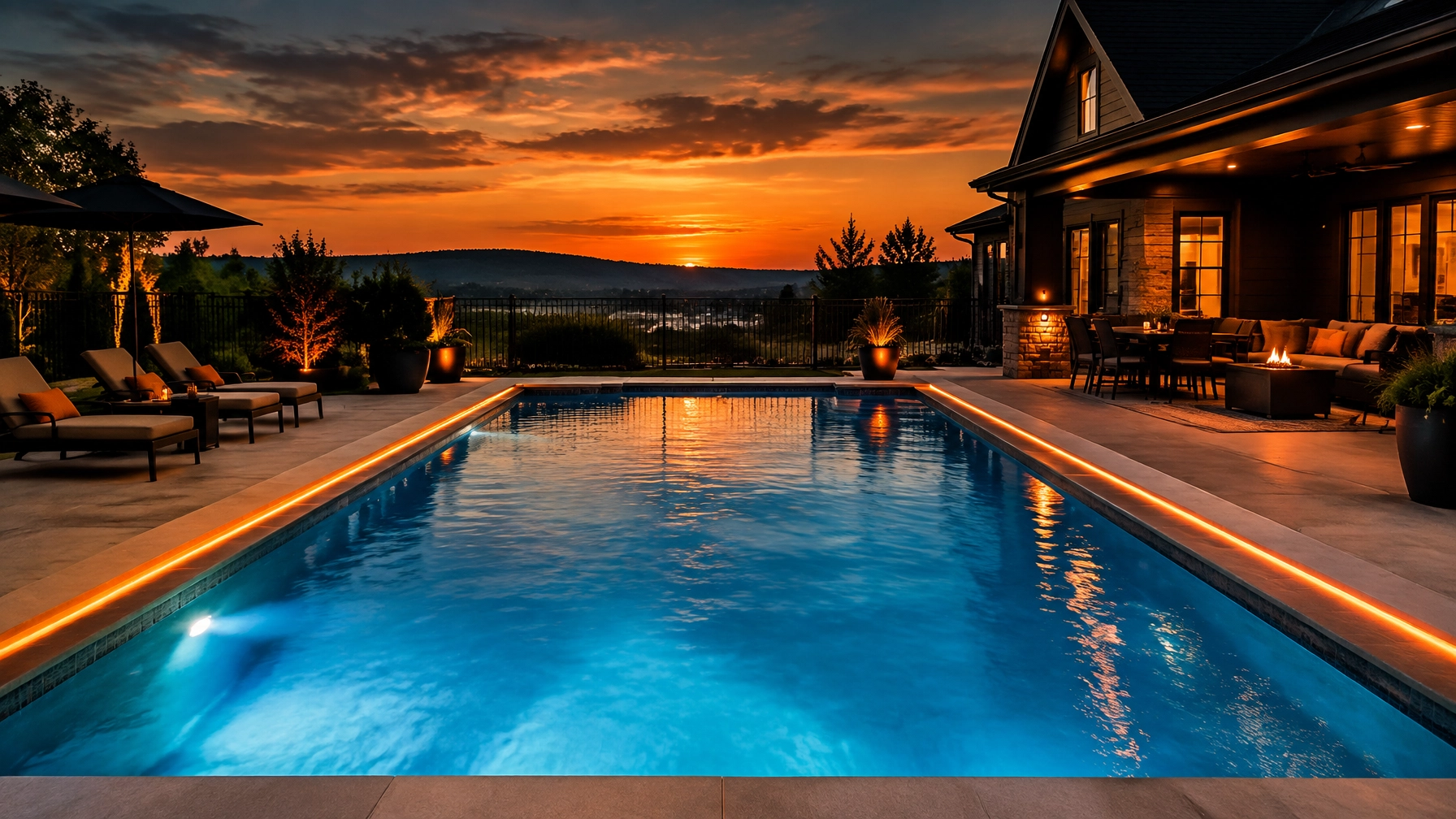

Owning a pool in Clarksville can add comfort, recreation, and outdoor-living appeal to your home. It can also add a recurring financial responsibility that extends beyond chemicals and occasional cleaning.
For a typical residential in-ground pool, a practical Clarksville budget is approximately $2,500 to $6,000 or more per year. Your actual cost depends on the pool’s size, equipment age, heating habits, maintenance arrangement, and whether you handle some tasks yourself.
Here is what you should expect when estimating the pool maintenance cost in Clarksville, TN.
What is the average annual cost of owning a pool in Clarksville?
A typical annual pool budget may include:
- Opening and closing: Approximately $600 or more if each service costs about $299
- Weekly maintenance: Approximately $2,000 to $2,500 for a full swimming season
- Chemicals and testing: Roughly $20 to $50 per week for many DIY owners
- Electricity and water: Approximately $400 to $2,000 per year
- Repairs and equipment reserve: Approximately $500 to $1,500 per year
- Insurance changes: Varies by carrier, coverage, pool type, and safety features
A DIY-focused owner may spend closer to $1,500 to $3,000 per year, while an owner using full-service maintenance, frequent heating, and professional repairs may spend $4,000 to $6,000 or more.
These figures are planning ranges, not quotes. Pool size, surface type, sanitation system, landscaping, and equipment condition can materially change the total.
How much do seasonal pool opening and closing services cost?
Middle Tennessee weather makes seasonal preparation especially important. Clarksville typically experiences warm summers, cool fall weather, occasional freezing temperatures, and unpredictable spring conditions. You should plan around weather trends rather than a single calendar date.
Spring opening
Many Clarksville homeowners open their pools between late March and late April, depending on overnight temperatures and the condition of the water. Opening too early can increase chemical use and cleaning costs if the water is still cold and debris continues to accumulate.
A professional opening may include:
- Removing and storing the cover
- Reinstalling plugs, baskets, ladders, and equipment
- Starting the pump and filtration system
- Inspecting visible plumbing and equipment
- Adding startup chemicals
- Beginning water testing and balancing
One Clarksville pool service provider lists openings starting at approximately $299, although cleaning, repairs, or unusually difficult conditions may add to the cost.
Fall closing and winterization
Pool closing typically occurs between late October and November, but timing should be based on sustained cooler temperatures and the forecast. Closing too early may require additional maintenance if warm weather returns. Waiting too long can expose plumbing and equipment to freezing conditions.
A professional closing may include:
- Lowering the water level when appropriate
- Blowing water from the lines
- Installing plugs and antifreeze where needed
- Winterizing the pump, filter, and heater
- Removing ladders and handrails
- Installing the safety cover
Professional closing services also commonly start around $299 in the Clarksville market. A pool with older equipment, complicated plumbing, or a damaged cover may cost more to winterize.

What do weekly chemicals and cleaning cost?
Routine maintenance is one of the most consistent costs of pool ownership.
If you manage the pool yourself, plan for regular spending on:
- Chlorine or another sanitation system
- pH increaser or reducer
- Alkalinity and calcium-balancing products
- Shock treatments
- Algaecide when needed
- Test strips or a liquid testing kit
- Filter cleaning supplies
- Replacement baskets, seals, and small parts
A reasonable DIY chemical budget is often $20 to $50 per week during the active season, although heavy use, storms, algae, water loss, and poor chemical balance can increase that amount.
You will also need to skim debris, brush the walls, vacuum the pool, empty baskets, inspect the equipment, and monitor water levels. Neglecting these tasks can turn a small chemistry problem into an expensive repair or cleanup project.
For professional service, one local Clarksville provider lists weekly residential maintenance starting at approximately $399 per four-week billing cycle. That works out to about $100 per week before considering any services outside the maintenance agreement. A full-season service plan can therefore exceed $2,000 before opening and closing fees.
Ask exactly what a service plan includes. Some plans cover chemical balancing and routine cleaning but charge separately for chemicals, repairs, filter media, or equipment service.
How long do pool pumps, filters, and heaters last?
Equipment replacement is not an annual expense for most homeowners, but it should be part of your long-term budget.
Pool pumps
A residential pool pump commonly lasts approximately 8 to 12 years. Variable-speed pumps may last longer when properly sized and maintained, while pumps operating for long periods under heavy loads may wear sooner.
Start evaluating replacement when you notice:
- Persistent leaks
- Excessive noise or vibration
- Difficulty maintaining prime
- Reduced circulation
- Repeated motor or seal repairs
- Parts that are no longer readily available
If an older pump needs a major repair, compare the repair cost with the energy efficiency and expected life of a replacement pump.
Filters and filter media
The filter tank or housing may last approximately 8 to 11 years, depending on the type and condition. The internal media generally needs attention sooner.
Typical planning timelines include:
- Cartridge elements: Approximately 2 to 5 years
- Diatomaceous earth grids: Approximately 2 to 5 years
- Sand media: Often replaced or refreshed on a multi-year schedule, depending on water quality and performance
A filter that requires increasingly frequent cleaning or cannot maintain normal pressure may need new media or broader service.
Pool heaters
Gas heaters commonly last approximately 7 to 12 years, while electric heat pumps may last approximately 10 to 15 years under normal conditions. Actual life depends on installation quality, water chemistry, ventilation, usage, and maintenance.
Heaters can be among the more expensive pool components to replace. If you are buying a home with a heater that is approaching the end of its expected life, request service records and ask a qualified pool professional to evaluate it.

How do utilities affect pool ownership costs?
Pool equipment uses electricity throughout the swimming season. Your cost depends on:
- Pump horsepower and efficiency
- Daily run time
- Water temperature
- Heater type
- Lighting and automation
- Pool size and plumbing design
- How often the pool is covered
A pump-only setup may add several hundred dollars per year to utility costs. Frequent heater use can increase the total substantially, particularly if you are heating the pool early in spring or late into fall.
Water is another consideration. You may need to replace water lost through evaporation, splashing, backwashing, leaks, and seasonal maintenance. A pool cover can reduce evaporation and help retain heat.
If you are considering a pool home, ask the seller for recent utility information when available. Past usage will not predict your exact bill, but it can help you understand the property’s operating pattern.
Will a pool increase your homeowners insurance cost?
A pool may increase your liability exposure and affect how your homeowners insurance policy is structured. Some carriers may require safety features such as:
- A compliant fence or barrier
- Self-closing and self-latching gates
- Door alarms or other access controls
- Additional liability coverage
- Restrictions on diving boards or slides
The premium impact is not uniform. It depends on your insurer, policy limits, pool type, safety features, claims history, and the property’s overall risk profile.
Ask a licensed insurance professional about coverage, exclusions, liability limits, required barriers, and any premium changes before you buy or install a pool. Do not rely on a general online estimate as a substitute for a policy-specific review.
If the property is inside Clarksville city limits, review the city’s official permitting information. Properties outside the city but within Montgomery County may follow different local procedures.
Does a pool improve resale value in Clarksville?
A pool can improve a home’s appeal to the right buyer, but it does not automatically add its full installation cost to the resale price.
Pool value may depend on:
- The pool’s age and condition
- Equipment age and service records
- The quality of the deck and outdoor living area
- Neighborhood expectations
- Recent sales of comparable pool homes
- Safety features and fencing
- The season in which the property is listed
- Buyer concerns about maintenance and insurance
Some families actively want a pool. Other buyers may avoid one because of maintenance, safety, insurance, or future resale concerns. That means a pool can narrow the buyer audience even while making the home more attractive to a specific segment.
For a detailed selling strategy, read How Do You Sell a Home With a Pool in Clarksville TN?. That guide covers pricing, preparation, documentation, inspections, safety, and marketing without repeating the full process here.

What should you budget before buying a pool home?
Before making an offer, request information about:
- Pool age and installation date
- Pump, filter, and heater ages
- Recent repairs and replacements
- Opening and closing invoices
- Average chemical and service costs
- Utility usage, if available
- Safety covers, fences, and gates
- Permits and inspection records
- Known leaks or structural problems
- Whether equipment conveys with the property
If you are financing the home, remember that mortgage rates affect your total monthly housing budget in addition to pool ownership costs. Freddie Mac’s 30-year fixed-rate mortgage benchmark was 7.03% for the week ending September 24, 2026. This is a national benchmark, not a personal mortgage quote. Your actual rate and payment will depend on your credit, loan program, down payment, lender, property, and other factors. Review financing details with a qualified lender.
Is owning a Clarksville pool worth the cost?
For many homeowners, the answer is yes if the pool fits their lifestyle and budget. A well-maintained pool can provide years of recreation and make your outdoor space more useful. However, you should purchase with a realistic understanding of the annual commitment.
Before you buy or sell a pool home, estimate:
- Seasonal service costs
- Chemicals and cleaning
- Utilities
- Insurance changes
- Equipment replacement
- Repairs and resurfacing
- Potential resale considerations
If you are evaluating a Clarksville home with a pool or planning to sell one, contact Haus Realty & Management for homeowner-focused guidance on pricing, inspections, market positioning, and your next step.
This article is for general educational purposes and is not legal, insurance, tax, appraisal, financial, or engineering advice. Costs vary by property and service provider. Consult qualified local professionals before making decisions about pool installation, maintenance, insurance, financing, or resale.






