





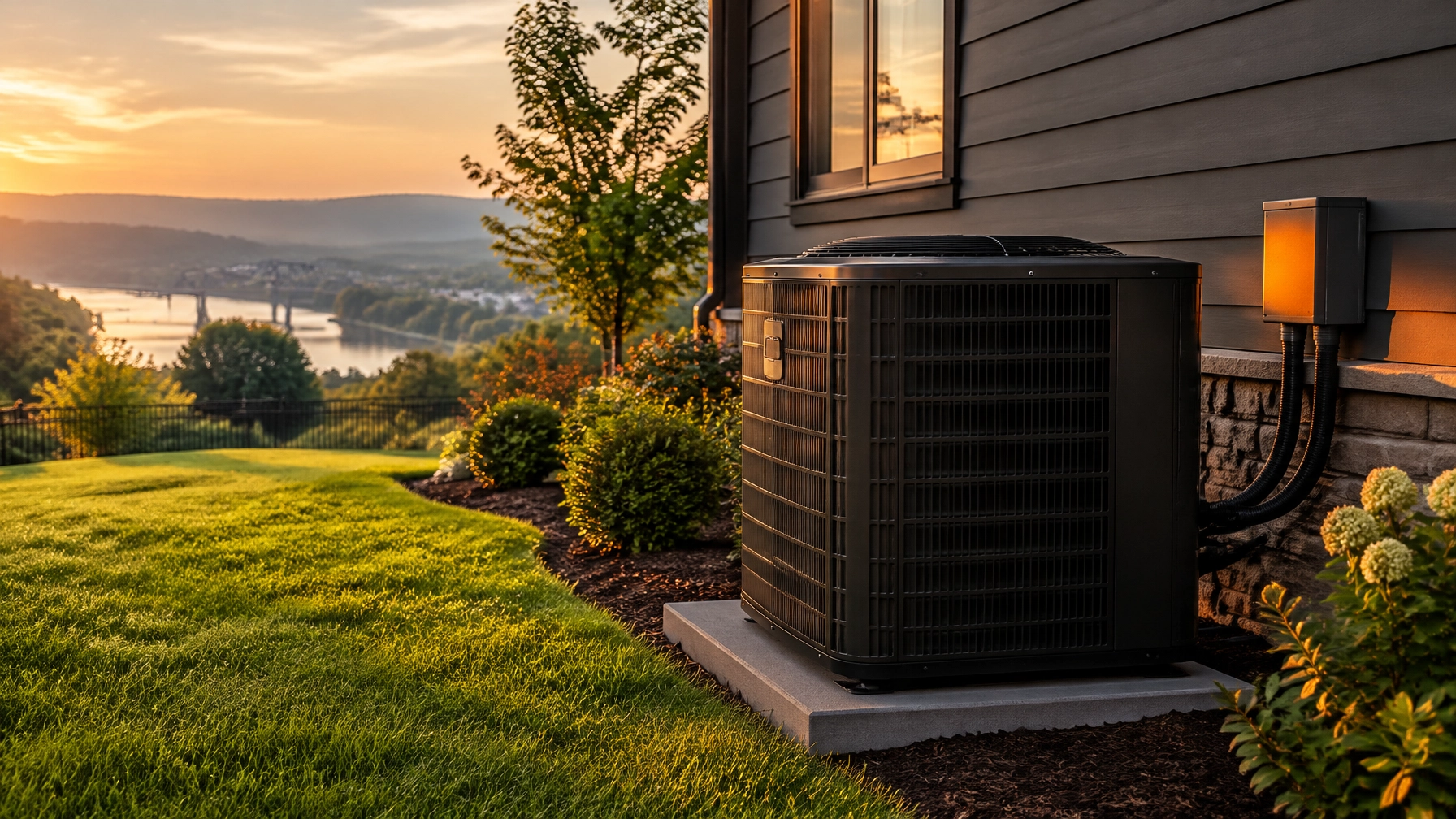

If you own or manage a home in Clarksville, Tennessee, you should generally schedule professional HVAC service twice a year: once in spring for cooling and once in fall for heating. At minimum, your system should receive a complete professional inspection annually, with air filters checked monthly and replaced as needed.
This spring-and-fall schedule is especially practical in Clarksville because of humid summers, significant Tennessee Valley humidity swings, seasonal pollen, and long periods of heating and cooling use.
Why Does HVAC Maintenance Matter in Clarksville TN?
Your HVAC system does more than heat and cool your home. It also affects indoor humidity, air circulation, comfort, energy use, and the condition of important equipment.
Clarksville’s summer weather can place substantial demand on air-conditioning systems. High humidity may cause an air conditioner to run longer as it works to remove both heat and moisture from the air. During the shoulder seasons, temperature changes can also be abrupt. A system may switch from cooling during the afternoon to heating overnight.
These conditions make preventive service more valuable than waiting until the system stops working.
Regular maintenance can help you:
- Identify worn electrical components before they fail
- Keep condensate drains clear
- Improve airflow through the home
- Reduce unnecessary strain on the compressor and blower
- Support more consistent indoor temperatures
- Detect safety concerns before heating season
- Protect the useful life of the equipment
- Prepare a rental property for a new tenant
According to the current ENERGY STAR residential HVAC maintenance checklist, homeowners should arrange annual pre-season checkups, with cooling service in spring and heating service in fall. This guidance was reviewed for this article on September 23, 2026.

How Often Should You Schedule HVAC Service?
Best practice: twice each year
For most Clarksville homes, the preferred schedule is:
- Spring: Air-conditioning or heat-pump cooling inspection
- Fall: Furnace or heat-pump heating inspection
Scheduling service before peak demand gives you an opportunity to correct smaller issues before an extreme-weather event. It may also make it easier to obtain an appointment before contractors become fully booked during the hottest or coldest parts of the year.
Minimum baseline: once each year
If your budget or equipment schedule allows only one professional visit, do not go longer than a year without service. Ask the technician to complete a comprehensive inspection that addresses both heating and cooling functions.
However, one annual visit may not provide the same level of seasonal preparation as separate spring and fall appointments. This is particularly true for:
- Older HVAC systems
- Heat pumps used year-round
- Homes with pets or indoor allergies
- Properties with high occupancy
- Houses with recurring humidity or drainage issues
- Rental homes between tenants
- Equipment with a history of breakdowns
What Should Be Included in a Spring HVAC Tune-Up?
A spring visit should focus on preparing your air conditioner or heat pump for Clarksville’s summer conditions.
A qualified HVAC professional may inspect or service:
- Thermostat operation
- Electrical connections and motor readings
- Condensate drain lines
- Evaporator and condenser coils
- Refrigerant levels and possible leaks
- Blower components and airflow
- Outdoor-unit condition
- System controls and startup sequence
- Unusual noise, vibration, or cycling
Dirty coils, restricted airflow, and clogged drains can force equipment to run longer. In a humid climate, a blocked condensate drain can also contribute to water damage or indoor moisture problems.
You should also keep grass, leaves, mulch, and other debris away from the outdoor condenser. Do not attempt to open refrigerant circuits or make electrical repairs yourself. Those tasks should be handled by a qualified professional.
What Should Be Included in a Fall HVAC Inspection?
Fall service should prepare the system for sustained heating use. For a furnace, the technician may inspect:
- Burner operation
- Gas connections and pressure
- Ignition and flame-sensing components
- Heat exchanger condition
- Electrical connections
- Blower operation
- Safety controls
- Venting and combustion-related components
- Thermostat performance
If your home uses a heat pump, ask the technician to evaluate the heating mode as well as the cooling mode. Heat pumps operate throughout much of the year, so they may experience more continuous wear than a system used only for summer cooling.
Before the first cold spell, test your smoke and carbon monoxide alarms. Keep storage, boxes, and household items away from furnaces and other heating equipment.

How Often Should You Change Your HVAC Filter?
Check your filter at least once each month. Replace it when it is visibly dirty or according to the manufacturer’s recommendations.
Many homes need a replacement every one to three months, but the correct interval depends on:
- Filter size and type
- Number of occupants
- Pets
- Allergies or respiratory sensitivities
- Construction dust
- Home renovation activity
- How frequently the system operates
A dirty filter can restrict airflow and make the HVAC system work harder. When replacing a filter, confirm that the size and airflow direction match the equipment requirements. If you are unsure which filter to use, ask your HVAC professional during the next service visit.
You should also keep supply registers and return grilles open and unobstructed. Furniture, rugs, curtains, and dust buildup can interfere with airflow even when the equipment itself is operating properly.
When Should Fort Campbell Rental Properties Receive HVAC Service?
Fort Campbell-area rental homes often operate on a schedule that is different from an owner-occupied property. Military moves, PCS orders, lease expirations, and rapid tenant turnover can create narrow windows for inspections and repairs.
For a rental property, schedule HVAC service:
- Before the spring cooling season
- Before the fall heating season
- During a vacancy or turnover inspection
- After a tenant reports unusual noise, weak airflow, water near the unit, or inconsistent temperatures
- Before marketing the property if it has been vacant for an extended period
During a Fort Campbell rental turnover, the HVAC inspection should be coordinated with other work, including filter replacement, smoke and carbon monoxide alarm testing, plumbing checks, and general property-condition documentation.
A complete turnover review can help identify issues before a new resident moves in. It also gives the owner a clearer record of the system’s condition and any recommended repairs.

Haus Realty & Management Expert Contribution
From a Haus Realty & Management property-management perspective, HVAC maintenance should be treated as a scheduled operating responsibility rather than an emergency-only expense.
Our team’s local recommendation is to plan service around the property’s use:
- Owner-occupied homes should follow a spring-and-fall schedule.
- Rental homes should combine seasonal service with documented turnover inspections.
- Older systems should receive closer monitoring, especially during extended heat or cold.
- Owners should keep service records, filter-change information, and repair recommendations with their property files.
This approach helps you make maintenance decisions before comfort complaints become urgent repair calls. It can also support a smoother experience for tenants, buyers, sellers, and property owners throughout Clarksville and the surrounding Tennessee and Southern Kentucky markets.
What Are the Warning Signs That Your HVAC Needs Service Now?
Do not wait for the next seasonal appointment if you notice:
- Weak or uneven airflow
- Frequent cycling
- A burning or electrical smell
- Water near the indoor unit
- Ice on refrigerant lines or the outdoor unit
- Unusual rattling, grinding, or squealing
- A sudden increase in utility costs
- Rooms that remain too humid
- Thermostat readings that do not match indoor comfort
- A system that will not start or shut off
Turn off the equipment and seek professional assistance if you smell gas, see smoke, hear a serious electrical noise, or suspect a carbon monoxide problem.
The Clarksville HVAC Service Schedule to Remember
For most homes, the simplest plan is:
- Every month: Inspect the filter and keep vents clear.
- Every one to three months: Replace the filter, depending on household conditions.
- Every spring: Schedule cooling-system service before the hottest weather.
- Every fall: Schedule heating-system service before sustained cold weather.
- During rental turnover: Document the HVAC condition and complete necessary maintenance before move-in.
- Immediately when warning signs appear: Contact a qualified HVAC professional.
If you are buying or selling a Clarksville home, HVAC condition should also be part of your planning. You can search current Tennessee and Kentucky properties through Haus Realty & Management or review your real estate options with the Haus team.
For property owners, landlords, and families preparing for a move near Fort Campbell, contact Haus Realty & Management to discuss your next step and connect your home-maintenance planning with your broader real estate goals.






