





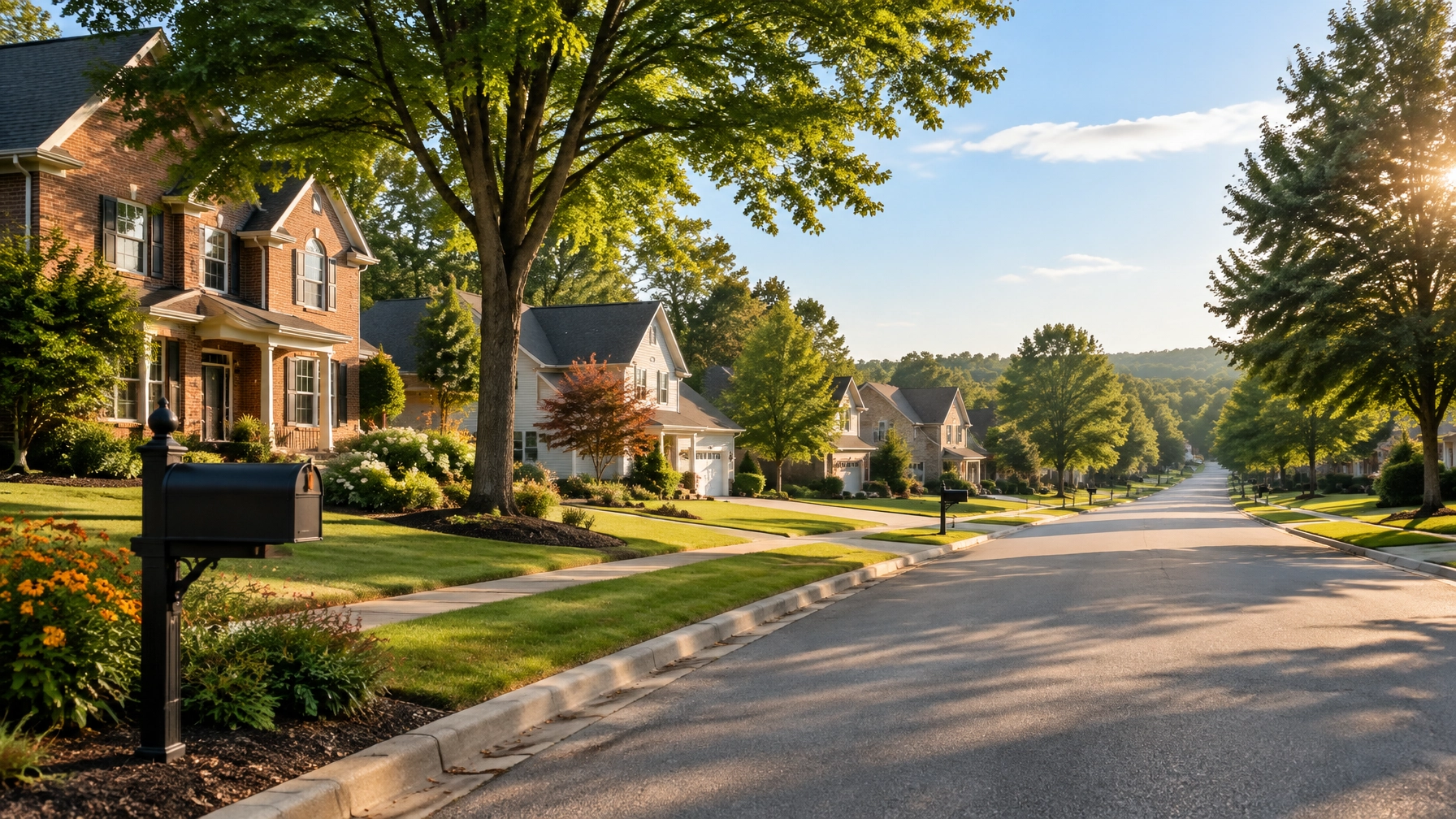

If you are searching for Clarksville TN neighborhoods no HOA, you have options across the Clarksville-Montgomery County area. No-HOA homes may be available in older subdivisions, established city neighborhoods, rural areas, and smaller developments that were never organized around a mandatory homeowners association.
However, “no HOA” is a property-specific conclusion, not a neighborhood-wide assumption. A listing description, search filter, or seller statement can be incomplete. Before you make an offer, you should verify the property’s deed, recorded subdivision plat, covenants, and title records.
Where can you find no-HOA homes in Clarksville?
The best places to begin your search are areas with older housing stock, larger lots, individually built homes, and rural or semi-rural properties outside newer master-planned communities.
Established neighborhoods and older subdivisions
Older Clarksville neighborhoods often predate the HOA structure common in many newer developments. Buyers may find no-HOA opportunities in portions of:
- Kenwood
- New Providence
- Greenwood
- Woodlawn Estates
- Neighborhoods near the Madison Street corridor
- Older sections of the 37042 and 37040 areas
- Established subdivisions near Fort Campbell
Some listings in areas such as Heritage Estates and Virginia Hills have been marketed as having no HOA fees or no mandatory association. That does not mean every parcel in those areas is automatically free of restrictions. A subdivision may contain different phases, recorded covenants, voluntary associations, or restrictions that are not described in the listing.
Use these neighborhoods as search starting points, not as a substitute for property-level verification.
Rural and acreage properties in Montgomery County
If you want more land, privacy, or flexibility for outbuildings, rural Montgomery County may offer additional no-HOA possibilities. Homes on larger parcels and properties outside established subdivisions are less likely to have a mandatory homeowners association.
You may find more flexibility for:
- Detached workshops
- Gardens and personal landscaping
- Recreational vehicles or boats
- Fences and gates
- Larger accessory structures
- Exterior improvements
Even rural properties remain subject to county zoning, building codes, septic or utility requirements, easements, floodplain rules, and recorded deed restrictions. “No HOA” does not mean “no rules.”
Older sections of the Fort Campbell area
The 37042 area includes a wide range of housing, from established neighborhoods to newer developments. Buyers seeking no-HOA homes may have more success focusing on older sections rather than recently developed communities with shared amenities, entrance features, and planned association services.
Because neighborhood boundaries and HOA structures can vary, ask your agent to search by individual property rather than relying only on subdivision names or online filters.
For broader neighborhood comparisons involving schools, commutes, and home prices, review Haus’s Clarksville neighborhood guide.
How do you verify that a Clarksville home has no HOA?
A listing that says “no HOA” is a useful lead, but it is not final proof. Before you remove contingencies or proceed toward closing, use a layered verification process.
1. Review the listing details carefully
Look for the listing’s HOA fields, including:
- Has HOA: Yes or No
- Mandatory or voluntary association
- Annual or monthly dues
- Transfer fees
- Association management information
- Restrictions on rentals, parking, pets, fencing, or exterior changes
Be cautious when the listing says “no HOA fees” rather than “no HOA.” A property may have recorded covenants even if there are currently no dues or an association is inactive.
2. Ask the seller for written information
Ask whether the property is subject to:
- A homeowners association
- Covenants, conditions, and restrictions
- A declaration of restrictions
- Architectural guidelines
- Road or maintenance agreements
- Shared private-drive obligations
- Common-area or stormwater responsibilities
Request copies of any documents the seller has received. A seller’s disclosure can provide useful information, but it should not replace a title and document review.
3. Obtain the recorded deed
The deed may reference restrictions, covenants, declarations, easements, or a recorded book-and-page number. If the deed points to another document, obtain and read that document.
The Montgomery County Register of Deeds is the public-record source for recorded deeds, subdivision plats, declarations, easements, and restrictions affecting property in the county. Provide the property address, owner name, subdivision, lot number, or parcel information when requesting records.
4. Review the recorded subdivision plat
A recorded plat can show:
- Lot boundaries
- Easements
- Building setbacks
- Rights-of-way
- Common areas
- Access roads
- Notes referring to restrictions
- The subdivision’s recorded name and phase
A plat may not contain every covenant governing the property, so review it together with the deed and any separate declaration of restrictions.

5. Ask the title company or closing attorney
Your title company or closing attorney can search the chain of title and identify recorded documents that may affect the property. Ask specifically whether the title search found:
- Mandatory HOA obligations
- Recorded restrictive covenants
- Private-road agreements
- Shared maintenance obligations
- Restrictions on use, structures, or improvements
This is especially important when a listing advertises “no HOA” but the subdivision appears to have common amenities, shared roads, or uniform architectural requirements.
Why must “no HOA” claims be verified against the deed and plat?
HOA status can be misunderstood for several reasons. An association may be inactive, unpaid, voluntary, newly formed, or managed informally. A listing may also confuse “no monthly dues” with “no recorded restrictions.”
A restrictive covenant can exist even if there is no active HOA board collecting dues. For example, recorded documents may still limit:
- The type or size of structures you can add
- Fences, sheds, or detached garages
- Commercial activities
- Livestock or certain animals
- Parking of boats, trailers, or recreational vehicles
- Short-term rentals
- Exterior materials or paint colors
The deed and recorded documents are more reliable than a marketing phrase. If you are unsure how a covenant applies, ask a qualified Tennessee real estate attorney to review it.
What are the tradeoffs of buying a home without an HOA?
No-HOA ownership can provide meaningful flexibility, but it also means accepting responsibilities that an association might otherwise handle.
Potential advantages
You may have more control over:
- Landscaping and yard design
- Exterior paint and improvements
- Fences and gates
- Parking arrangements
- Workshops and accessory buildings
- Use of your property, subject to local law
You may also avoid recurring HOA dues, special assessments, architectural review fees, and association rules that do not fit your lifestyle.
Potential tradeoffs
Without an HOA, you generally should not expect shared association services such as:
- Community pools
- Clubhouses
- Private playgrounds
- Maintained entrance landscaping
- Neighborhood events
- Association-funded common-area repairs
- Consistent architectural enforcement
You may also have more personal maintenance responsibility. If a neighborhood entrance, private road, drainage feature, or shared green space needs work, owners may need to coordinate directly or follow a separate maintenance agreement.
Less architectural enforcement can be both an advantage and a drawback. You may have more freedom, but nearby homeowners may also have more freedom to make changes you would not choose.
What rules replace HOA restrictions?
City and county zoning, building codes, permitting requirements, and recorded property documents remain in effect whether or not a home has an HOA.
First, determine whether the property is inside Clarksville city limits or in unincorporated Montgomery County. The applicable zoning authority and permit process can differ.
The Clarksville-Montgomery County Regional Planning Commission zoning resources provide information about city and county zoning processes, including the applicable city zoning ordinance and county zoning resolution.
Depending on your project, you may need to confirm:
- Setback requirements
- Lot coverage
- Accessory-structure rules
- Fence regulations
- Parking requirements
- Sign restrictions
- Floodplain requirements
- Septic or utility approvals
- Building, electrical, plumbing, or mechanical permits

“No HOA” means a private association may not control the property. It does not eliminate public regulations or private covenants recorded against the land.
How do mortgage rates affect your no-HOA search?
Your financing choices still matter when comparing homes. Freddie Mac’s 30-year fixed-rate mortgage averaged 7.03% for the week ending September 24, 2026. This is a national benchmark, not a personal mortgage quote.
Your actual rate may differ based on your credit profile, loan type, down payment, occupancy, lender, points, property characteristics, and other underwriting factors. A lender can help you compare the payment impact of HOA dues, insurance, taxes, and potential maintenance costs.
A no-HOA property may reduce monthly association expenses, but you should budget for your own exterior maintenance, private-road obligations, fencing, landscaping, and future improvements.
Is a no-HOA home right for you?
A no-HOA property may be a good fit if you want more control over your home and are comfortable researching records, maintaining the property yourself, and following city or county regulations.
It may be less suitable if you strongly prefer shared amenities, uniform neighborhood standards, or association-managed common areas.
The most important step is to evaluate the specific property, not just the neighborhood name or listing language. Ask for a document review early, verify the deed and recorded plat, and confirm any restrictions before making a final decision.
Find a Clarksville no-HOA home
If you are ready to explore Clarksville TN neighborhoods no HOA, Haus can help you identify potential properties and organize the verification process.
Request a Clarksville home-value analysis or ask our team for a current no-HOA home list tailored to your preferred price range, location, lot size, commute, and property features.
This article is for general educational purposes and is not legal advice. HOA status, restrictive covenants, zoning, and permitting requirements should be verified for the specific property with the listing agent, title company, closing attorney, and applicable local government offices.






