





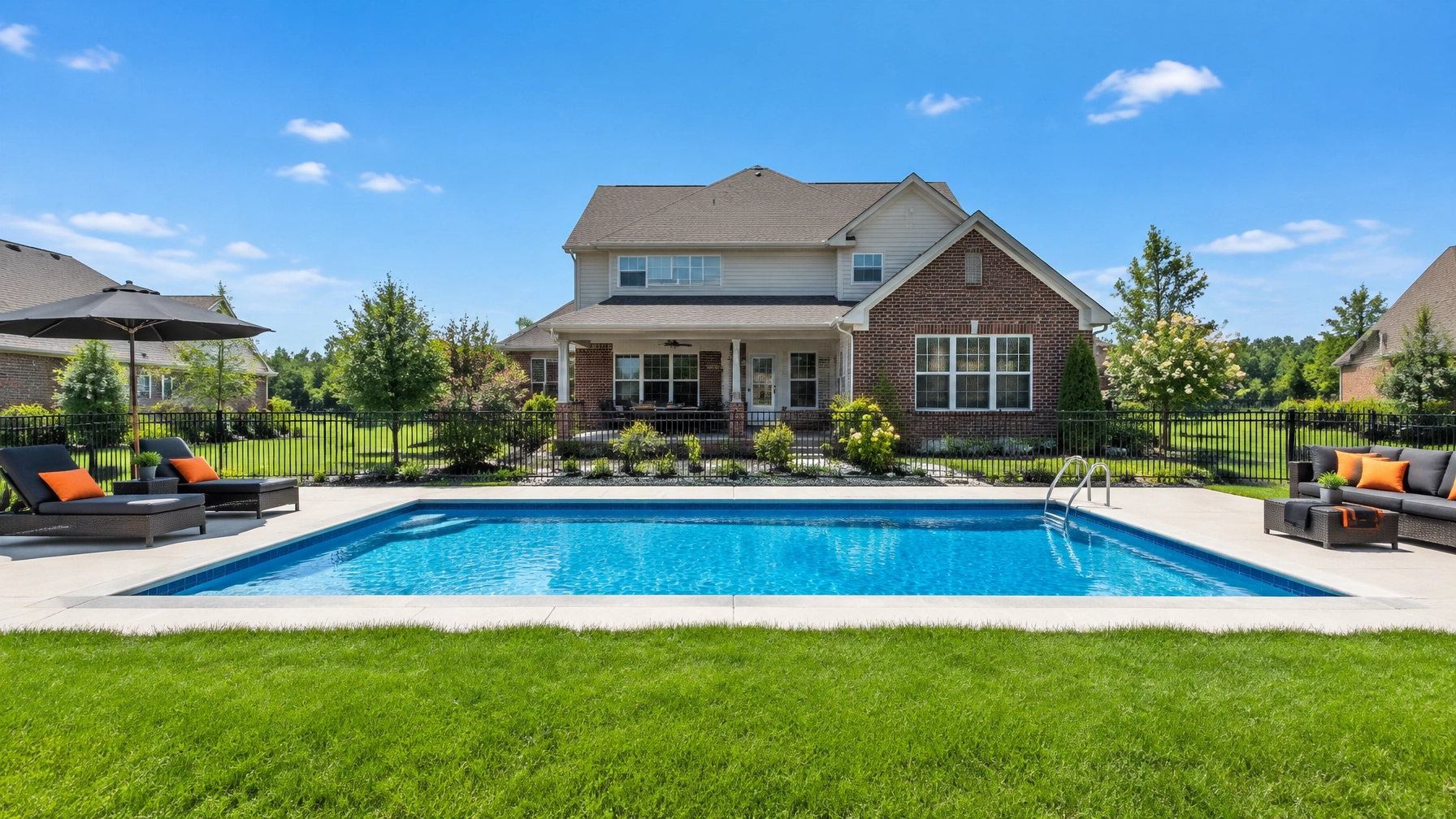

How do you sell a home with a pool in Clarksville TN?
To sell a home with a pool in Clarksville, you need to present the pool as a clean, safe, documented lifestyle feature while pricing it according to local buyer demand, not simply according to what it cost to install.
A pool can help your home stand out, especially from May through September. However, the local pool-buyer pool is smaller than the overall group of Clarksville homebuyers. Some buyers actively want a pool for family recreation. Others immediately think about maintenance, liability, insurance, and future resale.
That makes preparation, accurate pricing, and targeted marketing especially important.
Haus recently spoke with a listing agent who has sold pool homes in Montgomery County. The agent’s practical advice was straightforward: “The pool should look easy to own before buyers ever start asking what it costs to maintain.” That means clear water, working equipment, safe access, strong photography, and documentation ready before the first showing.
Does a pool add value to a Clarksville home?
Usually, an in-ground pool adds contributory value, but it does not automatically add its full installation cost to your resale price.
The value depends on:
- The pool’s age, size, design, and condition
- Whether it is in-ground or above-ground
- The condition of the pump, filter, heater, liner, coping, and decking
- The surrounding neighborhood and price range
- Whether nearby comparable homes have pools
- The current season and buyer demand
- The quality of the outdoor living space
- Whether permits and safety features are documented
A $60,000 pool installation does not necessarily create $60,000 in additional market value. Buyers and appraisers focus on what similar homes have actually sold for, not only on construction receipts.
In-ground pools are generally treated as permanent site improvements and are analyzed as part of the real property. Above-ground pools are typically removable personal property and may contribute little or nothing to the appraised real-estate value. The exact result depends on the property, market evidence, lender, and appraiser.
Fannie Mae’s appraisal guidance emphasizes that improvements must be described accurately and supported by comparable market data. In practical terms, your agent should prepare a comparative market analysis using recent pool-home sales whenever possible rather than adding an unsupported premium.
For more Clarksville pricing guidance, review Haus’s article on how to sell your home fast in Clarksville.
Is Clarksville’s pool buyer market large enough?
Pool homes appeal to a specific segment of buyers, not every buyer.
Some families relocating to Clarksville may consider a pool a major benefit. Others may be concerned about:
- Monthly maintenance and chemical costs
- Opening and closing the pool each year
- Liability exposure
- Higher insurance premiums or coverage limitations
- Child-safety requirements
- Repairs to older equipment
- The amount of usable yard remaining
- Resale difficulty if future buyers do not want a pool
That narrower audience does not mean your home is difficult to sell. It means your marketing should reach the buyers most likely to appreciate the feature.
For Fort Campbell families, position the pool as part of a practical outdoor-living setup. Show how the space works for summer evenings, children’s activities, weekend entertaining, and time at home between assignments. For out-of-state buyers, provide enough information that they can evaluate the pool remotely before traveling to Clarksville.
Do not simply write “beautiful pool” in the listing description. Include the type of pool, approximate age, dimensions, depth, heating system, sanitation system, equipment updates, safety features, and whether the pool is open or winterized.
When is the best time to list a Clarksville pool home?
The pool typically has its strongest visual impact from May through September, when buyers can see the water, decking, landscaping, shade, and outdoor living potential.
During the active pool season:
- Keep the water clear and properly balanced.
- Operate the equipment consistently.
- Remove leaves and debris before showings.
- Stage the patio with restrained, attractive furnishings.
- Use umbrellas, seating, and outdoor lighting to show function.
- Schedule photography in bright daylight.
- Photograph the pool from multiple angles.
- Keep safety gates closed and working.
Winter listings can still succeed, but the presentation needs to change. A closed pool is less emotionally compelling, so your marketing should include high-quality summer photographs if they accurately represent the property.
During fall and winter:
- Use a clean, secure pool cover.
- Remove standing water and debris from the surrounding area.
- Winterize the system professionally.
- Document recent maintenance and repairs.
- Explain the expected opening and closing process.
- Include summer images with clear dates or captions.
- Emphasize the yard, patio, privacy, and outdoor layout, not only the water.
A winter listing should reduce uncertainty. Buyers need to understand what they are purchasing even when the pool is not available for use.

What maintenance and documentation should you complete before listing?
Before marketing begins, have the pool and its equipment reviewed by a qualified pool professional. Ask for an evaluation of:
- Pump and filter operation
- Heater and timer
- Electrical connections
- Pool shell, liner, tile, coping, and plaster
- Decking and drainage
- Automatic covers or safety covers
- Ladders, handrails, diving boards, and slides
- Water chemistry and circulation
- Fencing and gate hardware
Keep copies of service records, warranties, invoices, permits, equipment manuals, and recent repair documentation.
A buyer may also want to know the approximate annual cost of:
- Chemicals
- Professional service
- Utilities
- Repairs
- Opening and closing
- Equipment replacement
- Insurance
You do not need to promise a specific future cost. A reasonable history of ownership expenses helps buyers make an informed decision and makes the pool feel less like an unknown liability.
What must you disclose about a pool in Tennessee?
Tennessee sellers should disclose known material defects under the Tennessee Residential Property Disclosure Act, Tenn. Code Ann. § 66-5-202.
Pool-related issues that may require disclosure include known:
- Structural cracks or significant leaks
- Failing pumps, filters, heaters, or electrical components
- Drainage or flooding problems
- Unsafe decking or broken equipment
- Missing or defective fencing
- Known permit or code concerns
- Previous repairs related to a material defect
- Insurance claims or incidents involving the pool
An “as-is” sale does not give a seller permission to conceal a known defect or make a misleading statement. Answer pool-related questions accurately and discuss the disclosure with your listing agent. If a legal issue is complicated, consult a Tennessee real estate attorney.
A pre-listing inspection can help you identify concerns before a buyer’s inspection does. You are not required to repair every item, but you should understand the condition and decide whether to repair, disclose, price accordingly, or offer a negotiated concession.
What safety and insurance requirements matter?
Pool safety is both a legal and marketing issue. Inside Clarksville city limits, pool installations and related structures generally require permits through the City’s Building and Codes Department. The city’s pool permitting information addresses site plans, setbacks, barriers, and associated structures.
Properties in Montgomery County outside the city may follow county permitting procedures, including requirements for pool and barrier permits.
Before listing, confirm:
- Whether the pool was permitted
- Whether the barrier meets the applicable local code
- Whether gates self-close and self-latch
- Whether the fence has appropriate height and spacing
- Whether required alarms are present and operational
- Whether electrical work was completed properly
- Whether any HOA rules apply
Requirements can vary by jurisdiction, pool type, installation date, and whether the pool is private or part of an HOA. Verify the current requirements with the appropriate building department rather than relying on an older inspection report.
Contact your insurance provider before showings and closing. Ask whether the current policy includes the pool, whether additional liability coverage is recommended, and whether fencing, alarms, diving boards, or slides affect eligibility or premiums. A buyer may also want to know whether the property is reasonably insurable in its current condition.
How should you market a pool home to Fort Campbell families and out-of-state buyers?
Your marketing should sell the complete lifestyle, not just the pool.
For Fort Campbell families, highlight:
- The property’s commute and access to major routes
- The remaining yard space
- Fenced outdoor areas and privacy
- Covered patios or shade
- Storage for pool equipment
- Low-maintenance features
- The potential for family use during summer
- Whether the home is ready for immediate occupancy
Military buyers may also be comparing Clarksville with Oak Grove or Hopkinsville while working through a tight relocation schedule. Haus’s Fort Campbell PCS checklist can help families think through housing and relocation decisions.
For out-of-state buyers:
- Provide a video or virtual tour.
- Include clear equipment photographs.
- Share maintenance records digitally.
- Explain the pool’s age and operating system.
- Offer remote showing coordination.
- Describe seasonal opening and closing requirements.
- Make inspection access easy.
- Be precise about what conveys with the property.
Professional photography is especially important. The pool should look inviting but realistic. Avoid heavily edited water colors, misleading wide-angle images, or photographs that hide worn decking and equipment.

Should you repair or replace the pool before selling?
Usually, you should repair safety and function before considering cosmetic upgrades.
Prioritize:
- Leaks and structural concerns
- Unsafe fencing, gates, or electrical conditions
- Non-functioning pumps, filters, or heaters
- Broken decking, coping, ladders, or rails
- Cloudy or unbalanced water
- Peeling surfaces and visible damage
- Cosmetic improvements after the major concerns are addressed
Do not automatically replace an older pool or install expensive features just before selling. Ask your agent to compare the likely cost with the market-supported benefit. In many cases, cleaning, servicing, documenting, and pricing correctly produce a better result than a major last-minute renovation.
What is the best selling strategy?
Your best plan is to:
- Obtain a pool-focused comparative market analysis.
- Complete a pre-listing inspection.
- Service the pool and equipment.
- Confirm local permits and safety requirements.
- Disclose known material defects.
- Photograph the pool during its strongest season when possible.
- Stage the patio and surrounding yard.
- Price against recent closed sales.
- Monitor showing activity during the first 10 to 14 days.
- Adjust quickly if buyers see better value elsewhere.
Montgomery County inventory has stabilized near five months of supply, and average market time has been around 62 days in Haus’s recent internal market observations. In that environment, accurate first-day pricing and professional presentation are essential. A pool home that is overpriced or difficult to evaluate can sit past 60 days and lose momentum.
Ready to sell your Clarksville pool home?
Selling a home with a pool in Clarksville requires more than adding a pool photo to the listing. You need a dedicated plan for seasonal presentation, safety, maintenance records, disclosure, insurance questions, appraisal support, and buyer targeting.
Haus Realty & Management provides experienced guidance for sellers in Clarksville and Montgomery County. If you are planning to sell, contact Haus to discuss your pool’s condition, neighborhood, timeline, and likely buyer audience.
This article is for general educational purposes and is not legal, insurance, appraisal, tax, or financial advice. Pool requirements, insurance policies, appraisal conclusions, market conditions, and disclosure obligations can vary. Consult the appropriate licensed professionals regarding your property.






