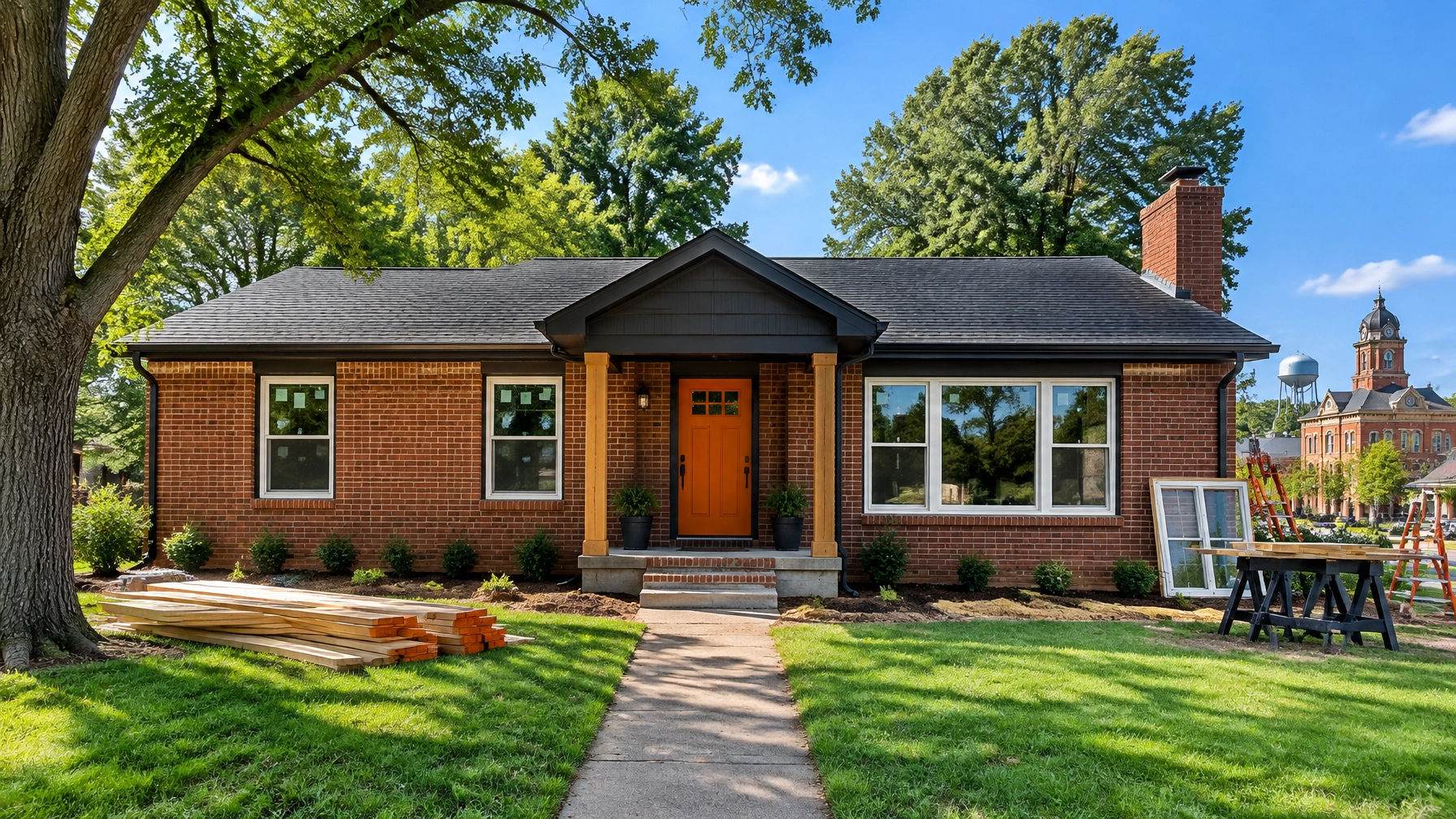

Yes, you can use a renovation loan to buy a fixer-upper in Clarksville, Tennessee. These mortgages combine the home purchase and approved renovation costs into one financing package. Depending on your eligibility, project size, and lender availability, you may compare an FHA 203(k), Fannie Mae HomeStyle Renovation loan, or a VA renovation loan.
For older homes near downtown Clarksville, established Montgomery County neighborhoods, and Fort Campbell’s older off-post housing areas, renovation financing may help you purchase below the price of a fully updated property. However, the process involves more paperwork, contractor documentation, inspections, escrowed funds, and appraisal requirements than a standard home purchase.
How does a renovation loan work in Clarksville TN?
A renovation loan generally follows this structure:
- You identify an eligible fixer-upper.
- You obtain pre-approval from a lender offering the renovation product.
- A qualified contractor prepares a detailed, itemized bid.
- The lender orders an appraisal based on the home’s expected condition after improvements.
- The loan closes using the purchase price and approved renovation budget.
- Renovation funds are held in an account and released in draws as work is completed and inspected.
The most important number is not simply the listing price. You need to evaluate the total project cost:
Purchase price + renovation costs + permits + inspections + lender fees + contingency reserve + temporary housing
A home that appears inexpensive may not create value if the repairs are underestimated or the finished appraisal does not support the combined investment.
Why consider a fixer-upper near downtown or Fort Campbell?
Clarksville has older housing stock in and around downtown, as well as established neighborhoods near Fort Campbell that may offer larger lots, mature landscaping, and convenient access to employment centers. Some homes may need updated kitchens, flooring, roofing, HVAC work, electrical improvements, or repairs related to age and deferred maintenance.
A renovation loan may allow you to:
- Buy in a location that would otherwise be outside your budget
- Finance eligible repairs without taking out a separate personal loan
- Customize the home to your household’s needs
- Build equity if the completed value exceeds your total investment
- Improve energy efficiency, safety, and long-term livability
Haus expert Randy Whetsell, Principal Broker, recommends comparing the completed project against move-in-ready homes before making an offer. The goal is not simply to buy the home at a discount. The goal is to determine whether the finished property will be worth the money, time, and disruption required to renovate it.

What is the difference between FHA 203(k), HomeStyle, and VA renovation loans?
FHA 203(k): Limited versus Standard
The FHA 203(k) program combines a purchase mortgage with approved rehabilitation costs through one FHA-insured loan. The official HUD 203(k) consumer fact sheet explains the program’s eligible improvements, property types, and general requirements.
Limited 203(k) is designed for non-structural improvements. Potential uses may include:
- Flooring and painting
- Kitchen or bathroom updates
- Appliance installation
- Roofing, gutters, or exterior repairs
- Energy-efficiency improvements
- Accessibility modifications
- Certain health and safety repairs
Current HUD guidance allows eligible non-structural work up to $75,000, although lender overlays and older local materials may reflect different limits. Confirm the current limit with your lender.
Standard 203(k) is intended for larger rehabilitation projects, including structural repairs, major electrical or plumbing work, foundation issues, additions, or substantial reconstruction. It generally requires:
- At least $5,000 in eligible improvements
- A HUD-approved 203(k) consultant
- A detailed work write-up
- Contractor bids and project schedules
- Inspections and draw approvals
Standard 203(k) projects generally have up to 12 months for completion, while Limited 203(k) projects may have up to nine months, subject to lender approval and current program rules.
FHA financing may offer a lower down payment for qualified borrowers, but you should also account for mortgage insurance, lender fees, possible rate differences, and strict renovation procedures.
Fannie Mae HomeStyle Renovation
HomeStyle is a conventional renovation mortgage that can combine the purchase and improvement costs into one loan. It may be attractive if you have stronger conventional qualifications, want a broader range of improvements, or need financing that is less restrictive than FHA for certain upgrades.
Potential advantages may include:
- Conventional underwriting
- Possible lower mortgage insurance than FHA, depending on your down payment and credit
- Flexibility for certain cosmetic or higher-end improvements
- Financing based on the completed value, within applicable loan limits
Availability, down payment requirements, credit standards, contractor rules, and eligible improvements vary by lender. Ask whether the lender offers Fannie Mae HomeStyle specifically rather than assuming every conventional lender provides it.
VA renovation loans
Some lenders offer VA renovation or VA rehabilitation products for eligible veterans and service members. These may combine VA purchase financing with approved repairs while preserving the benefits of VA financing.
VA renovation availability is highly lender-specific. Ask about:
- Maximum renovation amounts
- Eligible repair categories
- Contractor approval requirements
- Occupancy rules
- Appraisal and inspection procedures
- Whether the loan supports cosmetic improvements or only required repairs
A VA appraisal is not a substitute for a comprehensive home inspection. You should use both your lender’s requirements and an independent inspector’s findings when evaluating an older Clarksville property.

What do contractor bids and appraisals look like?
Your contractor bid should be more detailed than a basic remodeling estimate. It may need to identify:
- Each repair or improvement
- Labor and material costs
- Required permits
- Completion dates
- Draw milestones
- Contractor licensing and insurance
- Allowances for approved materials
- Change-order procedures
A low bid is not always the strongest bid. An incomplete estimate can lead to delays, underfunded work, or disputes when hidden conditions are discovered.
The appraisal typically considers the property’s after-improved value. The appraiser reviews comparable homes that reflect the expected finished condition. In Clarksville, that may mean comparing the renovated property with similar homes in the same neighborhood or price band, not simply comparing it with nearby properties in significantly different condition.
Your lender may require the appraisal before final approval of the renovation budget. If the projected completed value does not support the total loan, you may need to reduce the scope, increase your cash investment, renegotiate the purchase price, or choose a different property.
How do interest rates affect the decision?
Freddie Mac’s Primary Mortgage Market Survey reported an average 30-year fixed conventional mortgage rate of 6.95% for the week ending September 17, 2026. Your renovation loan rate may be higher or lower depending on the program, credit profile, loan-to-value ratio, lender, property type, and other factors.
For illustration, a $300,000 30-year loan at 6.95% would have estimated principal-and-interest payments of approximately $1,984 per month. At a rate one-quarter point lower, 6.70%, the estimated payment would be approximately $1,936 per month. A difference of about $48 per month.
This illustration excludes taxes, homeowners insurance, mortgage insurance, HOA dues, renovation fees, and other costs. It is not a loan quote. A renovation loan may also involve higher fees or more complicated underwriting than a standard mortgage.
The honest tradeoff is straightforward: you may buy below the price of a finished home and create instant equity, but you could pay more in interest, fees, contingency reserves, and administrative costs while managing a longer transaction.
Why might sellers prefer conventional buyers?
In competitive Clarksville price bands, sellers sometimes prefer a conventional buyer because the transaction may involve fewer property-condition requirements and less renovation-related uncertainty. A standard conventional offer can appear easier to close than an offer dependent on contractor bids, a consultant report, an as-completed appraisal, and multiple renovation approvals.
That does not mean a renovation-loan offer cannot succeed. Your offer may be stronger when you provide:
- A complete pre-approval from an experienced renovation lender
- A realistic closing timeline
- A defined contractor plan
- Strong earnest money, where appropriate
- Clear inspection and financing deadlines
- A buyer’s agent who understands the process
Your agent can help explain the structure of the offer and identify properties whose condition and price are more likely to work with renovation financing.
What timeline should you expect?
A typical renovation purchase may take longer than a standard Clarksville transaction:
- Pre-approval and program selection: several days to a few weeks
- Contractor bids and scope development: one to three weeks
- Appraisal and underwriting: several weeks
- Closing: often 45 to 75 days, depending on complexity
- Renovation period: approximately three to 12 months, depending on the program and scope
Plan carefully if you are relocating to Fort Campbell, selling another home, or arranging temporary housing. Renovation funds are generally released through approved draws rather than delivered as unrestricted cash at closing.
After you become an owner, include ongoing maintenance in your budget. Haus’s guide to Clarksville home utility costs and buyer budgeting explains why your monthly housing cost includes more than principal and interest. You can also review the Haus home-maintenance guidance before committing to an older property.
Frequently asked questions
Can first-time buyers use a renovation loan in Clarksville?
Yes. First-time buyers may qualify for FHA 203(k), conventional renovation, or certain VA renovation products, depending on their income, credit, debt, down payment, occupancy, and lender requirements.
Can I use a renovation loan for an investment property?
FHA 203(k) is generally intended for an owner-occupied primary residence. Some conventional renovation products may allow second homes or certain investment properties, but availability and down payment requirements vary. Ask a qualified lender before making an offer.
Can I do the renovation work myself?
Self-help rules vary by program and lender. Some work may require a licensed or approved contractor, and the lender may not permit you to perform all repairs yourself. Get written guidance before relying on your own labor.
Is a renovation loan always cheaper than buying a finished home?
No. It can create value when the purchase price, repair budget, and completed appraisal align. However, higher rates, fees, temporary housing, delays, change orders, and unexpected repairs can reduce or eliminate the savings.
What should I do first?
Talk with a lender experienced in renovation financing, then connect with a buyer’s agent who understands Clarksville and Montgomery County housing conditions. Do not rely on a general mortgage pre-approval if you intend to finance repairs.
The bottom line
A renovation loan in Clarksville TN can help you purchase a fixer-upper near downtown, Fort Campbell, or an established Montgomery County neighborhood and finance eligible improvements through one mortgage. FHA 203(k), Fannie Mae HomeStyle, and VA renovation options each have different requirements and tradeoffs.
Start with a realistic contractor bid, a thorough inspection, a completed-value appraisal strategy, and a cash reserve for surprises. Then compare the total project cost with nearby move-in-ready homes.
Talk with a Haus buyer specialist about your renovation budget. Visit the Haus buying resources or contact Haus to discuss your Clarksville home search.
This article is for general educational purposes only and is not mortgage, financial, legal, tax, construction, or appraisal advice. Loan programs, rates, limits, lender overlays, contractor rules, and timelines can change. Confirm current requirements with a qualified lender, HUD or the applicable loan guarantor, licensed contractors, inspectors, and other appropriate professionals before making a purchase decision.